BioWare existed for nearly 32 years. The end of its story clearly demonstrates that games are not created by signs and logos, but by people. Today, we will trace how systemic issues gradually led the studio to lose its creative continuity and economic appeal to its owner.
Why BioWare Doesn’t Fit into EA’s Business Following Its Delisting
The closure of BioWare is part of a new business reorganization at Electronic Arts, during which it also announced the layoffs of 400 employees (3% of its workforce) and a shift in priorities. The company plans to focus on investments in already established franchises and areas with more predictable commercial returns and potential for scaling, as well as focus on fewer simultaneously developed projects.
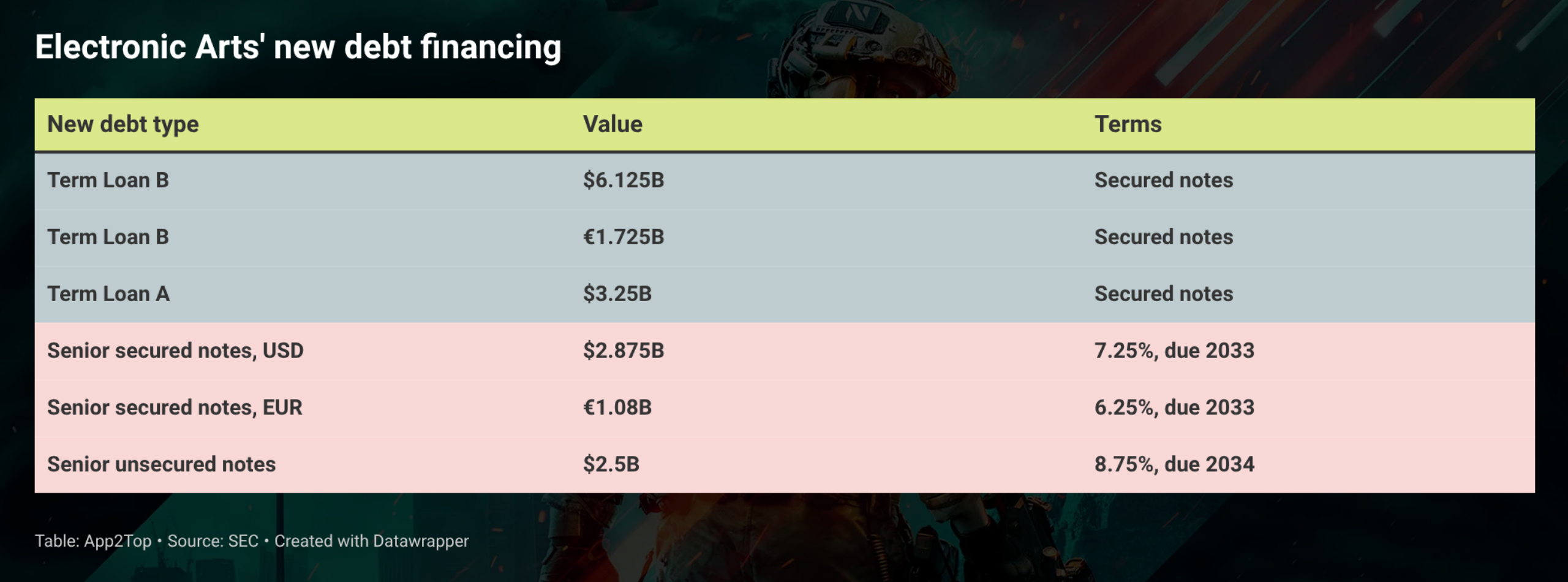
To better understand the business context, it's worth looking at the company's position following the completion of EA's buyout. Recall that the deal format is a so-called LBO, a leveraged buyout, valuing the business at $55 billion. A consortium of investors led by the Saudi Arabian Public Investment Fund (PIF) provided equity totaling $36 billion, while the remaining part was covered by new debt financing of approximately $18 billion.
A large portion of this amount, about $11.3 billion, came in the form of secured loans. Simply put, the gaming business became part of a debt servicing structure with guarantees in the form of the parent company's assets and its individual legal entities.
Another important aspect is that the new financing (outside the secured obligations) is significantly more expensive than EA's previous debts. Previously, the company’s bond rates were around 1.85–2.95%, whereas the new ones, totaling about $6.58 billion, are now in the range of 6.25–8.75%. Moreover, they need to be repaid by 2033–2034.
Structure of New Debt Financing in the Electronic Arts Buyout
