
In July 2026, SuperCity celebrated its 15th anniversary. Over this time, the game by Playkot evolved from a browser-based city-building project to one of the company's most enduring products (and indeed, of the genre), earning over $100 million and amassing 40 million installs. SuperCity's story is intriguing not just by the numbers. It's a tale of how the game repeatedly found itself at the brink of a technological or product dead-end, only to discover a new form each time, preserving what players valued.
Column prepared by Denis Adlerberg and Valeria Fedorova.
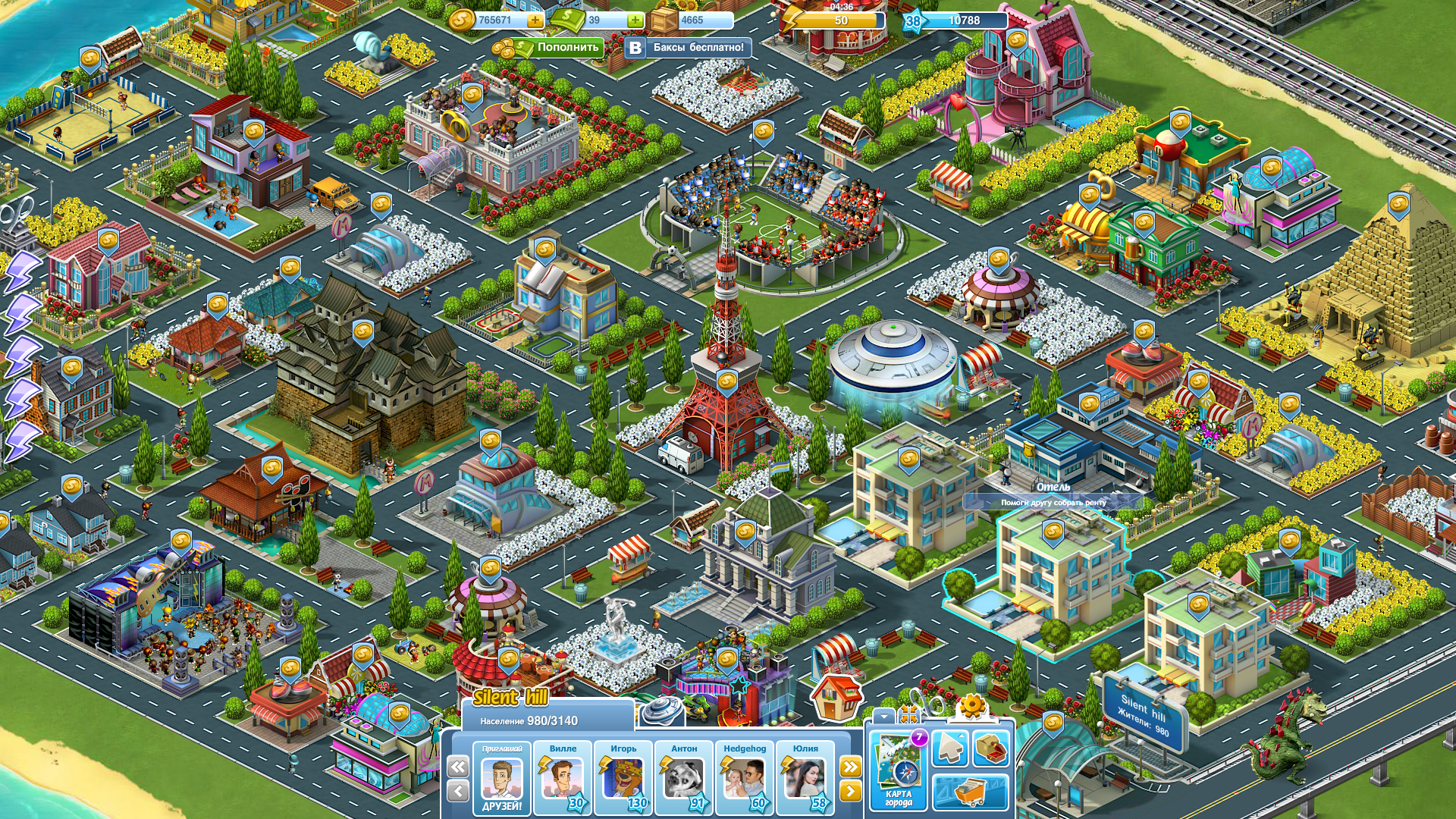
SuperCity
Today, SuperCity is developed by an autonomous studio within Playkot. Its CEO Denis Adlerberg and the game’s Chief Product Officer, Lera Fedorova, cite the project’s main asset as not being its age or even its accumulated content, but rather the trust of its audience. Yet this very trust imposes the main constraint: a mature game cannot be abruptly rebranded to fit the latest market trend. It must be developed in small, constant steps, maintaining familiar rituals while simultaneously giving players reasons to return.

Denis Adlerberg and Valeria Fedorova
The Game That Didn't Start With a City
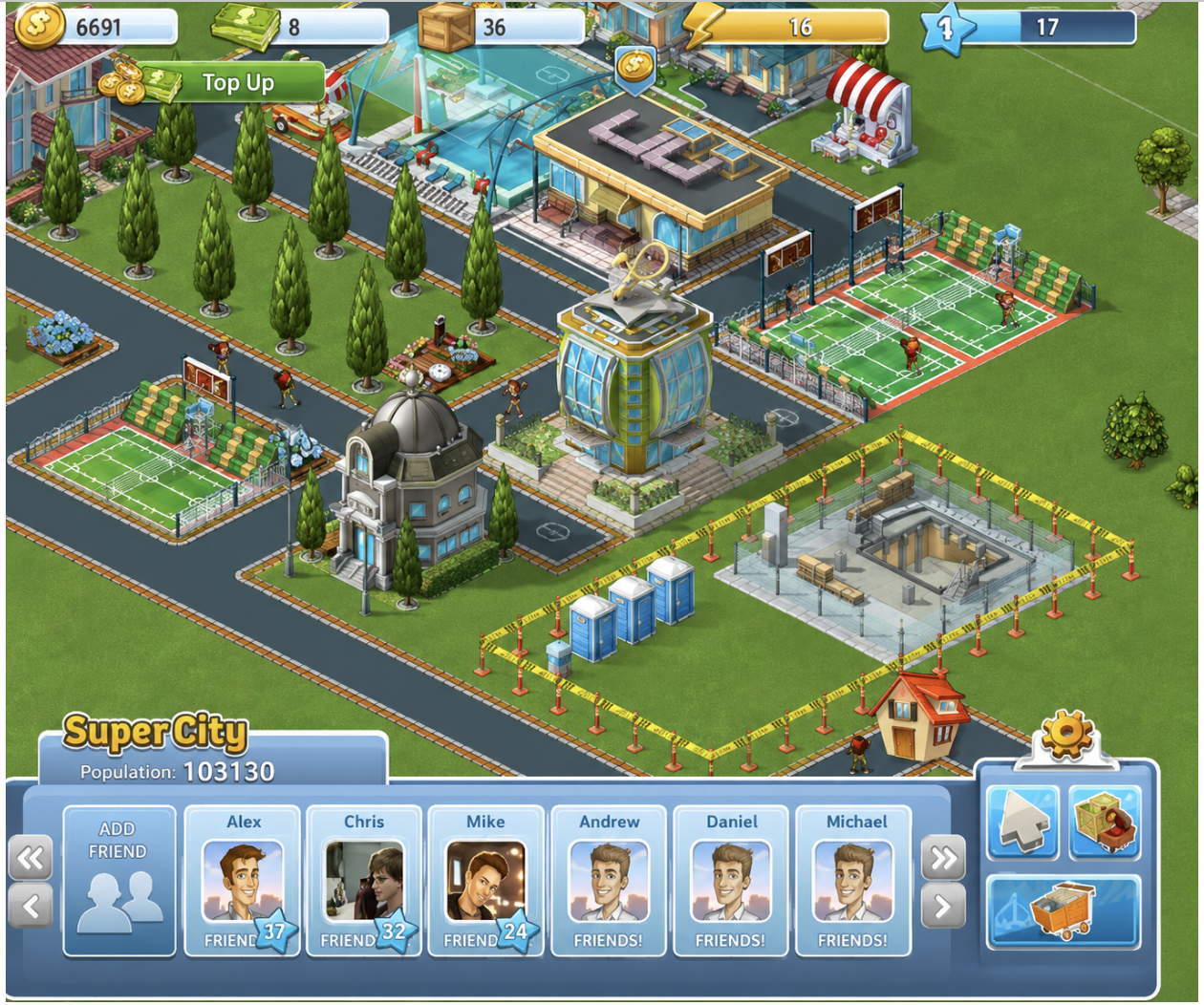
SuperCity did not originate as SuperCity. The initial concept was called SportVille, and its English version was Fitness City. According to the team’s recollections, the idea came to Playkot’s founder Alexander Pavlov during a workout: to create a city entirely dedicated to sports, with stadiums, clubs, and themed activities.
No sooner said than done! Within just a few months, the new game saw the light of day. Early playtests revealed that a single sports theme was insufficient. Players didn't understand why they should only build stadiums and why their capabilities were confined to one idea. The team quickly pivoted the project towards a more universal city concept. From the initial concept, only certain buildings, stadiums, resource cycles, and characters remained, eventually evolving from sports archetypes into the first residents of SuperCity.
With the new name came a more significant decision—the emotional tone. SuperCity was conceived as a kind world where truly dark stories don't exist, and challenges conclude happily. Aliens, yetis, a dinosaur, or the Loch Ness monster might appear in the game, but the player's task isn’t to defeat them but to understand what happened and offer help.
This approach marked SuperCity's first distinction from the myriad of social farms and city builders of the early 2010s. Much of the market was based on repetitive economic cycles: produce a resource, transform it, and invest in the next upgrade. SuperCity rendered the basic cycle more meditative and added "superstories"—quest chains about helping characters. Players didn't just expand the city; they turned potential "monsters" into neighbors.
First Growth and the Problem of Success
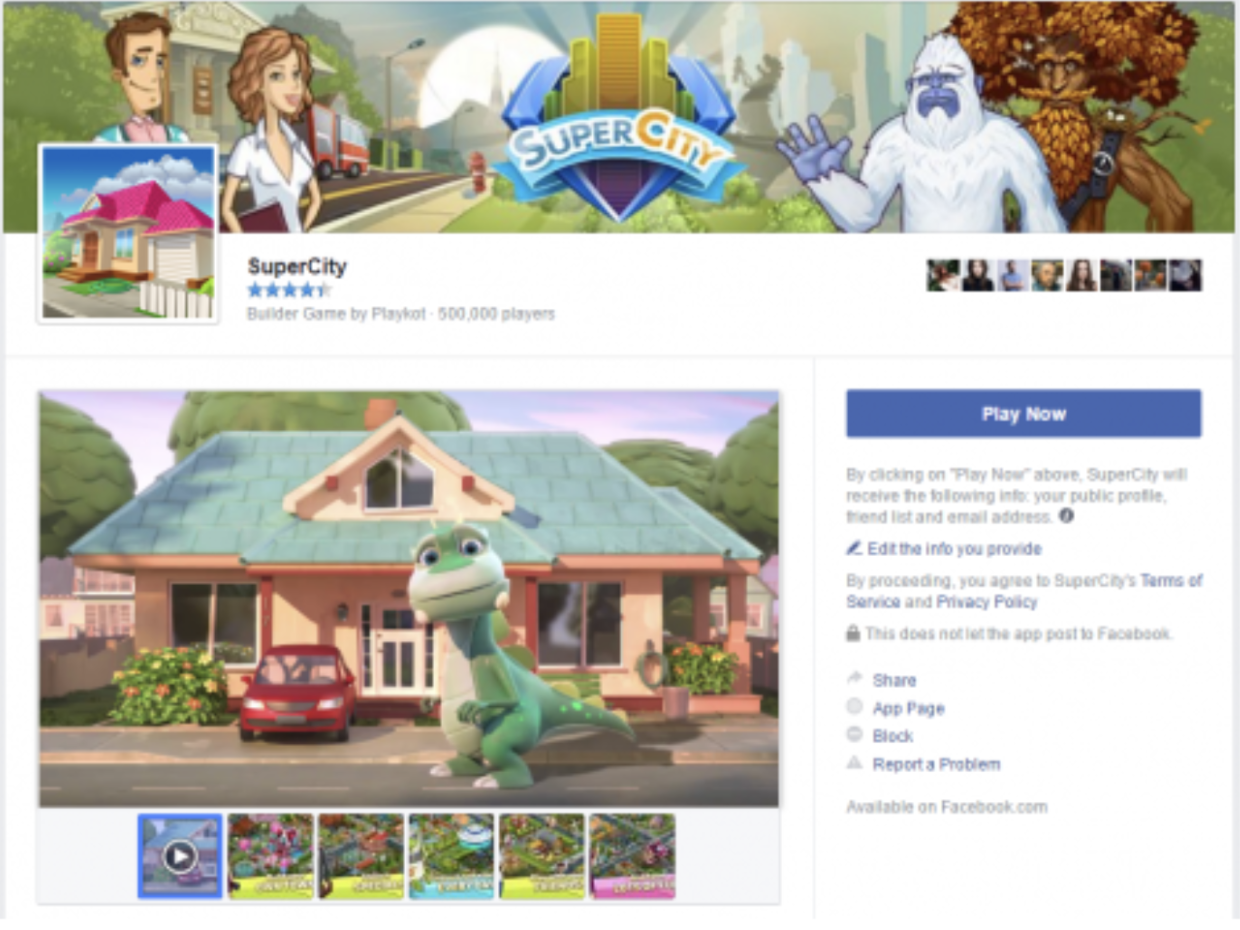
The Facebook launch in 2014 was a moment of international growth for the project. SuperCity received industry recognition as one of the best new social games of the year, and the project’s popularity led to advertising integrations with major brands: their buildings became part of players' cities.
But the scale quickly caused a new problem. The audience consumed content faster than the small team could produce it. Developers had to establish regular supply cycles, expand the team, and gradually transition to what today would be called a full-fledged LiveOps model.
This model worked for several years, but by about 2017, the project faced two immediate threats. Players learned the repetitive mechanics, and the social gaming market rapidly ceded to mobile. Simultaneously, the end of Flash support—the technology on which the game was built—was approaching. For many browser-based projects, this was the point of closure.
There was also internal uncertainty about whether SuperCity would survive this transition. However, instead of gradually winding down the product, Playkot continued to invest in it. The game migrated from Flash to HTML5, the team boosted analytics, and began making more data-driven decisions: observing what truly engaged players, developing parallel game cycles, and investing not only in new offerings but also in new modes.
This period is crucial for understanding the entire subsequent history. SuperCity became an evergreen product not because it once found an error-free formula. Conversely, the sentiment that the game would "always be there" emerged after several crises. Continuing each time demanded the team's faith, investment, and a willingness to adapt the product with the market.
Expeditions as the Second Layer of Gameplay
The most successful product hypothesis emerged at the turn of 2019–2020.
The team re-evaluated the core gameplay and introduced expeditions—separate storyline adventures with their own maps, tasks, and progression.
According to Lera Fedorova, this was not just another event but a second deep layer of the game. Expeditions significantly impacted long-term revenue, prompting the team to develop the format: altering durations, testing new types of maps, and transforming the experiment into a sustainable product part. The first variant of the mechanic was assembled by a dedicated team in about two months; subsequently, SuperCity’s experience became a source of inspiration for a separate expeditionary game, Spring Valley.
Another successful hypothesis was the suburbs—a re-playable location for high-level players. They restore villages and gather resources for the main city. Such a layer addresses a typical problem for mature content games: the most active users quickly "consume" large updates, and endlessly increasing the volume of manual content is too costly. The suburbs engaged the audience between major releases and became a stable income source, requiring almost no constant reworking.
How a City-Builder Became a LiveOps System
In the early years, SuperCity was primarily a city-building game. As long as players had enough basic content, a rich event calendar was unnecessary. A full-fledged LiveOps model began forming when part of the audience reached the end of the available progression.
Today, the calendar is organized as a system of various temporal rhythms. It features a long primary event, accompanying gacha activities, short offers, one-day mechanics, and monthly cycles. Even periods without major events are planned in advance as "rest days," where players can check in for offers but not engage in an intense leaderboard race.
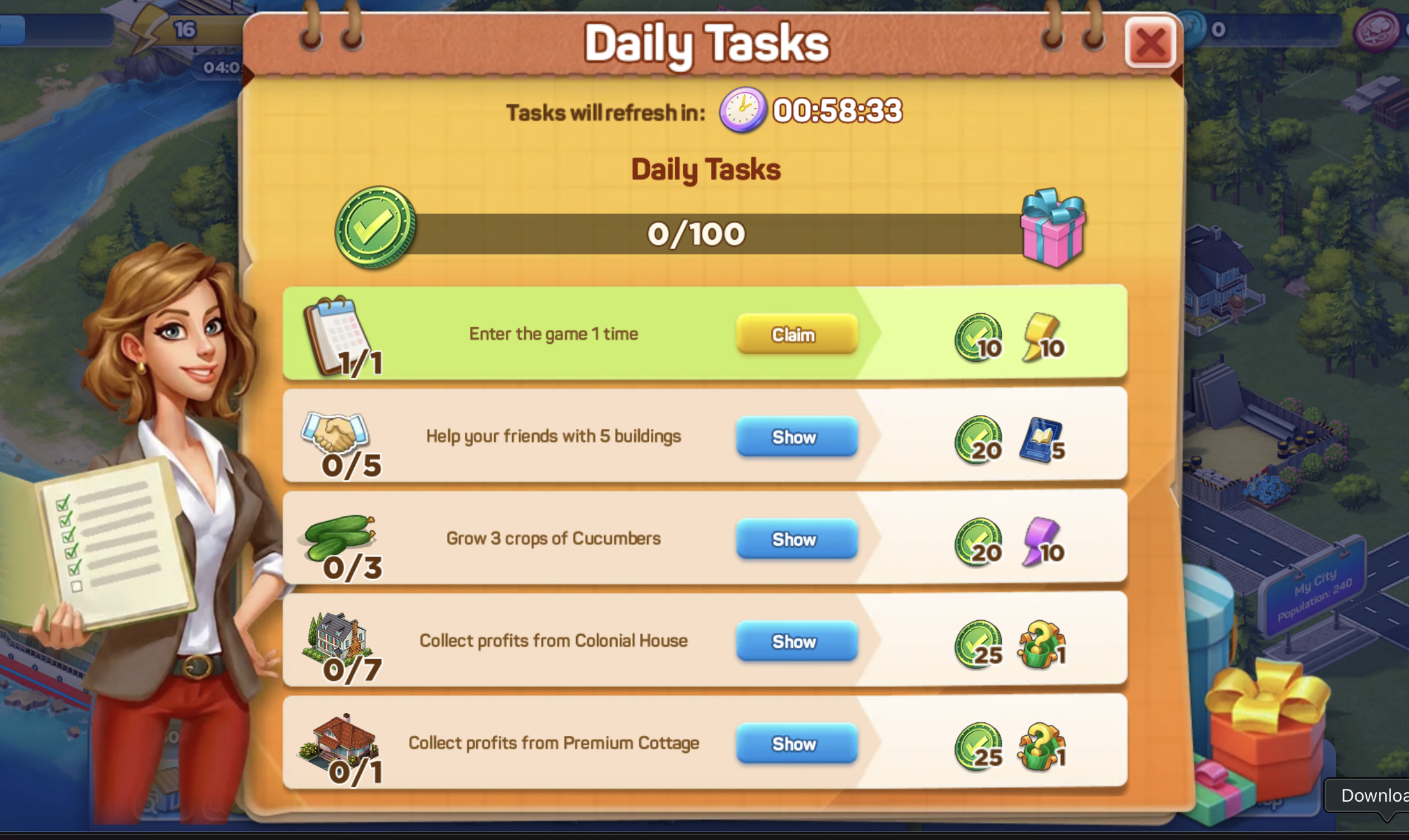
Where previously the game might have had two events a month with long pauses between them, the studio now releases as many as 15 releases a month! The goal is not to fill every minute with activity, but to align the monthly, weekly, and daily rhythm with audience habits. This calibration did not result in a single explosive leap but made the project’s results more stable and predictable.
An Audience That Grew Up With the Game
In 15 years, part of the SuperCity audience has virtually aged with the project. Many people play for years, and some remain since the launch. For them, the game has long ceased to be just entertainment: it’s a familiar space where they relax, socialize, and maintain relationships with other community members.
According to Lera Fedorova, players used to value novelty and a constant stream of impressions more. Today, for many, SuperCity has become an "island of tranquility" and a set of familiar rituals. The new audience also comes not only for city building: expeditions and story adventures attract those who value narratives.
These habits directly influence development. Unlike many mobile games, activity in SuperCity can be higher on weekdays: part of the core audience spends weekends with family and meets friends in the game on working days. Events and releases are tailored to this schedule.
The team also considers interface features: contrast, font sizes, button placement, and payment actions' clarity. For a mature audience, understanding whether an action is paid or free is especially important. An unexpected change in a familiar pattern can not increase conversion but destroy the trust built over years. Therefore, their internal development formula often looks like 70%–80% familiar experience and 20%–30% new.
Why a 15-Year-Old Game Cannot Simply Be "Supported"
The word "support" creates the impression that a mature project only needs to be kept from breaking and regularly filled with content. In the case of SuperCity, this would mean a gradual fading away. The game competes not only with other city-builders but with the entire entertainment market—from contemporary mobile games to streaming services and short videos. To earn the audience's time, the product must continue to evolve.
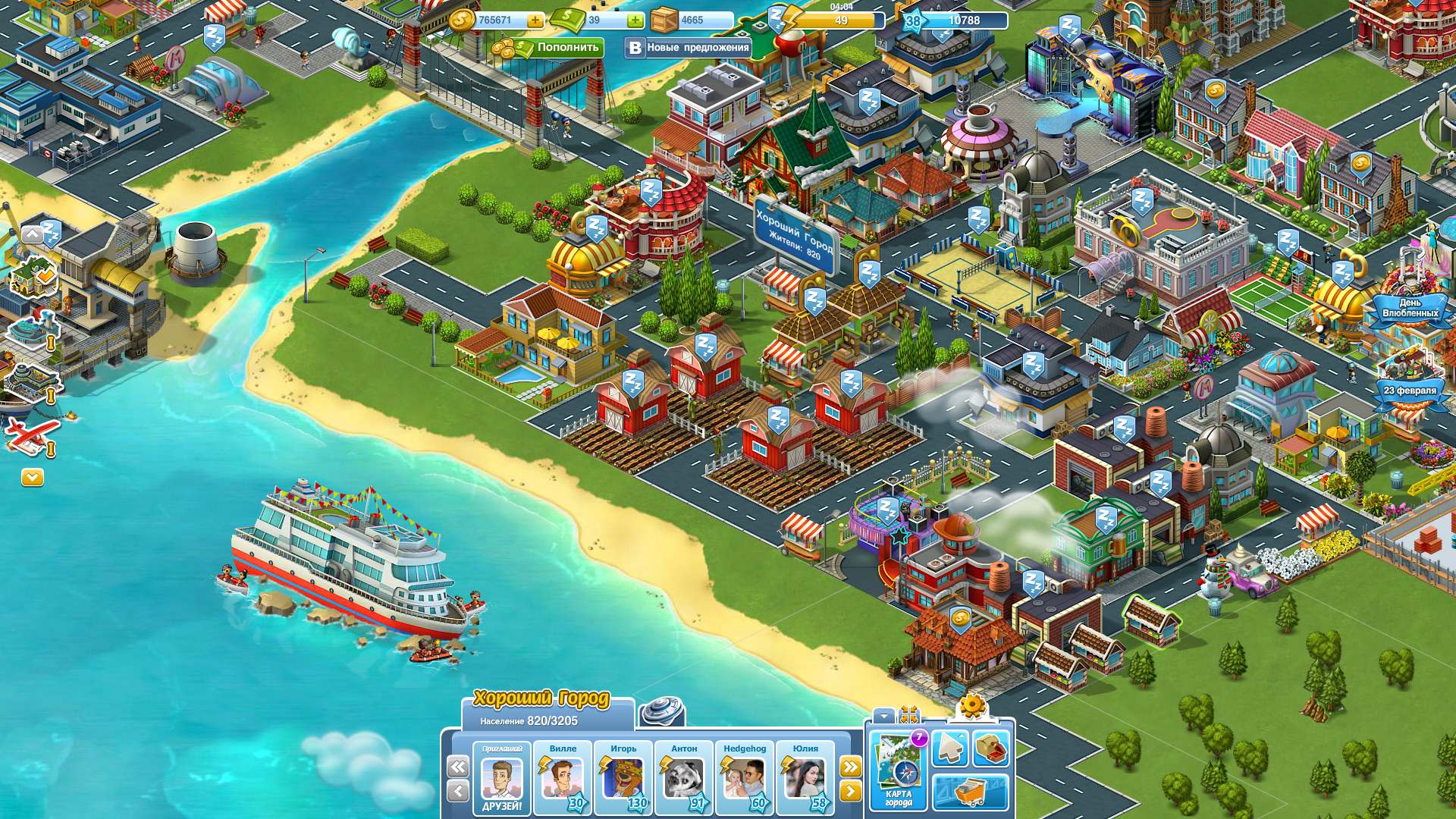
Meanwhile, age creates complexity at every level. The game has accumulated over a thousand architectural objects; the team needs to find new landmarks, consider preferences of different countries, and ensure rewards remain valuable. Land in the city is limited, so large buildings cannot be endlessly distributed. Production also had to be restructured: unique expedition maps were replaced with modular biomes, which proved cheaper and even better received by players.
The game's economy follows a similar path. Over 15 years, the game has seen inflation, numerous currencies, and resources valuable for newcomers but nearly useless for high-level players. Restoring the balance of the main hard currency took about a year and a half: the team simultaneously adjusted the sources of its inflow and spending methods. Denis Adlerberg jokingly calls this process the "SuperCity Central Bank mode," but behind the joke lies an important principle: in a mature game, there rarely exists one "killer feature" capable of solving a systemic issue.
The Next Chapter: Not Feats, But Constant Evolution
The next phase of SuperCity's development is associated with abandoning the model where a significant product "feat" is needed every half year. Instead, the studio wants to establish a manageable flow of small but meaningful changes: improving existing modes, updating monetization, quickly transferring suitable practices from mobile games, and systematically working on quality of life.
A crucial area remains the return of former users and finding a new audience similar to the current core. Reactivation delivers results, but its potential is limited: a single player cannot be endlessly brought back. Therefore, the long-term task is to learn to identify more precisely the people for whom SuperCity can become such a familiar space for years.
Big ideas are now tested through small MVPs. If a new mechanic resonates with the audience, the team quickly spreads it across the game. This happened with the ability to choose the desired reward: initially tested in separate offers, after a positive response, it was integrated into many gacha-events and other systems.
Behind the $100 million in revenue and 15 years of SuperCity's life lies not just one successful mechanic. It's thousands of decisions about what to preserve, what to change, and where to resist the temptation of a sharp update. The game endured platform shifts, the death of Flash, multiple team generations, and audience transformation.
Its story demonstrates that an evergreen product is not a game that once became successful and then refused to die. It’s a product that learns again and again to stay true to itself in a changing world.