
Unlike mobile, on Steam, economically attractive options have long been deckbuilders with roguelike elements rather than CCGs or digital adaptations of classic card games. However, after analyzing metrics from several categories, we arrived at some unexpected conclusions. What does the card game market look like today? Find out in our detailed benchmark.
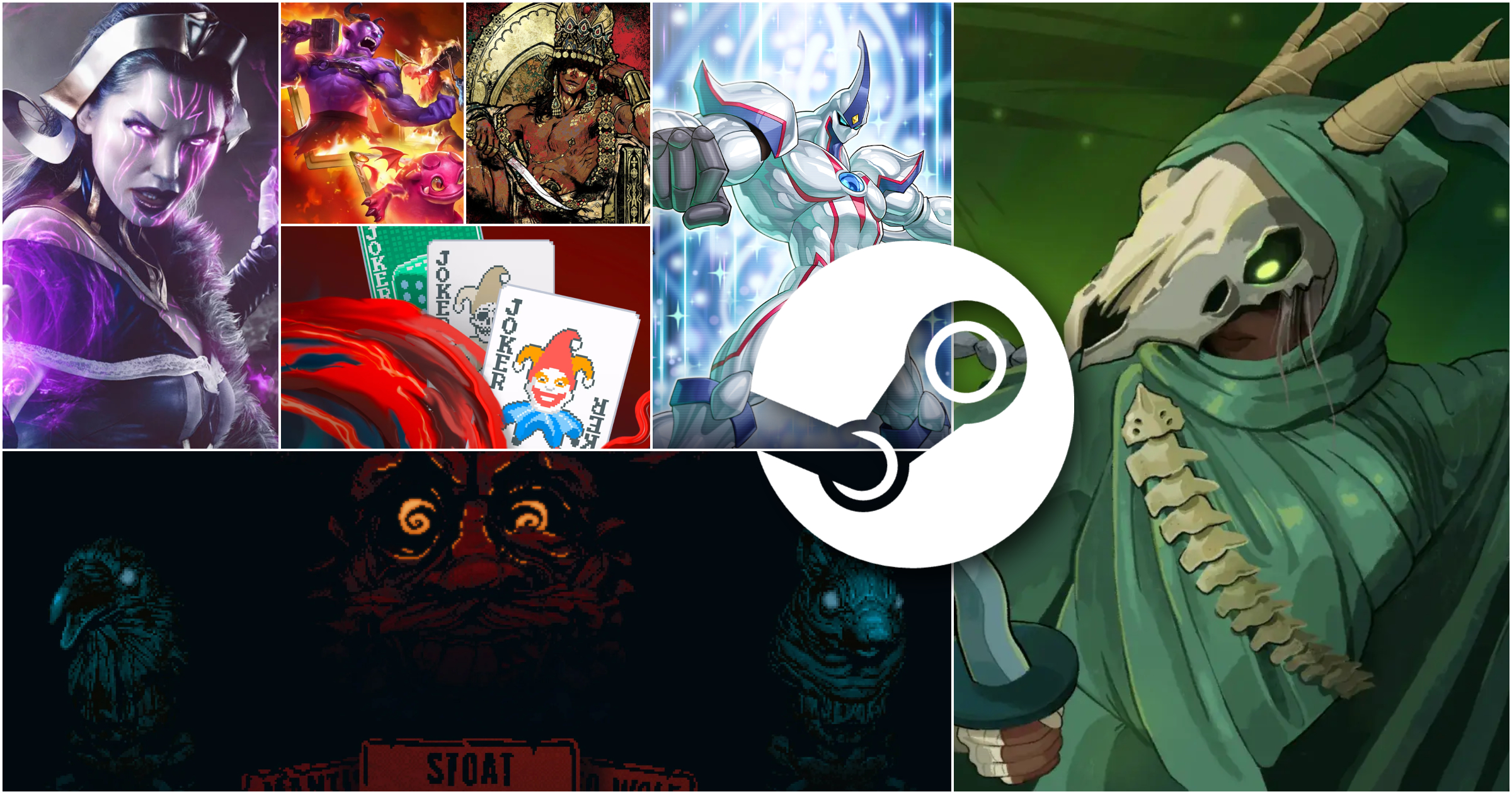
Genre Boundaries: How Diverse is the Card Game Market in Terms of Categories?
Today, card games encompass a broad spectrum of projects. These include digital adaptations of classic CCGs, roguelikes, full-fledged RPGs, and simulators.
The one unifying factor across these different genres is the central role of cards in gameplay. However, merely having cards (or their equivalents) does not suffice to classify a game in this market segment. Cards must be fundamental to the game cycle, determining the actions available to the player and directly influencing decision-making processes.
Initially, we planned to focus on just one segment, but we immediately encountered several issues. First, a single project often merges multiple genre directions. Second, some categories lack sufficient data for a comprehensive and compelling analysis. In the case of CCGs, for instance, limiting the study to Steam is inadequate because their audiences are often spread across multiple platforms (mobile, standalone clients, web).
Based on core gameplay features, session structures, and progression types, the broad segment of card games today can be divided into six key groups:
- Collectible Card Games (TCG, CCG) — projects centered around collecting cards, constructing decks, and mainly competitive PvP battles (Magic: The Gathering, the Yu-Gi-Oh! franchise, Gwent, Marvel Snap);
- Card-Based Roguelikes (Roguelike Deckbuilders) — games where decks are formed and refined during individual runs, with replayability achieved through card variety, their synergies, and strategic elements (Slay the Spire, Monster Train, Balatro);
- Card-Based RPGs and Turn-Based Tactics — here, cards are integrated into the combat system, potentially replacing perks and active skills, and a narrative campaign is an integral part of such projects (Thronebreaker: The Witcher Tales, loosely speaking, Marvel's Midnight Suns);
