Despite the delay, we've compiled a detailed report on the gaming stock market situation for the first half of the year. Inside, you'll find a wealth of data and illustrative tables highlighting macro trends and the situation in specific countries. As usual, we'll also discuss the reasons behind certain crises.

Note:
- All data on changes in capitalization and stock prices are current as of July 30, 2026 — at the time of this article's publication, some indicators have changed, but not significantly;
- The phrase "since the beginning of the year" describes percentage changes from the close of trading at the end of 2025 (late December) to the present day (July 30, 2026);
- For consistency, figures like capitalization and stock prices in general lists have been converted to US dollars at the current exchange rate;
- For convenience, some terms are abbreviated — for example, YTD (year-to-date).
This summary essentially reflects the trend we analyzed in the first-quarter report. 62% of all tracked gaming companies have recorded a decline in stock value since the beginning of 2026. On a 12-month scale, nearly 74% of all companies are in the red zone.
The average YTD decline in stocks was 8.24%, and the annual decline was 12.88%. The only "safe haven" can conditionally be considered Japan, where the average growth was 6%. Apart from it, only Polish companies averaged positive results in the first half of the year (+2.6%).
Systemic crises are observed in China (average decline of 18.5%), South Korea (-19.8%), and Western Europe — especially in France, where all tracked companies showed significant declines since the start of the year (averaging 39%).
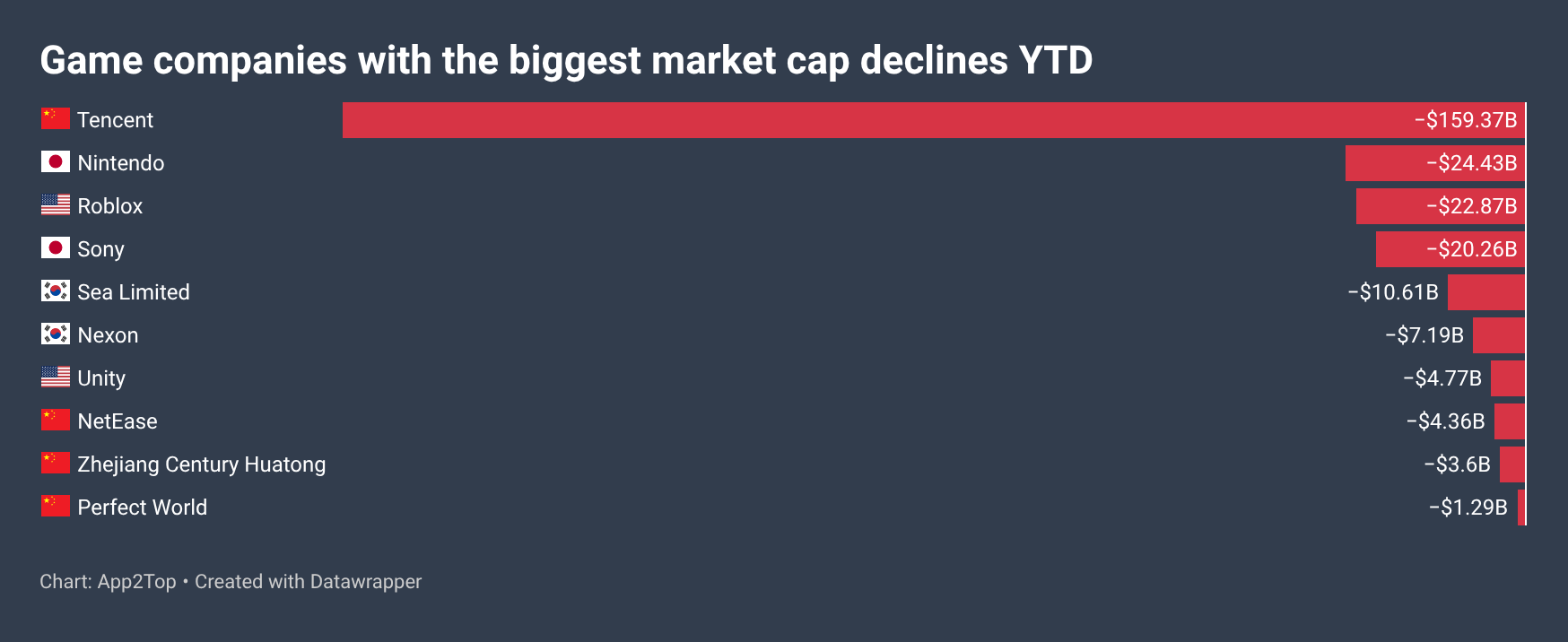
Gaming companies with the biggest market cap declines since the start of 2026 (excluding Microsoft)
