
Already in 2026, we continue to summarize the outcomes of 2025 with gaming (or gaming-related) teams and experts. This time, the editorial team spoke with Nikita Bokarev, Head of Business Development at Yandex Games.

How was the year 2025 for your gaming platform from a business perspective?
We surpassed the mark of 50 million active players per month and achieved a 10% growth compared to 2024. Our main focus has entirely shifted toward the quality of games and the service overall.
Thanks to this, developer revenue from in-game purchases has already increased by 75% compared to 2024.
In summary, we're growing by enhancing content quality and the spread of in-game purchases.
How did the platform change from a product perspective over the past year? Why were specific changes implemented?
All changes on the platform occur because we want to provide long-term value to players and sustainable income growth for developers.
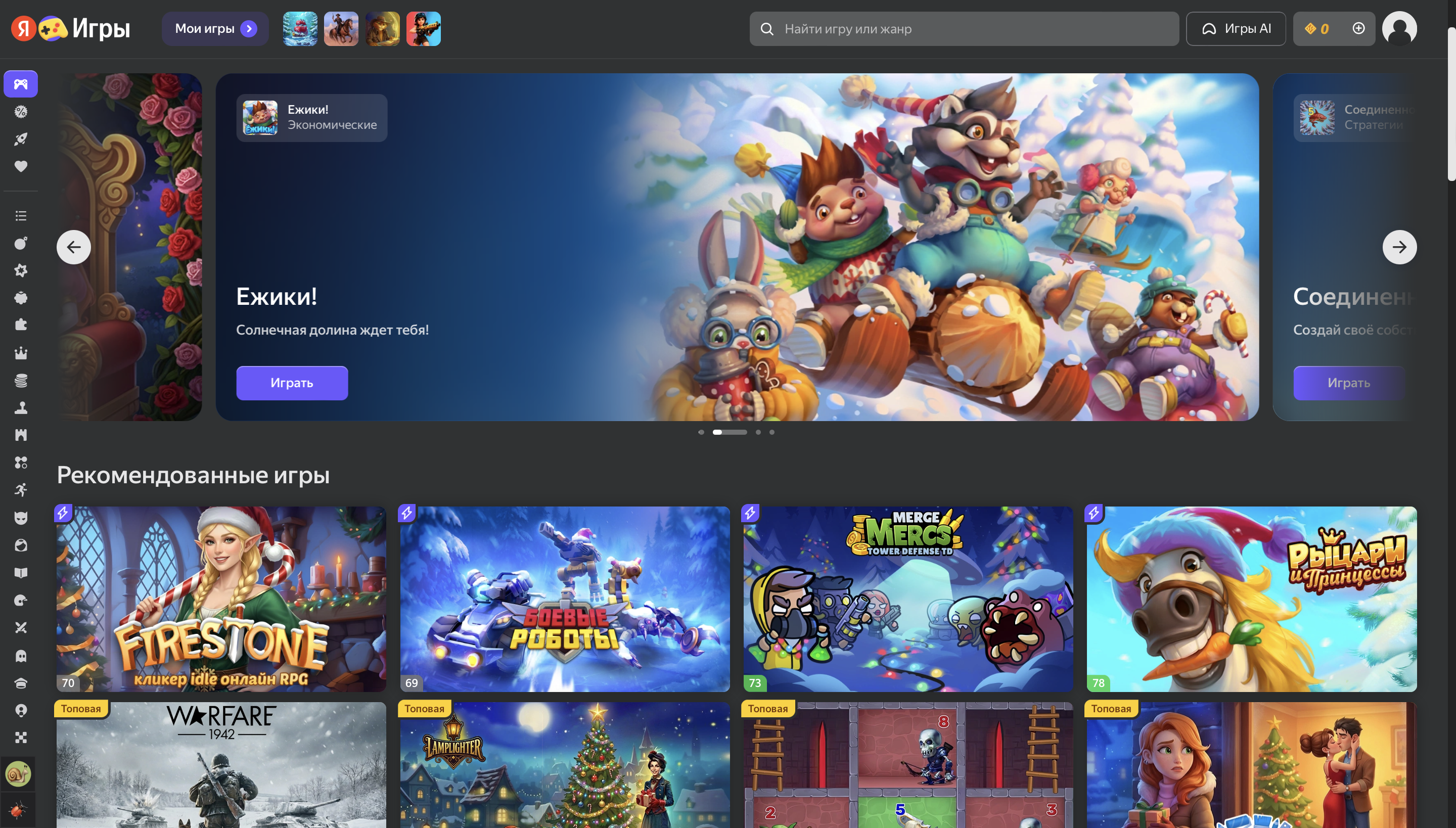
We reworked and improved recommendations so players can quickly find "their" game, and developers can find their target audience. But if that's not enough, we now have an AI assistant that helps players discover interesting projects.
The main page of the service is going to have a bright future: for now, we've changed the design and interface and started paying more attention to gaming events and LiveOps.
The number of games on the platform has decreased because we introduced a new game evaluation algorithm and removed about 10,000 unpopular projects with low ratings from the catalog. Currently, there are 19,000 games in the catalog: in total, we published 24,000 games over the year and removed 29,000. Meanwhile, we observe a stable increase in the number of casual and midcore games.
We are still open to a variety of projects, it's just that the quality bar has been raised.
What key changes occurred on the platform in terms of products represented/market trends/genres?
The major trend in 2025, observed through our own data, is that "midcore" entered the top 5 most popular genres on "Yandex Games". Currently, the platform successfully hosts heavier games with deep gameplay, better graphics, and hybrid monetization.
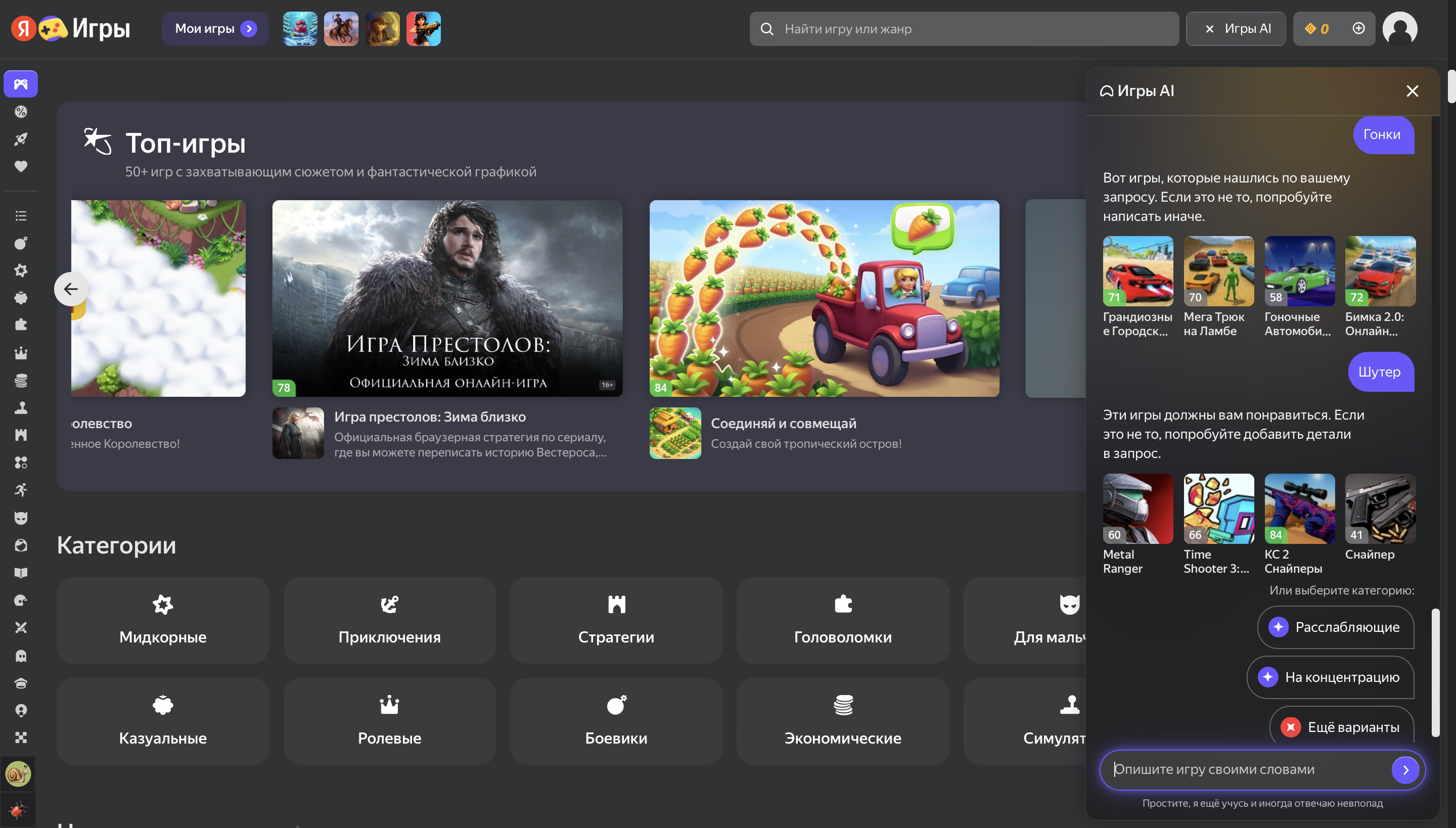
The trend towards cross-platform capabilities and porting mobile hits (which we noted in 2024) has fully formed and been confirmed. We see an influx of games that were unimaginable on the web just a few years ago.
These include strategies, deep RPGs, and complex simulators. Studios like Red Brix Wall, TAPCLAP, HeroCraft, VIZOR Games, and Helio Games have brought projects to the platform that redefine the possibilities of the browser. Their success proves that the web audience is ready for long-term projects and willing to spend money on them.
Did player behavior change in 2025?
Yes, player behavior continues to transform alongside changes to the platform.
We see the average playtime increasing, confidently approaching 60 minutes. Players consciously engage in particular projects, which they are deeply immersed in, rather than choosing random hyper-casual games for short sessions.
Payments have become a routine part of the gaming experience, as confirmed by the players themselves. They purchase bonuses, boosters, passes, or customization elements. The web has definitively become another full-fledged gaming platform for them, where monetization systems are often indistinguishable from native mobile apps.
What trends within the platform do you anticipate strengthening or emerging in 2026?
We expect the strengthening of all trends that emerged in 2025.
- Dominance of hybrid monetization. The share of payments will only increase. The "ads + in-apps" model will become standard for projects of certain genres on the web.
- Genre diversity. More games from genres that are currently rare will come to the web: fighting games, online shooters, large-scale strategies, complex RPGs, co-op games, and others.
- Technological breakthrough. With engine advancements and WebGPU support, the boundary between the web and native platforms will continue to blur.
What can we expect from the platform in 2026?
We will continue to make the platform more technological and convenient for developers, making it easier to launch on the web. Expansion and enhancement of tools that help manage games and influence their success are planned.
We will continue to develop and scale the midcore games segment with in-game purchases. This is our strategic bet, and we see that the market is heading in the same direction.
And most importantly, we will continue to work closely with our developer community.