
New content in the “Investor/Publisher Wanted” section. Yerevan-based Grim Future Studio is looking for a partner for their turn-based role-playing game, The Iron Jest. The team needs about $50,000 for production up to early access and another $22–25,000 for marketing, unless the partner takes on promotion responsibilities. The studio's founder, Oganes Martirosyan, shared details about the project.
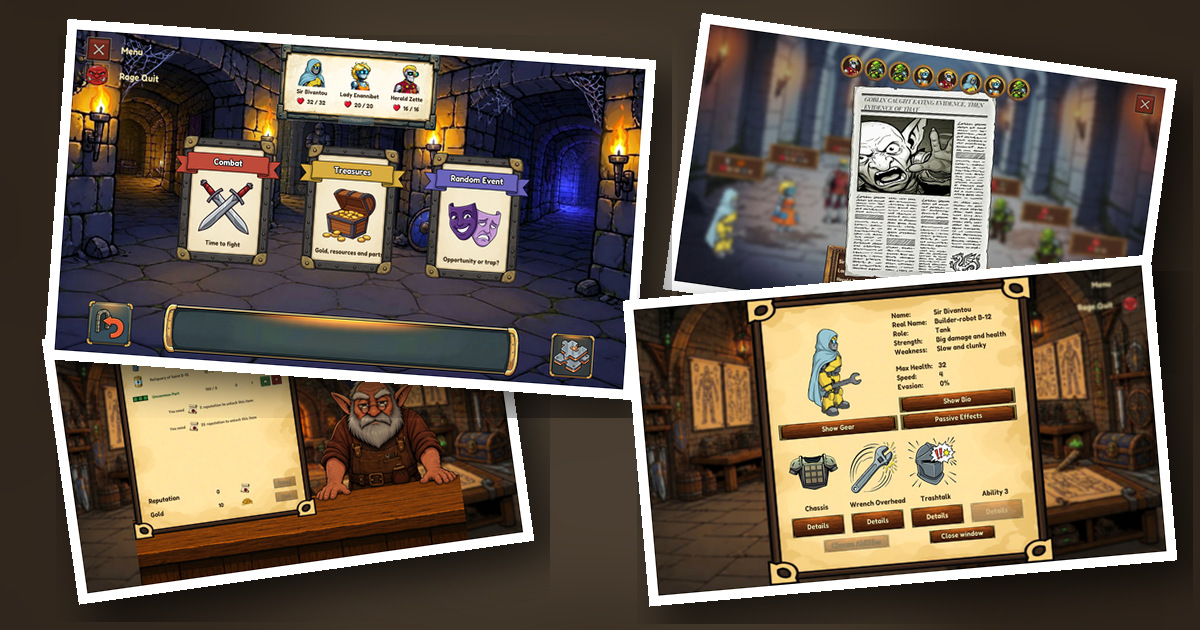
Project Overview
- Genre: turn-based roguelite and dungeon crawler with a spatial puzzle;
- Platform: PC (Steam, Epic Games Store);
- Engine: Unreal Engine 5, game coded in C++;
- Status: core systems are ready, there’s a playable build, graphics are still placeholder;
- Business Model: premium, early access — October 2027, full release — 2028;
- Request: approximately $50,000 for production up to early access and an additional $21,000 for marketing if the partner is not the publisher.
About the Team
My name is Oganes Martirosyan, I am the founder of Grim Future Studio and the lead developer of The Iron Jest. I've been in the industry for six years, spending most of that time as a game designer. I started as a junior game designer at Cyber Mantis and began working with Unreal Engine in 2020. Then, I created mobile games at Noor Games, worked on gameplay for action-stealth on UE5 for PC and consoles in the Kingdom of Ani project, and since 2025 I was the lead game designer at Pharsalus Games, releasing another five games there. I have a total of eight mobile games and one game on Steam under my belt.

Oganes Martirosyan
The music and sound for The Iron Jest are composed by Benjamin Decre, a composer and sound designer from France. He works for a share of the game's revenue.
I started working on my own projects in 2024 with Witnesses of War — an immersive first-person stealth and survival game dedicated to civilians caught in war. I built the first prototype in August 2024. Next came Dropkick Rick, a comedic visual novel about an overconfident wrestler. I led it from concept to Steam release in six months, self-publishing it on September 30, 2025. The game had its own budget, and I led a team: a writer from Family Guy, an artist from Marvel, and voice acting in three languages. While Dropkick Rick didn't become a hit, it allowed me to experience the entire journey from idea to release, including marketing and working with Steam.
Witnesses of War and the horror shooter Depth of Denial are currently on pause. These are large projects with estimated budgets ranging from $860,000 to $2 million. The Iron Jest can be developed up to early access for $50,000, so the studio is currently focused entirely on it.
Grim Future Studio officially opened on August 5, 2026, in Yerevan, where I have lived for four years. Currently, the studio operates on my funds: income from game development courses, sales of Dropkick Rick, and a YouTube channel about games with around nine thousand subscribers.
About the Project
The Iron Jest is a turn-based roguelite about robots aspiring to be knights. The game's structure is closest to Darkest Dungeon: a party, dungeon, turn-based battles. Heroes are upgraded through a spatial puzzle, similar to Backpack Hero. This is complemented by absurd humor in the style of Monty Python.
The idea grew from the old Jurassic Park: Dinosaur Battles (2002). There, dinosaurs were upgraded with "Tetris-like" DNA fragments, but the system was too confusing and poorly matched the genre. Later, I encountered Backpack Hero and Backpack Battles with similar mechanics, but they built the entire game around the puzzle. I combined this mechanic with the formula of Darkest Dungeon. It was logical to incorporate the details into something inorganic, which led to the creation of robots. There's a lot of sci-fi about robots, so I sent them into a fantasy setting.
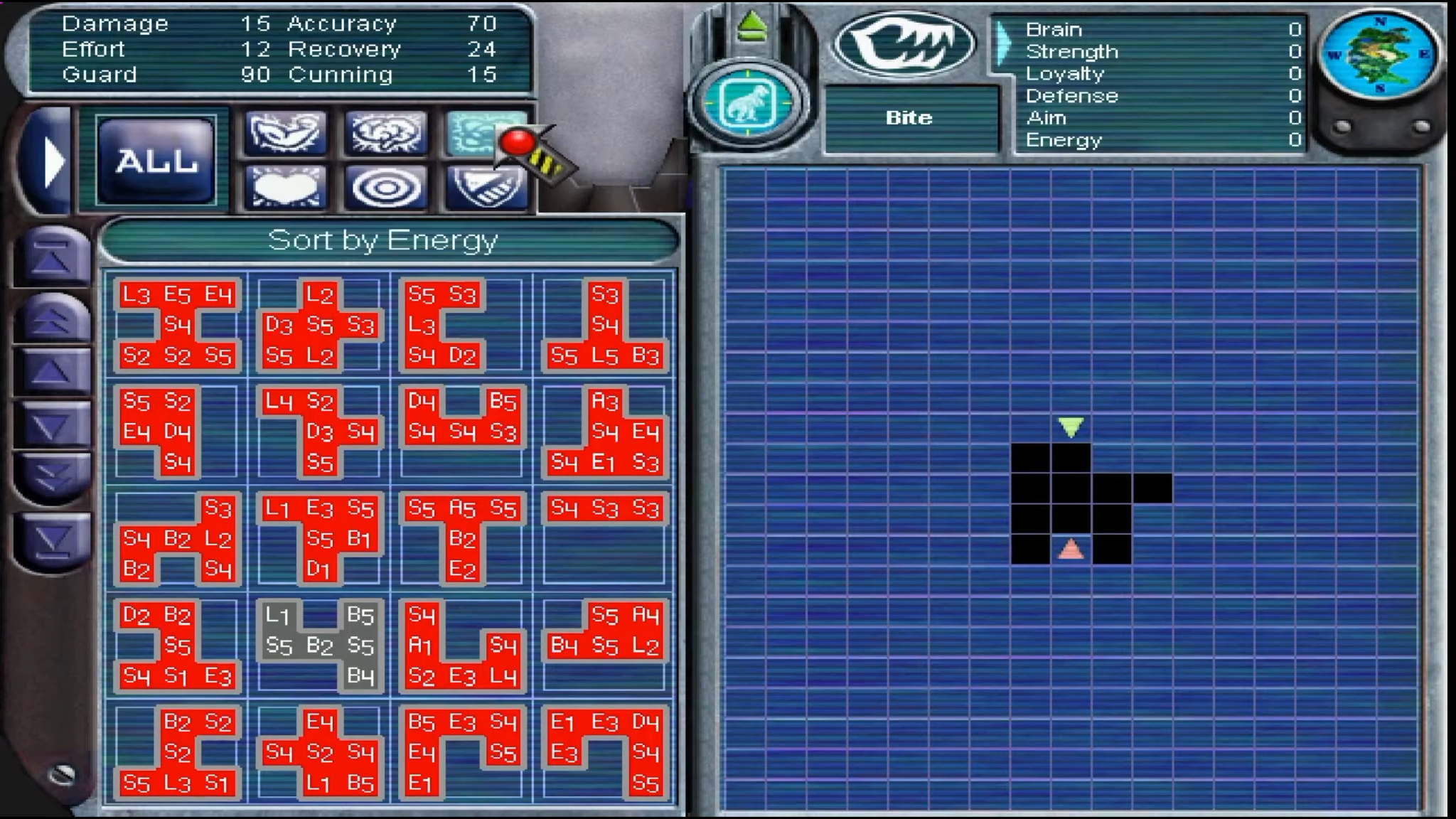
Screenshot from Jurassic Park: Dinosaur Battles (2002)
The game is built on Unreal Engine 5; I have six years of experience with this engine, and switching to another would have been an unnecessary risk. All logic is written in C++, and the interface is done with blueprints.
Development has been ongoing for four months, and in that time, I've personally built all the major systems: combat and turn order, parts grids, run structure, crafting, equipment, upgrades, and character development in the base. Part of the music is already composed, and Benjamin continues to work on it. I showcased a playable build at the Developer Showcase WN Yerevan’26.
The next and main step is art. There's no artist on the team, and currently, the game uses temporary placeholders, some generated by AI. Technically, the game could be released on Steam now, but such visuals would deter players. Therefore, the Steam page will only open with the final art, which will be hand-drawn; animation will be frame by frame.
Besides art, the game needs expansion from one dungeon to a full-fledged campaign and the addition of a storyline. Jokes and stories will be added once a writer joins.
About Gameplay and Mechanics
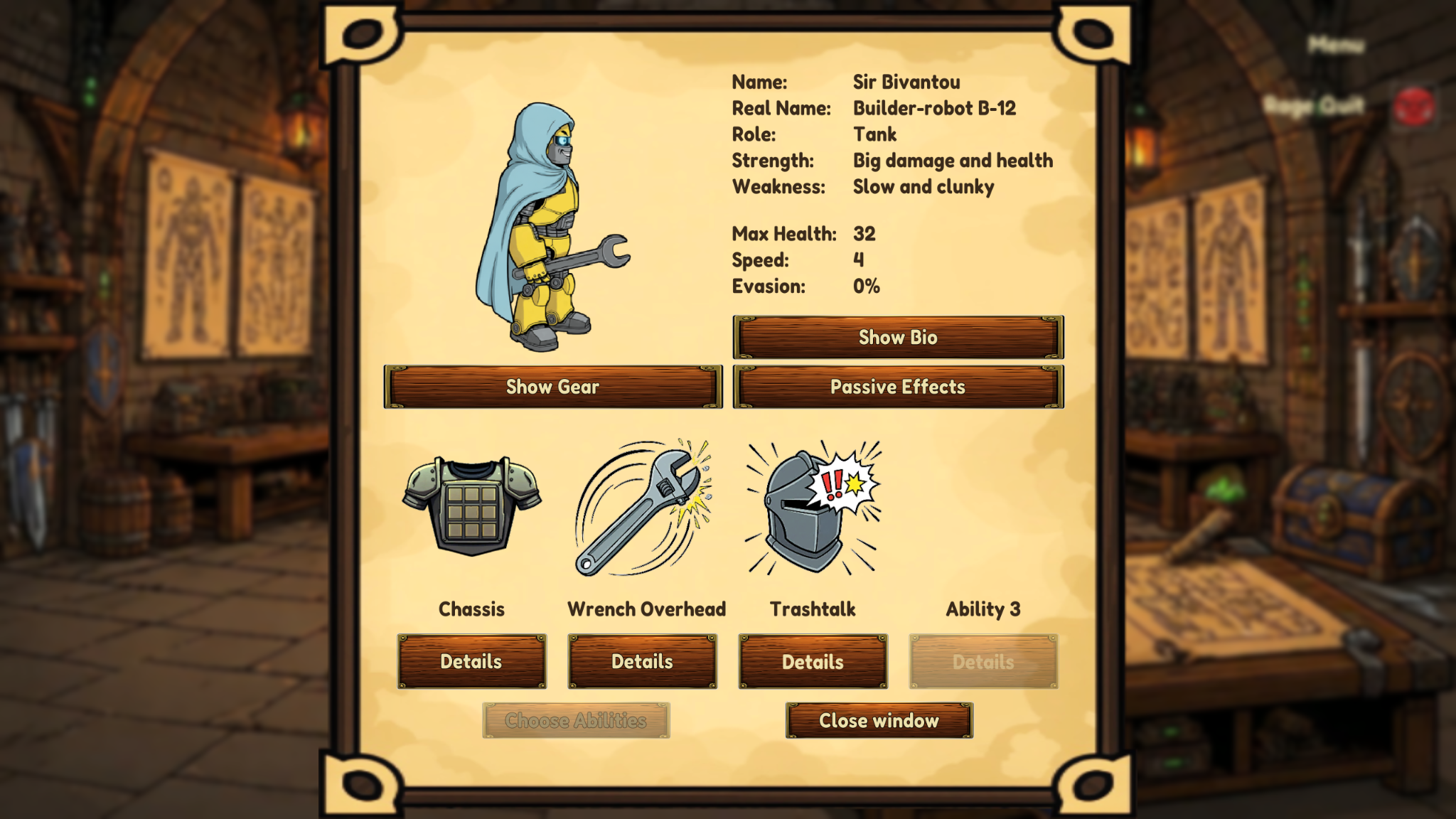
The party consists of three robots, each with their own characteristics, abilities, and playstyle.
- Sir Bivantou, a builder with a wrench, unleashes a wrecking ball on enemies during his ultimate attack.
- Lady Enannibet, a nanny, throws slippers, gives head smacks, and sings a lullaby that puts all enemies to sleep.
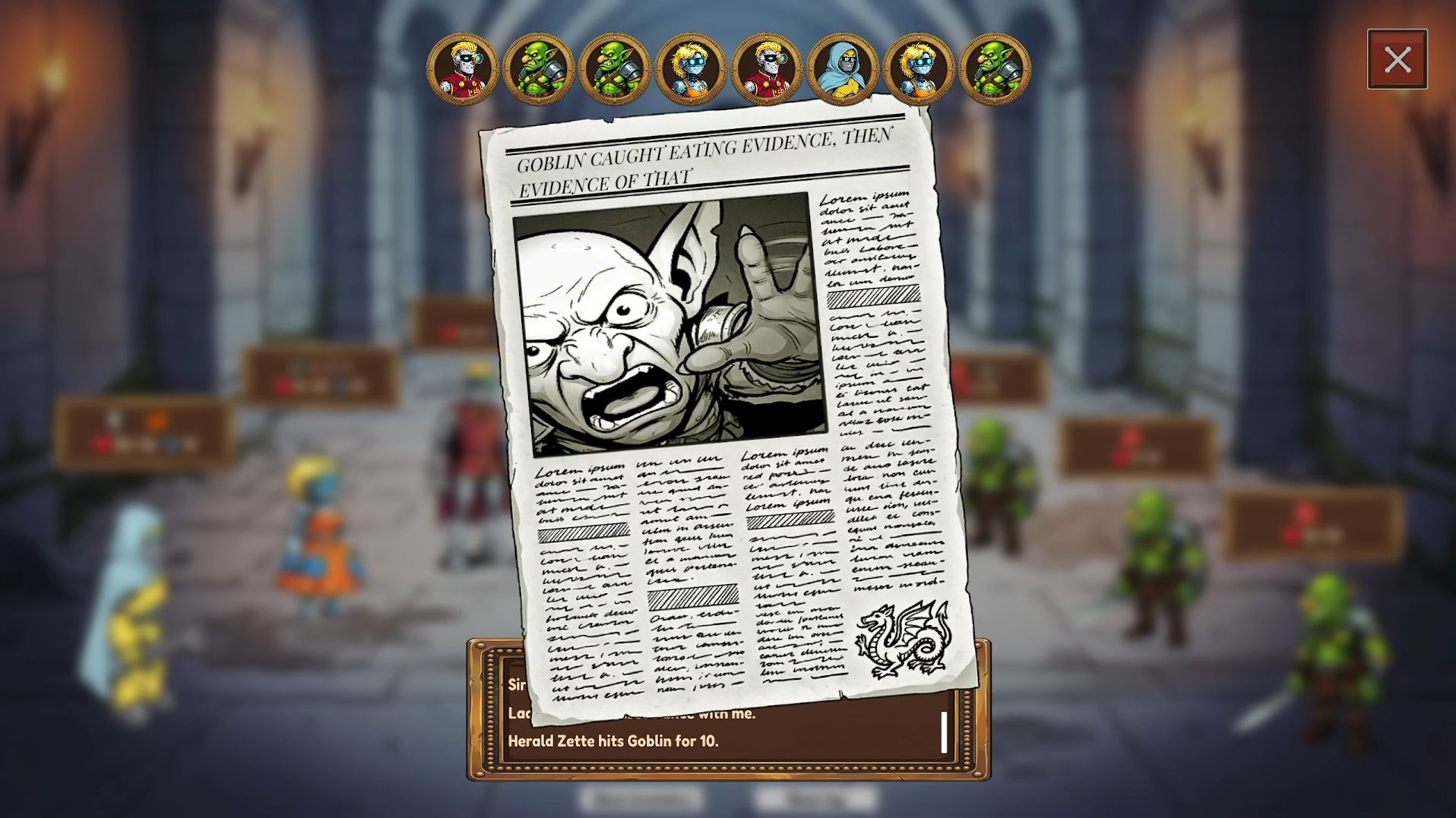
- Herald Zette, a paparazzo, finishes off enemies by exposing them in the newspaper.
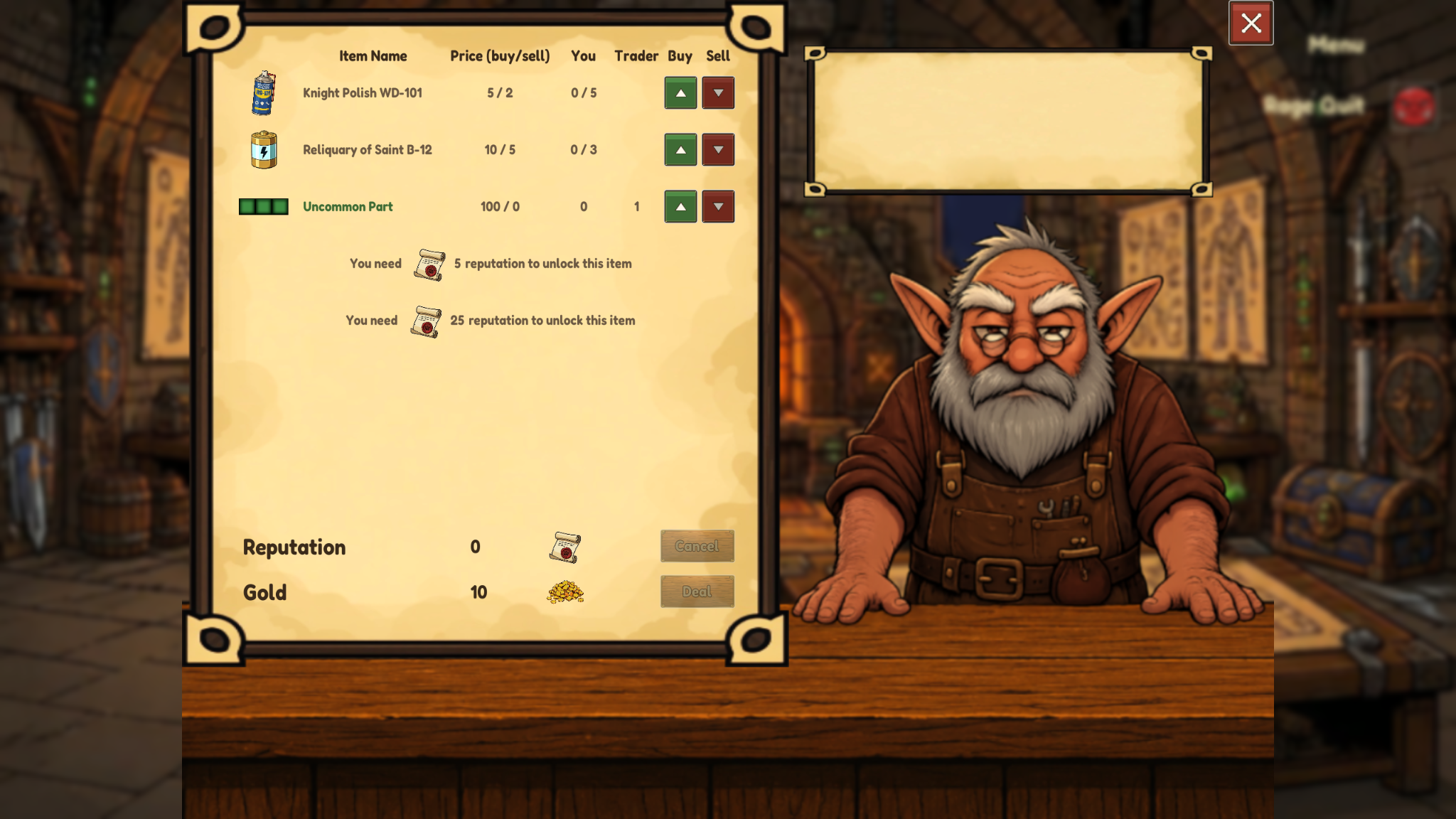
The game begins in the base. Here, the player can purchase consumables, crafting resources, equipment, and parts for robots from a merchant. Unnecessary parts can be dismantled into resources or combined to create new ones.
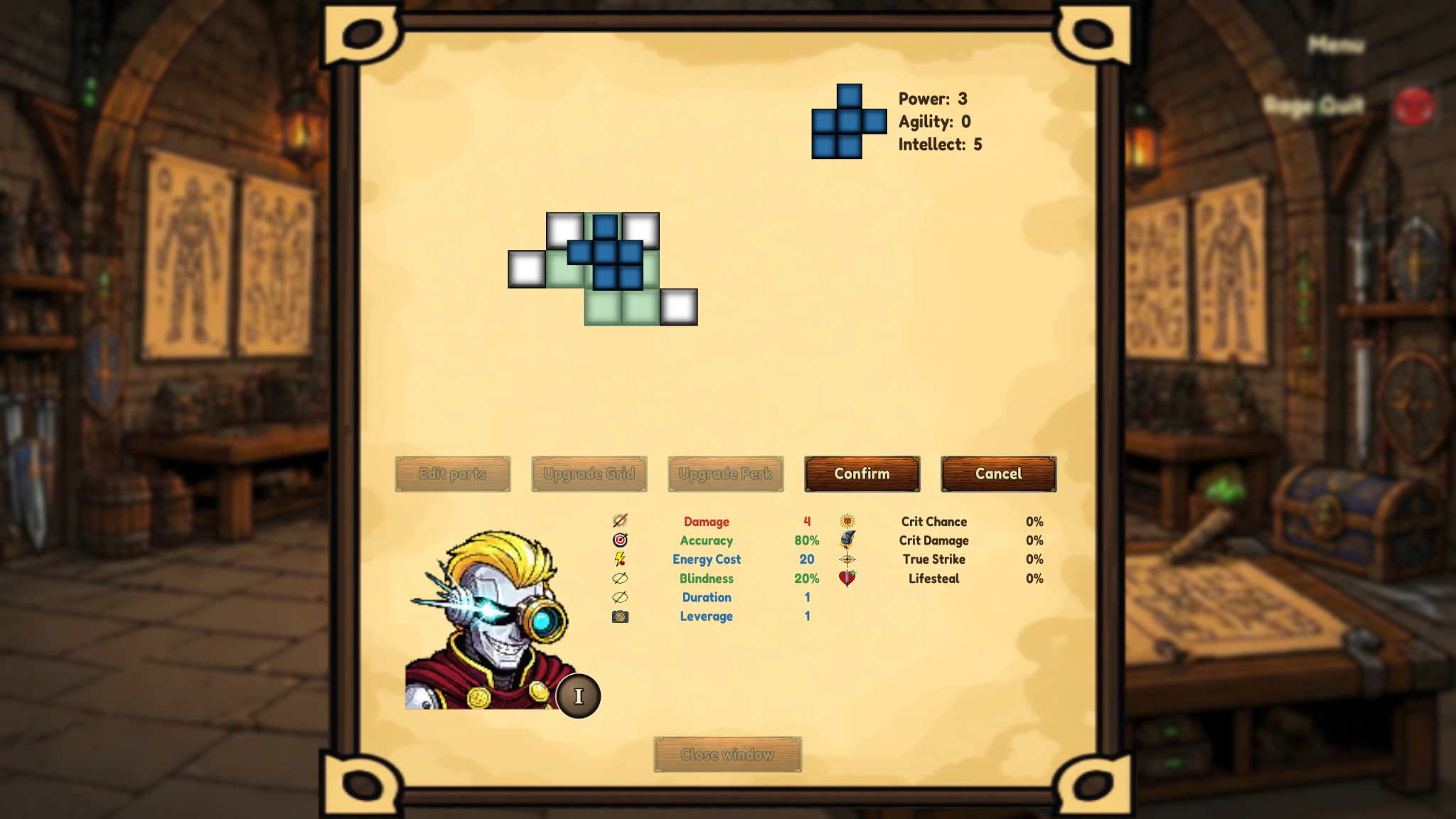
Each part is a piece that the player rotates and inserts into one of two grids: the robot's body or one of its abilities. The grid determines what the part does. Strength in the body provides health, while in an ability it gives damage. Dexterity in the body gives evasion, while in an ability it gives accuracy. A trait that provides fire resistance in the body sets an enemy on fire on a wrench. Thus, with each find, the player decides which of its two functions is more needed. The body grid is regenerated in each campaign and grows as the player progresses.
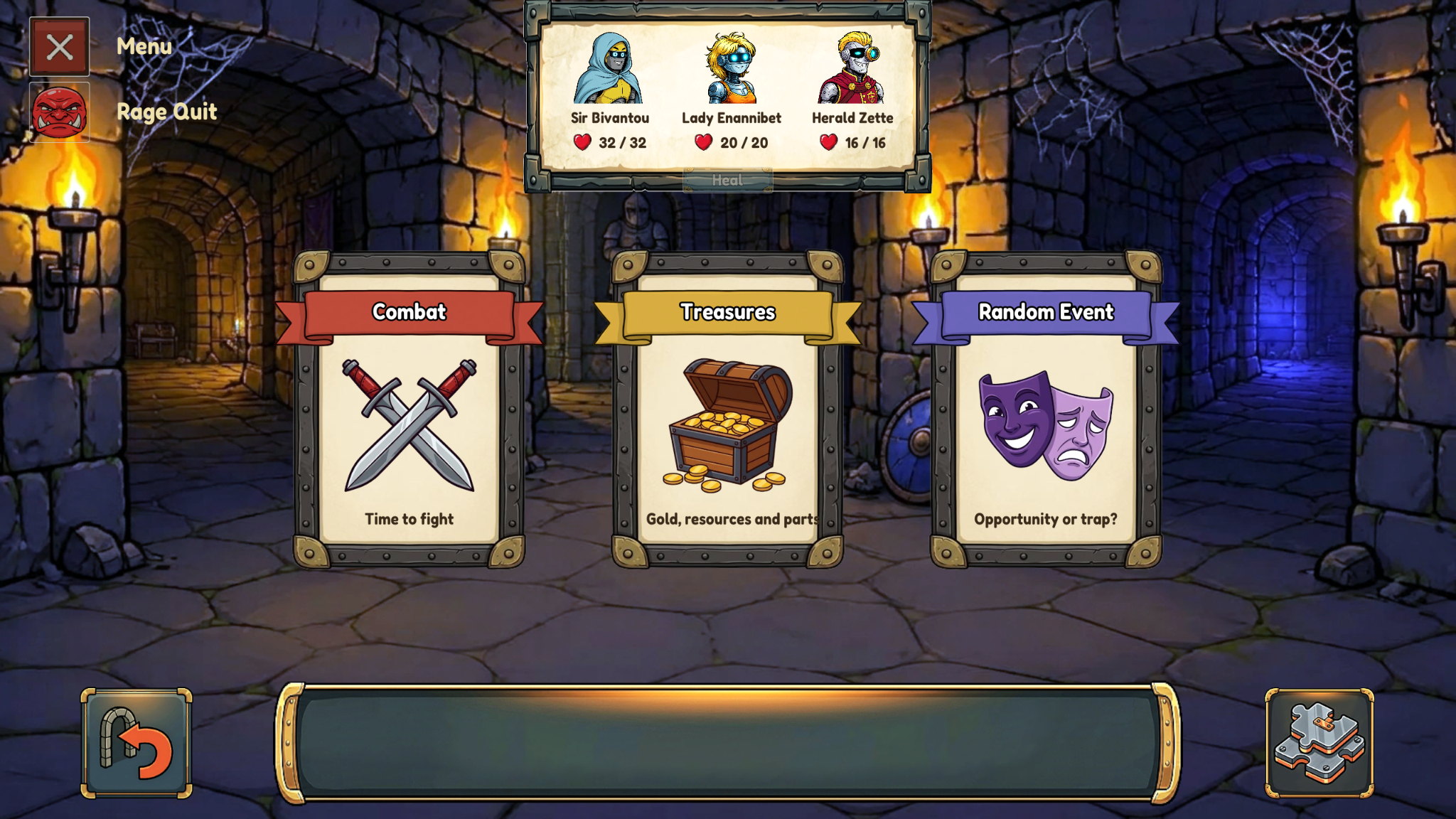
The dungeon is randomly generated. At each step, the player is offered between one and three choices, and they don’t always see what lies ahead.
Combat is turn-based. Turn order is determined by a speed bar: with a significant speed difference, a character can act more than once per round. Each robot has a basic attack, abilities, and an ultimate attack. The character of the hero sets the strategy, and the parts and unique equipment effects allow players to find their preferred way to play each robot.
About the Target Audience
Our audience includes players of turn-based RPGs and dungeon crawlers who enjoy building strategies. The closest references are: Darkest Dungeon (party, dungeon, turn-based combat), Backpack Hero and Backpack Battles (spatial puzzle), Slay the Spire (roguelite structure and build construction).
There are few games with a spatial puzzle mechanic, and in my view, they sell well. Backpack Hero raised $223,000 from nine thousand backers on Kickstarter, and Backpack Battles has 18 thousand reviews on Steam with 91% positive feedback.
About the Business Model
Premium model, PC, Steam. Initially — early access in October 2027: five robots, three locations, 21 enemies. Full release in 2028: eight robots, six locations, around 50 enemies. The release price will be $19.99, with potential DLC featuring new robots coming later.
I plan to develop the full version with revenues from early access. According to my calculations, about 4,600 sold copies will suffice. My base goal is 10,000 copies: at the stated price, net income, in my estimation, will exceed $100,000.
The marketing strategy relies on three aspects. First — my YouTube channel with nine thousand subscribers: it will feature showcases and game streams. Second — funny animations, and third — short animated scenes with the game's heroes for TikTok and YouTube Shorts, each 30–40 seconds long. Absurd humor fits well with short videos, and I believe they'll help draw attention to the game. The budget includes a dedicated animator for these scenes.
About Metrics
The Steam page is not live yet, and that’s a deliberate decision: it can be launched only once, and doing so with AI placeholders would be a mistake. Everything else is ready for launch. Once the final art is available, the page will go live, followed by a demo and a wishlist collection.
The game has already passed its first check at the WN Yerevan’26 showcase: almost all player feedback was positive, and publishers noted the idea.
Who We’re Looking For
I am seeking an investor or publisher. To launch on Steam, the game primarily lacks art, so funding can be allocated in stages.
Stage 1: Steam page and demo — approximately $20,000 and three months of work. Final art for three robots, the first location, and five enemies, complete interface, materials for the Steam page, and a trailer by a game trailer specialist. If funds are available before January 2027, the page and demo will be on Steam by April, and the partner will see the first wishlists and player reactions. Based on these indicators, we'll decide whether to proceed further.
Stage 2: Early access — approximately $30,000 and six months of work. Two more robots, two locations, 16 enemies, plus a storyline and events. Early access is planned for October 2027.
Marketing — approximately $22–25,000: animated scenes, work with streamers, trailer for early access, QA, and PR. If the partner is a publisher and takes on the marketing, the request is limited to production — around $50,000. According to my estimates, this amount will be recouped after selling approximately five thousand copies.
With these funds, I will hire an artist to draw and animate characters, a second animator, a UI designer, a background artist, a trailer specialist, and a comedian writer fluent in English. The writer will craft both the campaign storyline and the scenes for TikTok. My salary is also included in the budget so that I can work on the game full-time; currently, I freelance in multiple areas and don't have a stable income. A detailed budget and workload are available upon request.
Artists and animators reading this article, I’m also looking to add to the team. The terms are a share of the game’s revenue (30% revenue share). After three months of work, their efforts will be visible on the game’s Steam page.
How to Contact?
- Telegram: @Grim_One
- Email: oganes.martirosyan@grimfuturestudio.com
- LinkedIn: https://www.linkedin.com/in/grimone/
- Studio Website: https://grimfuturestudio.com