
The law firm Semenov&Pevzner prepared a comprehensive report on legal conflicts in the gaming industry for the first half of 2026.
The review was compiled by Tamara Bogdanova, Senior Lawyer in the Intellectual Property and IT Transactions practice at Semenov&Pevzner, Yulia Lazareva, Senior Lawyer in the Anti-Counterfeiting and Gray Market practice, and Daria Pertseva, Lawyer in the Anti-Counterfeiting and Gray Market practice at Semenov&Pevzner.

Tamara Bogdanova, Yulia Lazareva, and Daria Pertseva
The review is divided into seven sections:
- Copyright;
- Patent rights;
- Trademarks;
- Gambling;
- Unfair competition;
- Personal data;
- Artificial intelligence;
- Other cases.
The previous review (July — December 2025) can be found here.
Copyright
In March 2026, the British collective rights management society, The Performing Right Society (PRS), representing composers, songwriters, and music publishers, filed a lawsuit against Valve Corporation (owner of the Steam platform).
The organization claims that Valve has not obtained the necessary licenses to use the musical repertoire managed by PRS for years. According to the plaintiff, numerous games available on Steam, including high-budget series like Forza Horizon, FIFA/EA FC, and Grand Theft Auto, contain musical works by the society's members.
After years of attempting to resolve licensing issues through non-judicial means without significant response from Valve, PRS filed a lawsuit under Article 20 of the UK Copyright, Designs and Patents Act 1988. The society demands that any game using works from the PRS repertoire on the platform obtain the appropriate license, both retrospectively and for future periods.
Dan Gopal, Chief Commercial Officer of PRS for Music, commented: “Our members create music that enhances the gaming experience, and PRS exists to safeguard the value of their work with integrity, transparency, and fairness. Legal action is not a step we take lightly, but when a company's actions undermine these principles, we are compelled to act. Great video games rely on great soundtracks, and the creators behind these deserve recognition and fair remuneration.”
In March, choreographer Darrin Henson, the creator of the iconic choreography for the popular NSYNC group from the early 2000s, initiated legal proceedings against Sony Music Holdings. The plaintiff claims that the company allowed the use of his work in the film "Deadpool and Wolverine" and the video game Fortnite without proper authorization, as Sony did not hold the rights to license this choreography.
According to the case materials, the dance was first presented at the Radio Music Awards ceremony in 1999, and in 2000 Henson received an MTV Video Music Award for it. The plaintiff demands a declaratory judgment officially confirming his authorship, as well as the collection of all revenues Sony and its licensees earned from using the choreography.
It is notable that Epic Games is not listed as a defendant. However, the lawsuit mentions that an emote with this dance debuted in the Fortnite Store on September 24, 2024, and was available for just five days.

Illustration 1: Frame from the game Fortnite. © 2024, Epic Games. Source: Official Fortnite Store.
The publisher Devolver Digital initiated legal proceedings against the artist Erick Scarecrow (known online as Erick Scarecrow) and his company ESC-Toy. The lawsuit stems from the continued production and sale of toys, pins, and clothing based on Hotline Miami after the termination of the licensing agreement in 2019.
According to the case materials, after the contract was terminated, the defendant was only allowed to sell off remaining stock. However, Devolver Digital claims that Scarecrow continued to produce new merchandise, filed for copyrights on at least 15 works (which the plaintiff qualifies as fraud), and actively promoted on social media the development of an "official" Hotline Miami spin-off called Dusted.
Devolver Digital demands that Scarecrow's actions be recognized as copyright infringement, seeks to prohibit further production of the disputed goods, and seeks compensation.

Illustration 2: Gameplay screenshot of Hotline Miami. © 2012, Dennaton Games / Devolver Digital. Source: Game page on Steam.

Illustration 3: Screenshot from "Snoopys Great Adventure" / Peanuts franchise promotional materials. © 2026, Peanuts Worldwide LLC / GameMill Entertainment. Source: Game page on Steam.
In May 2026, Lee Mendelson Film Productions, the rights holder to certain intellectual property related to the Peanuts franchise, initiated legal proceedings against the publisher GameMill Entertainment.
The lawsuit was prompted by the use of musical compositions in the soundtrack of the game Snoopy & the Great Mystery Club, released on the Nintendo Switch eShop in 2025, which are "substantially similar" to the original works of composer Vince Guaraldi, known for soundtracks to Charlie Brown and Snoopy cartoons.
According to the case materials, GameMill obtained a license to use the Peanuts characters but did not license the rights to Guaraldi’s compositions. The complaint includes a detailed analysis of several musical tracks from the game, including comparisons between famous compositions like Linus and Lucy and Skating with the game compositions Success, Town Theme, and Schoolhouse Theme. Musicologist Dr. Ethan Lustig was engaged as an expert, identifying "musicological similarities," including "specific rhythmic and metric instantiation" and "identical notational events (same pitch and rhythm)."
The plaintiff demands compensation, the amount of which will be determined in court, but preliminary estimates of the damage exceed $300,000.
In June 2026, Blizzard Entertainment initiated legal proceedings in a California court against the developers of the popular World of Warcraft private server named Project Ascension. The plaintiff accuses the defendants of copyright infringement, violation of the Digital Millennium Copyright Act (DMCA), interference with contractual relations, false designation of origin (unauthorized use of WoW trademarks), and involvement in an "enterprise in illegal development, sales, and distribution."
According to the case materials, Project Ascension attracted over a million players and earned millions of dollars by selling in-game currency (Donation Points) for purchasing cosmetic items and upgrades. Blizzard claims that the server's developers distributed pirated copies of WoW software, removed built-in game protection to bypass the official subscription requirement, and hosted servers on "unhackable" Russian hosting provided by Aeza Group, which was sanctioned by the US Treasury Department in 2025 for supporting cybercriminal activity.
The defendants include six individuals and a number of shell companies used for tax avoidance.
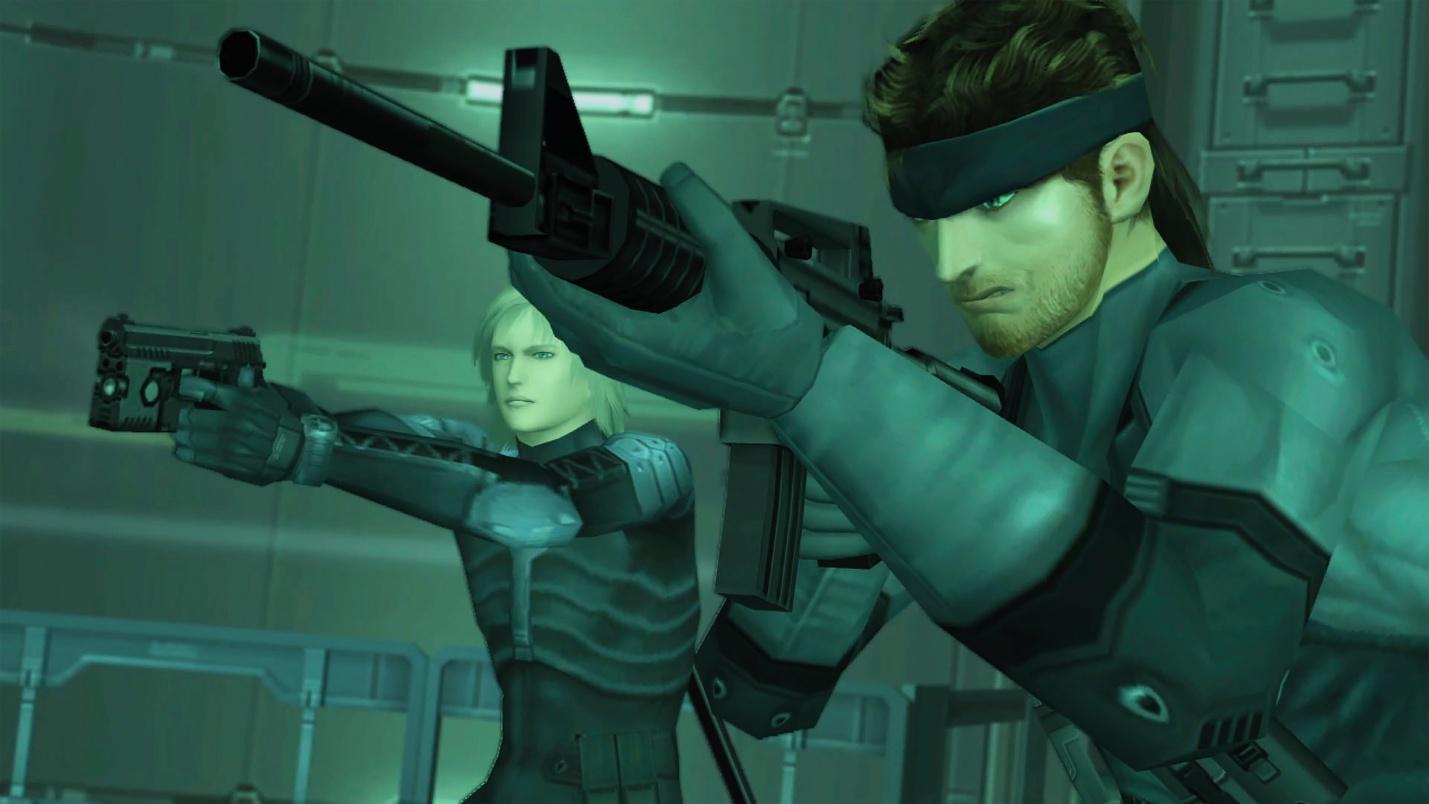
Illustration 4. Frame from the game Metal Gear Solid 2: Sons of Liberty. © 2001, Konami Digital Entertainment. Source: Official gameplay.
In June 2026, Konami Corporation initiated legal proceedings to identify the person who leaked the source code and unpublished assets of the iconic game Metal Gear Solid 2: Sons of Liberty (2001) online. The materials were posted on the 4chan image board and two file-sharing sites.
Although Konami quickly sent cease-and-desist notices and achieved the removal of the links, the company's internal investigation failed to identify the violator. Konami's lawsuit demands that the mentioned platforms retain and isolate any data that may help identify the user who uploaded the files to prevent further disclosures of confidential information.
Notably, Konami's lawyers' attempt to obtain subpoenas for the file-sharing sites via email was rejected by the judge without the right to appeal due to insufficient evidence of the plaintiff's due diligence in finding the defendants' contact information (such as their physical address).
7. Three Dots Games Studio regained rights to The Muller-Powell Principle
A conflict between indie studio Three Dots Games and publisher Take Aim Games arose due to strict publishing contract terms that effectively deprived the developers of control over their game The Muller-Powell Principle. The situation led to a prolonged dispute over intellectual property, during which the studio had to defend its rights to the project, including the possibility of further development and independent management of sales on the Steam platform.
The head of the studio, Artem Perevoz, reported that the parties reached a settlement agreement that allowed the developers to retain control over their intellectual property.
According to the settlement terms, the original publishing contract was terminated, and all rights to the game, including the ability to create sequels and use the fictional universe in future projects, fully transferred to Three Dots Games. Moreover, the publisher handed over full control of the game's Steam page to the developers (since the beginning of July Take Aim Games is no longer officially listed as the project publisher).
The parties also reviewed the revenue distribution terms: until the publisher's expenses are reimbursed, revenue is divided 30% to the developer and 70% to the publisher (from net revenue after taxes and expenses), and after breakeven, the distribution changes to 70% in favor of the studio and 30% in favor of the publisher. Although this decision is not ideal, it allows the studio to manage its project independently and continue its monetization.
Patent Rights
1. US Patent Office rejection of Nintendo's character summoning game mechanic patent
The United States Patent and Trademark Office (USPTO) decided to reject Nintendo's patent application describing a game feature for summoning a secondary character to aid in combat. According to published information, the decision was based on the results of an examination that found the claimed invention did not meet the criterion of patentability. The rejection is motivated by a combination of two or three prior sources presented as published US patent applications that impugn the novelty or inventive step of the claimed technical solution.
This decision is not final and may be appealed. The applicant has a two-month period to respond to the patent office, with the option to extend this period by filing an appropriate appeal. Timeline of consideration: the initial filing was made in March 2023, a decision of approval was issued in September 2025, but in November of the same year, the USPTO initiated a review procedure of the previously accepted positive decision, resulting in this rejection.
The long-running legal battle between Valve Corporation and patent holder Leigh Rothschild, considered a serial patent troll, has concluded. The facts of the case go back to 2016 when Rothschild initiated proceedings against Valve, accusing them of infringing several of his patents. As a result of this dispute, the parties reached a settlement agreement, under which Valve acquired an irrevocable, perpetual, and royalty-free license to use Rothschild's entire patent portfolio, presumably in exchange for a substantial monetary sum.
In 2022, one of Rothschild's affiliated companies notified Valve about an expansion of the patent library and offered the purchase of rights to new patents. Considering the nature of the previously concluded license agreement, Valve ignored these offers. Subsequently, Valve discovered a new lawsuit against them, accusing the company of infringing a patent related to the sale of streamable content within a cloud environment. Unlike its 2016 strategy, in 2023 Valve chose to go on the offensive, filing a counterclaim directly against Leigh Rothschild. The legal basis for the counterclaims was a violation of the original 2016 contract as well as provisions of the Patent Troll Prevention Act (PTPA).
As a result of legal proceedings, the jury ruled in favor of Valve. Of particular importance is the fact that financial liability in the form of monetary penalties was imposed directly on Leigh Rothschild as an individual, not on one of his shell companies. This decision establishes a significant precedent in combating patent right abuses, demonstrating the possibility of holding the ultimate beneficiary accountable when misusing corporate structures for dishonest patent practices.
3. Ironburg Inventions Ltd. vs. Valve case
The US Federal Circuit Court vacated earlier court decisions in the Ironburg Inventions Ltd. vs. Valve case, concerning a patent for a game controller equipped with a back button. This dispute is part of a protracted patent battle, during which a previous verdict imposed a four-million-dollar penalty on Valve for willful infringement of Ironburg's patent related to the Steam Controller. A key procedural question, reviewed by the appellate court, was the limits of applying the estoppel principle in the Inter Partes Review (IPR) process.
The panel of judges ruled that Valve did not lose its procedural right to assert two additional grounds for patent invalidation that were not included in its 2016 IPR motion. The court concluded that the estoppel principle, which is enshrined in patent law and restricts subsequent challenges to the patent's validity on grounds that could have been raised during the IPR, should not be interpreted expansively to the detriment of the applicant’s procedural rights. As a result, the case was remanded to the lower court for further consideration on the question of the Ironburg patent's invalidity based on grounds previously excluded from consideration. This ruling clarifies the legal regime of estoppel concerning the IPR procedure and sets a significant precedent, limiting the preclusive effects of non-exhaustive formulation of patent invalidity grounds at the stage of filing an IPR motion.
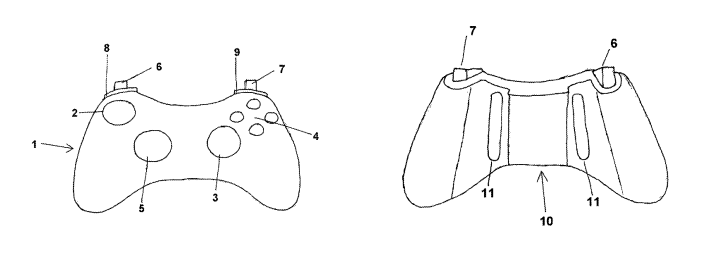
Illustration 5: Game controller patent documentation scheme. © Patent Year 2014, Ironburg Inventions Ltd. Source: United States Patent and Trademark Office (USPTO) database, patent no. US 8,641,525 B2.
4. Sony's AI Generated Ghost Player patent: AI technology to assist players in overcoming obstacles
Sony Corporation has developed and secured through a patent application a new artificial intelligence technology named AI Generated Ghost Player. The patent application was filed in 2024. The object of patent protection is a system designed to provide assistance during gameplay, functioning by executing a video game within a gaming session, controlling a player's character, and detecting the activation of a ghost help feature for the session.
The proposed technology involves displaying a ghost character, which overlays the game environment to demonstrate solutions to the player by mimicking actions of a cooperative partner. The patent documentation describes various support modes, differentiated by the amount of aid required — ranging from assistance in specific game fragments to full completion of sections for the player. The technical implementation potentially integrates natural language processing AI for user interaction and generating visual representation of the ghost character in the game environment. The descriptive part of the application justifies the invention's novelty and practical applicability by referencing the ongoing need of a significant number of users for help in completing challenging games that result in halted gameplay and the insufficient timeliness and relevance of traditional hint sources, such as independent searches or gameplay video recordings.
Trademarks
1. Epic Games registers the Sunflower trademark in the Russian Federation
The Federal Service for Intellectual Property (Rospatent) registered the Sunflower trademark, which is owned by the American corporation Epic Games — a developer of video games and software. According to data published in the agency’s electronic database, the trademark application was submitted to Rospatent in January 2025. A favorable decision following a formal examination and an evaluation of the designated mark was issued at the start of April of the current year.
The legal protection for the Sunflower trademark extends over a wide range of goods and services, including the production and distribution of software, video games, films, and animated content in the Russian Federation. This action to ensure the protection of intellectual property rights occurs as Epic Games meets the previously declared suspension of commercial relations with the Russian Federation, which was announced in 2022. Notably, this suspension of commercial activities did not lead to the blocking of access for Russian users to previously purchased gaming products, and the registration of a new trademark indicates the corporation’s preservation of legal mechanisms to protect its means of individualization within Russian jurisdiction.
Gambling
1. Austrian Supreme Court ruled that FIFA loot boxes are not gambling

Illustration 6: Promotional materials for EA Sports FC 26. © 2025, Electronic Arts Inc. Source: Official Electronic Arts website.
In January 2026, the Austrian Supreme Court issued a decision on a class action lawsuit filed by a group of gamers who collectively spent 20,000 euros on loot boxes in FIFA games.
The court ruled that the mechanic of obtaining digital content from packs in FIFA Ultimate Team mode does not fall under the definition of gambling. The judges noted that despite the random distribution of items, players can use their own skills to influence the game’s course with a probability sufficient for success, creating a “rational expectation of winning.” The court emphasized an important legal nuance: loot boxes cannot be evaluated in isolation and must be considered only in the context of the game they are a part of.
A representative of Electronic Arts welcomed the final decision, stating that it provides much-needed clarity and confirms that the Ultimate Team mode is not gambling.
Legal researcher Leon Xiao suggested that this decision, which did not provide consumers legal protection through gambling legislation, may prompt Austrian lawmakers to adopt more stringent regulations. He also noted that, unlike Austria and the Netherlands, the legal practice in the UK (as seen in a recent precedent on Runescape gold theft, discussed below) tends to recognize transferable virtual items as "property," which sets the legal ground for more stringent measures against loot boxes with the possibility of item transfer or cash-out.
2. Valve accused of promoting gambling
In February-March 2026, two major lawsuits were filed against Valve Corporation, related to loot box mechanics in Counter-Strike 2, Team Fortress 2, and Dota 2 games.
At the end of February, the New York State Attorney General's Office, led by Letitia James, requested a permanent injunction and fines, accusing the company of unlawfully engaging minors in gambling activities.
Just two weeks later, on March 10, the law firm Hagens Berman filed a class action lawsuit on behalf of consumers, claiming that the loot box system is “meticulously designed to extract money using deceptive psychological tactics common in casinos.”
The key argument of both lawsuits is the legal qualification of opening containers as gambling. The plaintiffs point out that the process visually and mechanically mirrors a slot machine, and the virtual items that emerge from loot boxes have real monetary value. This is evidenced by the possibility of selling them for real money both on the Steam Community Market and third-party platforms, which Valve allegedly facilitates through the “trade URLs” system, despite formal prohibitions in the user agreements. The class action relies on Washington State law, defining gambling as risking something of value on the outcome of a chance occurrence. The New York lawsuit, in turn, is based on a broad interpretation of the state's Penal Code, which does not require the capability for a free transfer of the item on the authorized market.
Interestingly, previous attempts to challenge loot boxes in US federal courts often failed, but new lawsuits focus on the provable convertibility of virtual items into real money, allowing them to circumvent earlier legal constraints. Amid increasing global pressure, Valve is already taking preventive measures: recently, the company introduced the “X-ray scanner” feature in Germany for Counter-Strike 2, allowing players to see container contents before opening to comply with strict local regulations.
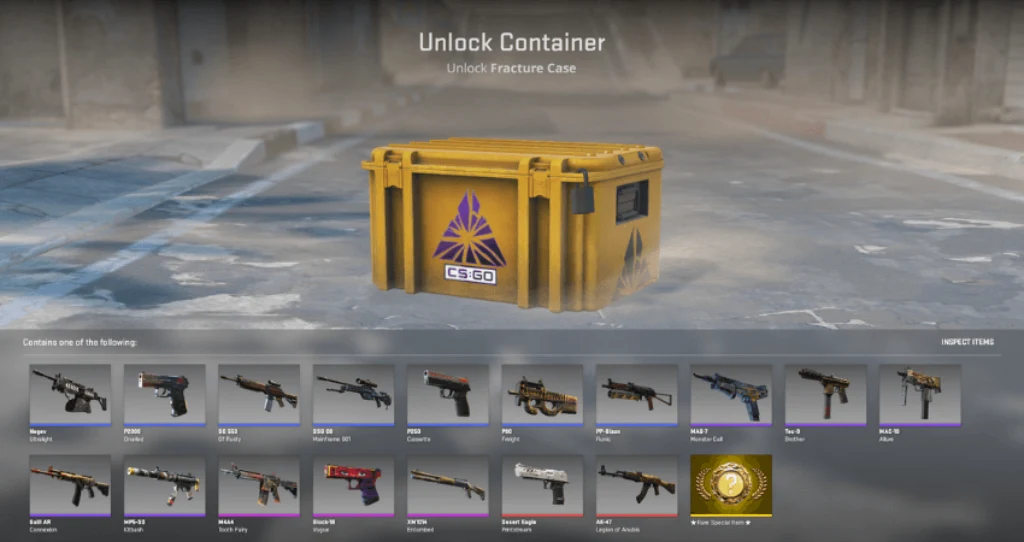
Illustration 7: Container opening interface in Counter-Strike 2. © 2023, Valve Corporation. Source: Game client for Counter-Strike 2.
Unfair Competition
1. Italian Competition Authority (AGCM) launched an investigation into Activision Blizzard
In January 2026, the Italian Competition and Market Authority (Autorità Garante della Concorrenza e del Mercato, AGCM) initiated an investigation against Activision Blizzard. The regulator suspects the company of using "misleading and aggressive practices" in offering in-game purchases, as well as violating consumer contractual rights.
According to AGCM's statement, the investigation will focus on the possible use of deceptive user interface elements, such as intrusive reward notifications and limited-time offers. These mechanisms, according to AGCM, entice players (including minors) to return to the game more often, spend more time playing, and spend significant sums without realizing the real cost of virtual currency and the terms of package sales. The regulator specifically noted that such practices are unacceptable in a sector sensitive to the risks of developing gaming addiction.
In addition, AGCM expressed concerns about the parental control settings in the games, which are set by default to "low protection level," not restricting in-game purchases, playtime, or interactions with other users. The investigation also examines the legality of obtaining consent for personal data processing and the completeness of informing consumers about their rights.
In January 2026, the Competition Appeal Tribunal (CAT) in London ruled that the collective lawsuit against Valve Corporation could be transferred to court for substantive consideration. The lawsuit, filed in 2024 on behalf of 14 million UK consumers who have been purchasing games and additional content through Steam since 2018, is valued at £656 million (approximately $897.7 million).
The case was initiated by consumer rights advocate Vicki Shotbolt. The plaintiff's lawyers claim that Valve imposes conditions on publishers that prohibit selling products cheaper or earlier on competing platforms. Additionally, the company requires users to purchase all additional content exclusively through Steam if the base game was bought there, effectively "tying" consumers to the platform ecosystem. In the plaintiff's opinion, this allows Valve to charge “unfair and excessive” commissions of up to 30%.
Despite Valve's objections, which sought to dismiss the claim at an early stage, the tribunal certified the case for further proceedings.
3. Papaya Gaming ordered to pay $420 million in a landmark false advertising verdict
In April 2026, a jury in the Southern District of New York Federal District Court delivered a verdict in favor of the Skillz platform, finding mobile game developer Papaya Gaming guilty of false advertising and unfair business practices under the Lanham Act.
The lawsuit, filed in March 2024, involved accusations that Papaya Gaming misled users by positioning its cash prize mobile games as competitions solely based on skill. Skillz claimed that the defendant used bots to simulate real players and manipulate tournament results, allowing them to artificially inflate engagement metrics, control win percentages, and encourage higher user spending.
The court ordered Papaya Gaming Ltd and Papaya Gaming Inc to pay $420 million in damages. Additionally, a recommended amount for disgorgement of illicit profits totaling $719 million was set. The final disgorgement amount will be confirmed by the judge, after which the plaintiffs can choose between collecting damages or forfeiting profits.
4. Google sued again over monopoly in the Android app store market
In April 2026, Aptoide, positioning itself as the third-largest Android app store (with a catalog of over 436,000 apps and more than 200 million users annually), filed a lawsuit in the Federal District Court in San Francisco. The plaintiff claims that Google violates US antitrust laws by creating an “anti-competitive chokehold” and deliberately squeezing out smaller competitors from the market.
According to the case documents, despite offering developers lower commissions and users more favorable prices, Aptoide suffers irreparable harm. Google is allegedly depriving alternative platforms of access to exclusive content from leading developers and uses its dominant position to redirect app creators solely to Google Play and other “mandatory” services within its ecosystem.
As legal remedies, Aptoide demands a judicial injunction against the alleged anti-competitive practices and seeks unspecified treble damage compensation.
A class-action lawsuit was filed in the Northern District of California against corporations SK Hynix, Samsung, and Micron. The plaintiffs, represented by a group of consumers and retail businesses by the law firm Bathaee Dunne LLP specializing in antitrust law, accuse the defendants of engaging in coordinated anti-competitive activities in the DRAM market. According to the lawsuit, since 2022, the companies have entered into an illicit agreement to restrict consumer memory supply and manipulate prices.
The factual basis for the claim rests on allegations of coordinated cessation of DDR3 and DDR4 chip production and a shift in production capacity to produce high-speed HBM memory. These actions are qualified as artificial supply reduction, contrary to objective economic conditions, especially in the context of Micron Technology’s closure of its consumer DRAM business under the Crucial brand during a period of record profitability. The lawsuit cites a rise in traditional DRAM prices by approximately 700% over a four-year period as evidence. Additionally, procedural documents refer to prejudicial circumstances: the defendants were previously held liable for price-fixing in the DRAM market from 1998 to 2002. It is asserted that the high entry barrier to the market (capital expenditures estimated at $15–20 billion) objectively prevents new market participants from emerging that could exert a restraining influence on the dominant trio's actions.
As justification for damages, a direct causal relationship between cartel actions and increased production costs of final products is highlighted. It is noted that the shortage and price escalation of memory components have forced companies like Sony, Microsoft, Nintendo, and Valve to adjust gaming hardware prices upwards. The financial results of the defendants, such as Micron's 1,398% year-on-year profit growth, are presented in the case as evidence of extracting unjustified gains from coordinated restrictive practices.
Personal Data
In the first half of 2026, Roskomnadzor significantly strengthened control over foreign gaming companies' compliance with Russia’s personal data localization laws. The agency initiated a series of administrative cases against major foreign publishers and developers, including Electronic Arts, Take-Two Interactive, Epic Games, Embracer Group, NetEase, Digital Extremes, and Battlestate Games. The basis for accountability was the violation of Part 8 of Article 13.11 of the Administrative Offenses Code of the Russian Federation (CoAP RF), which provides for liability for failing the requirement of primary localization of Russian users' personal data within Russia.
In several cases, courts have already rendered decisions, imposing administrative fines of 2 million rubles on companies. At the same time, Roskomnadzor representatives hinted that administrative fines might be only the first phase of enforcement. Should legal requirements continue to be unmet, the regulator could theoretically pursue measures to restrict access to relevant services in Russia, as earlier actions were taken against other foreign digital platforms.
Notably, up until now, gaming companies have rarely been the subject of systematic practice related to personal data localization cases. The new series of proceedings indicates that Russian authorities view gaming platforms not just as entertainment content providers but as full-fledged digital services processing significant volumes of users' personal data. Consequently, they are increasingly subject to requirements previously applied mainly to social networks, online services, and major IT companies.
In 2026, German companies JustPlay and Gimica reached a settlement over a class-action lawsuit filed in the state of Illinois. The plaintiffs alleged that the JustPlay mobile app collected and processed users' biometric data using facial recognition technology without prior written consent, thus violating the Illinois Biometric Information Privacy Act (BIPA). The defendants did not admit liability but agreed to settle the dispute out of court.
Under the terms of the agreement, the company established a compensation fund of $4.5 million. Residents of Illinois whose biometric data was processed through the app starting from October 2019 will be eligible for payments. The individual payout amount is initially set at $15 but may be adjusted based on the number of claims submitted. Final court approval of the settlement is scheduled for March 2026.
Previously, most such lawsuits targeted social networks, facial recognition services, and employers using biometric timekeeping systems. Now, mobile gaming apps that use identity verification or facial recognition technologies are increasingly becoming the focus of claims. For developers, this indicates the need to consider biometric data legislation requirements from the early stages of designing gaming services and user scenarios.
3. Roblox succeeded in having a class-action lawsuit over collecting minors' data moved to arbitration
In 2025, a class-action lawsuit was filed against Roblox, in which parents of minor users accused the company of illegally collecting and transmitting children's personal data without obtaining verifiable parental consent. The plaintiffs claimed the platform tracked user activities, including search queries, chat logs, mouse movements, and other service usage data, and shared some of the collected information with third parties for advertising purposes. They cited violations of the federal Children’s Online Privacy Protection Act (COPPA), which governs the handling of data from children under 13.
However, in February 2026, a federal court granted Roblox's motion to transfer the dispute to mandatory arbitration. The court found that users repeatedly accepted the platform's terms of use, which included an arbitration clause and a waiver of class-action lawsuits as a resolution method. As a result, the litigation was stayed pending the outcome of the arbitration proceedings.
The case is noteworthy not only for its implications for protecting minors' personal data but also as another example of digital platforms successfully using arbitration clauses to shield against class-action lawsuits. For the gaming industry, this means that user agreements continue to be one of the key tools for managing litigation risks, especially in disputes involving user data processing.
Artificial Intelligence
1. NetEase had to refute reports of a ban on generative AI use due to copyright infringement risks
In February 2026, Goichi Suda, CEO of Grasshopper Manufacture, stated in an interview with Eurogamer that NetEase allegedly prohibited its subsidiary studios from using generative artificial intelligence in game development. According to Suda, the company had previously engaged in research on generative AI but later ceased the work. He cited potential reasons such as player aversion to the technology and the risk of copyright infringement when using generative AI, although he emphasized that this was just his assumption.
Soon after the interview was published, an official NetEase representative denied the existence of any such ban, stating that the company had not imposed these requirements on its subsidiary studios.
Although the ban was not confirmed, the story is telling. Concerns related to possible copyright infringement when using generative AI are already becoming a subject of public discussion within the gaming industry and are considered by developers as a key legal risk when implementing such technologies.
2. Google launched an AI tool for creating game worlds, sparking copyright infringement debate
In January 2026, Google introduced Project Genie — an experimental tool based on the Genie 3 model, allowing the creation of interactive virtual worlds using text prompts and images. Users can describe an environment, character, and interaction method, and the system generates a space that can be explored in real time.
The practical use of the tool quickly drew attention to intellectual property issues. Users could create worlds that visually resembled famous game franchises, including those by Nintendo. This raised questions about where the line should be drawn between creating new content using AI and generating derivative works that use elements of games protected by copyright. Following the emergence of similar examples, Google began limiting the creation of certain worlds linked to other parties' intellectual property.
The launch of Project Genie is yet another example of how the development of generative AI complicates the application of traditional approaches to copyright protection in the gaming industry. Previously, the main disputes were linked to model training on protected works, but new tools raise additional questions: who is responsible for content created by users with AI if the result reproduces elements of existing gaming universes?
3. Studio Atelico bets on local AI models and proprietary data training
In January 2026, the game studio Studio Atelico presented its approach to using generative artificial intelligence in game development. The company is developing its own Atelico AI Engine — a system running directly on the user's device, without constantly accessing cloud services. One of the studio's first projects is the mobile game Bobium Brawlers, where generative models are used to create game creatures.
Studio Atelico representatives emphasized that the model is trained not on open data sets from the internet but on materials produced by the studio's own artists. The company believes this approach reduces the risks associated with the origin of training data and potential copyright infringement. The studio also states that it views artists not as replaceable resources but as participants in the process of creating and controlling AI work outcomes.
Though the project is not linked to litigation, it highlights one of the critical issues emerging around the use of generative AI in the gaming industry: how developers can implement such tools while mitigating the risk of rights-holder and content-creator claims. Studio Atelico's practice provides one possible solution — using closed models with controlled data sets rather than universal generative systems trained on publicly available materials.
4. Steam updated regulations for AI content labeling
According to the new rules, developers are required to disclose how artificial intelligence was used in the creation of a game. The use of generative AI must be reported if the AI-generated content "interacts" with the consumer: graphics, music, text, promotional materials. A separate field in the submission form requires a detailed explanation of AI's application and what specifically was created with its help. Valve emphasizes that in cases where AI content is generated during gameplay or on the player's side in real-time, developers are responsible and must ensure the generated content complies with the law.
Thus, the company aims to ensure maximum transparency in matters of AI application and its interaction with users.
Miscellaneous
In late 2025, the game Steppe Rider was released on PC and mobile platforms, created under a state contract worth 241.8 million tenge (approximately $480,000). According to the technical specifications, the project was supposed to be a turn-based role-playing game lasting at least 12 hours, with multiplayer mode and a language quiz, immersing players in Kazakh culture and traditions, including the Bӓyge equestrian races.
However, the company United Kingdom, which won the tender (and according to business directories, formally specializes in organizing conferences and exhibitions, not game development), released a simplified endless runner similar to Subway Surfers with educational inserts and a story about traveling on a snow leopard. The project was implemented in very tight timeframes: the tender was announced in March 2025, and the completed product was required by December 2025.
The gaming audience responded coolly to the release: peak online numbers on Steam were only 3–5 people, and app store ratings (about 3.4 stars on Google Play) remain below average. Users and journalists criticized the game's visual and technical quality, questioning the justification of the public funds spent.
Ministry representatives stated that they see no critical discrepancies between the final result and the initial requirements. They argued that the game was developed for three platforms, and its market value could reach $300,000 per platform, positioning the project as an international educational tool for language learning at levels A1-A2.

Illustration 8: Screenshot from Steppe Rider game. © 2026, game developers/publisher. Source: Game page on Steam.
In February 2026, the UK Advertising Standards Authority (ASA) ruled to ban a commercial for Call of Duty: Black Ops 7 on YouTube.
The ad depicted fictional airport security employees conducting passenger screenings while “the real ones are playing the new Call of Duty.” In the commercial, a male passenger was told he was “randomly chosen for a rough screening,” after which a female employee made suggestive gestures with a pill container, and the man was offered to undress with the comment “she's going in dry.”
ASA received nine complaints that the storyline trivializes sexual violence. Activision Blizzard defended the commercial, claiming the game is rated for ages 18+, the ad aired during times considered safe for children, and the scenario was intentionally implausible, parodying, and comedic in nature, unrelated to actual security procedures.
The regulator rejected the publisher's arguments and agreed with the complaints, ruling that the commercial is not socially responsible and may cause serious public offense. Two additional complaints regarding promoting drug use were not upheld. ASA required Activision Blizzard to stop using the commercial in its current form and ensure the social responsibility of its promotional materials, avoiding the trivialization of such topics in the future.
In February 2026, the Los Angeles County authorities initiated legal proceedings against Roblox Corporation. The plaintiffs claim that while the platform positions itself as a safe digital space for creativity, it is actually an unsafe environment that has become a “breeding ground for predators.” According to the lawsuit, children on the platform regularly encounter sexual content and manipulation. The county accuses the company of unfair and deceptive business practices, stating that Roblox's architecture allows adults to easily find minors, masquerade as children, and gain their trust, putting corporate profits above user safety.
As legal remedies, Los Angeles County seeks an injunction, measures to correct the violations, and civil penalties of up to $2,500 per day for each violation of the law.
In its official statement, Roblox categorically denied the allegations and vowed to actively defend itself in court. The company emphasized that safety is a fundamental principle of its operations. Roblox argued that it has advanced monitoring systems for harmful content and communications and that the chat functionality on the platform does not allow users to exchange images, closing off one of the most common methods of online abuse. Company representatives also noted continuous improvements in protective mechanisms and close collaboration with law enforcement to hold offenders accountable.
On March 3, 2026, a magistrate from Moscow's Tagansky District Court found Battlestate Games Limited guilty of committing an administrative offense under Part 8, Article 13.11 of the Administrative Offenses Code of the Russian Federation (CoAP RF). The violation involved the operator's failure, in collecting personal data, to ensure the recording, systematization, accumulation, storage, and clarification of Russian citizens’ personal data as required by law.
Battlestate Games, the developer and publisher of the hardcore stealth shooter Escape from Tarkov, is legally registered in London, but its main office and operations are based in St. Petersburg. The court imposed an administrative fine of 2,000,000 rubles on the company, highlighting increased scrutiny by Russian regulators on adherence to localization norms and correct data processing within the country, regardless of the entity's jurisdiction of registration.
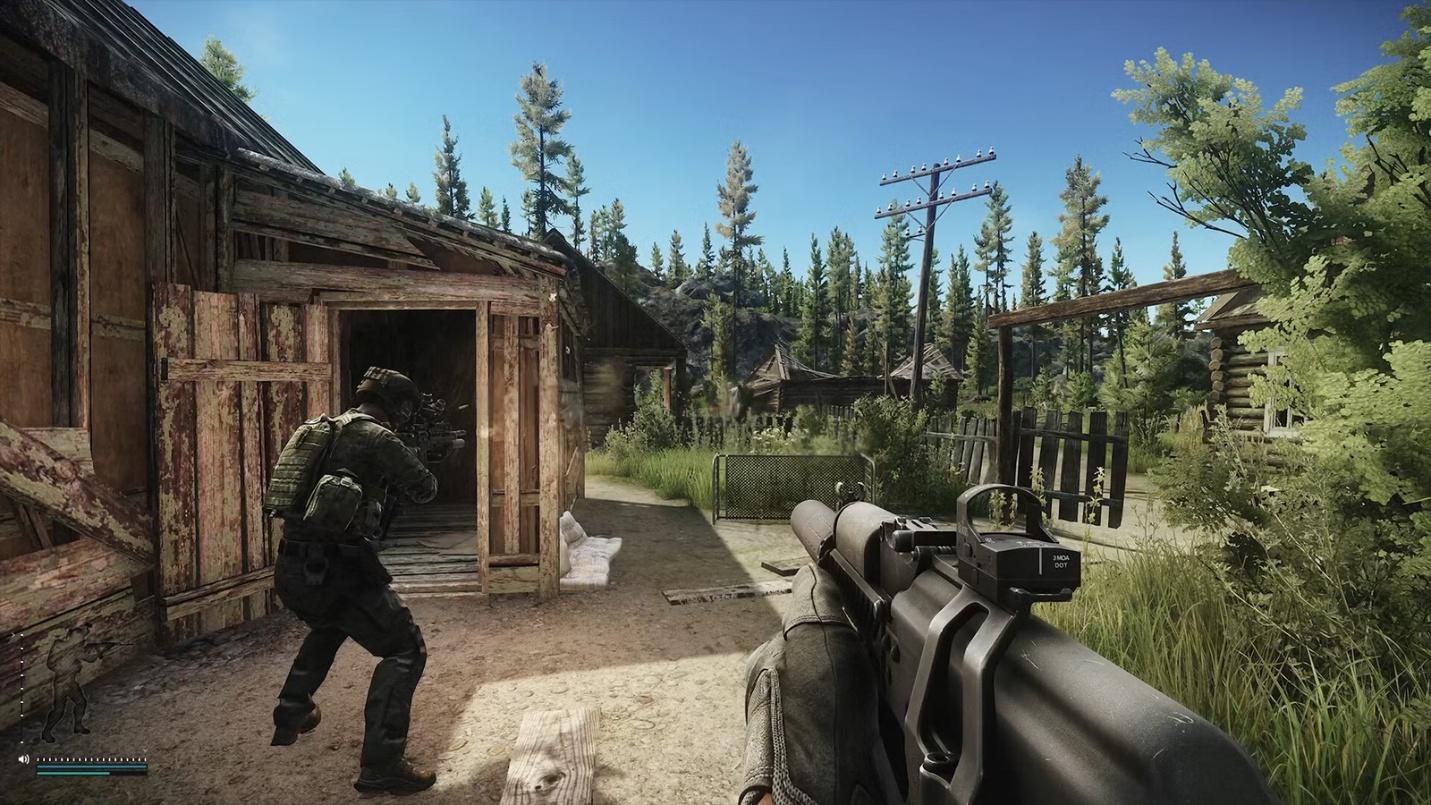
Illustration 9: Screenshot from Escape from Tarkov. © 2017, Battlestate Games. Source: Official gameplay/Archive materials.
In March 2026, lawyers representing the interests of Unknown Worlds co-founders accused parent company Krafton of deliberately leaking internal information about the planned early access launch of Subnautica 2 in May.
The leak occurred the day after a court decision demanded the immediate reinstatement of ousted CEO Ted Gill. Terms of his return included granting him full control over the game's early access release and extending conditions for his team to receive a $250 million bonus.
The plaintiffs' lawyers claimed that Krafton ignored the court ruling by allowing former employee Steve Papoutsis to announce the date. They alleged that Krafton acted in its "selfish interests," disregarding the impact on the game, team, community, and the authority of the court's verdict, effectively preventing Gill from managing the marketing announcement process and sowing additional confusion among fans.
In response, Krafton stated that Papoutsis's announcement merely acknowledged the developers' efforts based on an internal decision by Krafton that the game was ready for early access, made prior to the court ruling. The company emphasized that this announcement did not limit Gill's authority or discretion as CEO to independently assess the project's state and determine its final release timeline.
In April 2026, the Independent Workers Union of Great Britain (IWGB) filed a complaint against game developer Build a Rocket Boy (BARB), accusing the company of violating employee data protection laws. The complaint arose from employees discovering spyware, Teramind, installed on their work computers without prior notice or consent.
According to the union's statements, this software could track keystrokes, record screen activity, and capture audio from microphones. IWGB emphasized that these measures exceed legitimate productivity or cybersecurity monitoring, particularly for remote work, creating an atmosphere of total distrust. Initially, BARB management presented the software as an "enhanced cybersecurity tool," claiming it was necessary due to concerns about internal "saboteurs."
Following a collective complaint from more than 40 employees in March 2026, the software was removed. However, IWGB escalated the issue through the UK's Acas (Advisory, Conciliation and Arbitration Service) and the Information Commissioner's Office (ICO), demanding full transparency from the company and official explanations regarding how, why, and to what extent employee data was collected.
In April 2026, 23-year-old Kamerin Stokes, known online as TheMFNPlug, was sentenced by the federal court in the Southern District of New York to 30 months in prison for involvement in a cyberattack on the fantasy sports and betting platform DraftKings. The court also imposed three years of supervised release, asset forfeiture of $125,965, and restitution of $1,327,061 (totaling financial penalties exceeding $1.4 million).
According to the case materials, in November 2022, the perpetrator conducted a large-scale credential stuffing attack using databases of stolen logins and passwords purchased on the dark web. Victims were users who reused the same credentials for login, enabling the hackers to access approximately 60,000–68,000 accounts. Following the breach, the perpetrators added new payment methods, made small verification deposits, and then withdrew all available balances to accounts under their control.
Stokes sold access to compromised accounts through his online store, whose overall turnover exceeded $125,000. Remarkably, he continued his illegal activity and resumed the store's operation even after officially pleading guilty, claiming he needed the money to pay legal fees. This led to his re-arrest for violating pretrial release conditions.
8. UK Court of Appeal recognized theft of in-game currency as a criminal offense
Former Jagex developer Andrew Lakeman faced trial on charges of stealing 705 billion gold coins from RuneScape accounts belonging to 68 players. The real-world value of the stolen assets exceeded £500,000 (about $750,000).
Starting in 2018, the perpetrator, lacking direct access to user profiles, allegedly used compromised account recovery service credentials to hack profiles and then sell the in-game currency for bitcoins.
During litigation, the defense argued that virtual gold is not "property" under the UK's Theft Act. Attorneys categorized it as "pure information" with an infinite supply, which technically cannot be stolen, as its removal doesn’t deprive other players of the ability to possess it.
The first-instance court agreed with this argument, but the Court of Appeal issued an opposing decision. The judge ruled that virtual coins are identifiable assets separate from the original code and have assessable monetary value both within and outside the game ecosystem. The court rejected the “infinite” assets argument by drawing an analogy with common paper clips: their mass production does not deprive an individual item of its property status.
This verdict closes a significant legal loophole in the "gray market" for digital goods. Now, theft of in-game assets that results in an owner losing their use and financial value will be classified as a full-fledged criminal offense in the UK, potentially leading to a wave of similar prosecutions and a reconsideration of approaches to digital asset protection worldwide.
A class action lawsuit was filed in the California Superior Court against Obsidian Entertainment, known for developing games such as Fallout: New Vegas and The Outer Worlds. The lawsuit, initially filed in October 2025, was brought by plaintiff Victoria Turner, who served as a quality assurance department manager and reportedly participated in developing The Outer Worlds 2 project. The legal grounds for the claims are systematic violations of California's Labor Code and the state's Industrial Welfare Commission (IWC) wage orders.
The defendant is accused of unlawful behavior aimed at increasing profits through non-compliance with wage and hour laws. Specific violations include failing to pay all due sums, including minimum wages, overtime pay, and sums due upon termination, as well as systematically failing to provide meal and rest breaks. The class-action group comprises all individuals who worked as non-exempt employees for the defendant in California from October 9, 2021, until the class action's certification date. A subgroup of former employees who ended their employment from October 9, 2022, to the date of lawsuit certification is separately identified.
The lawsuit seeks compensation for unpaid wages, reimbursement for unrefunded business expenses, benefits, interest, legal costs, and attorneys' fees, as well as penalties for corresponding labor law violations. Obsidian Entertainment has submitted a procedural response, generally and specifically denying all allegations and has filed a motion for the complete dismissal of the case, barring the plaintiff from re-filing on this basis. At the time of the dispute's development, the studio also confirmed it was halting development of a third installment of The Outer Worlds due to commercial performance of the sequel not meeting expectations.