
Recently on Steam, a personal calendar featuring recommended upcoming and recently released games has appeared, which is formed based on the preferences of the gamers themselves. The store has not disclosed exactly how the calendar algorithm works, but the CEO of Luden.io, Oleg Chumakov, has some guesses.
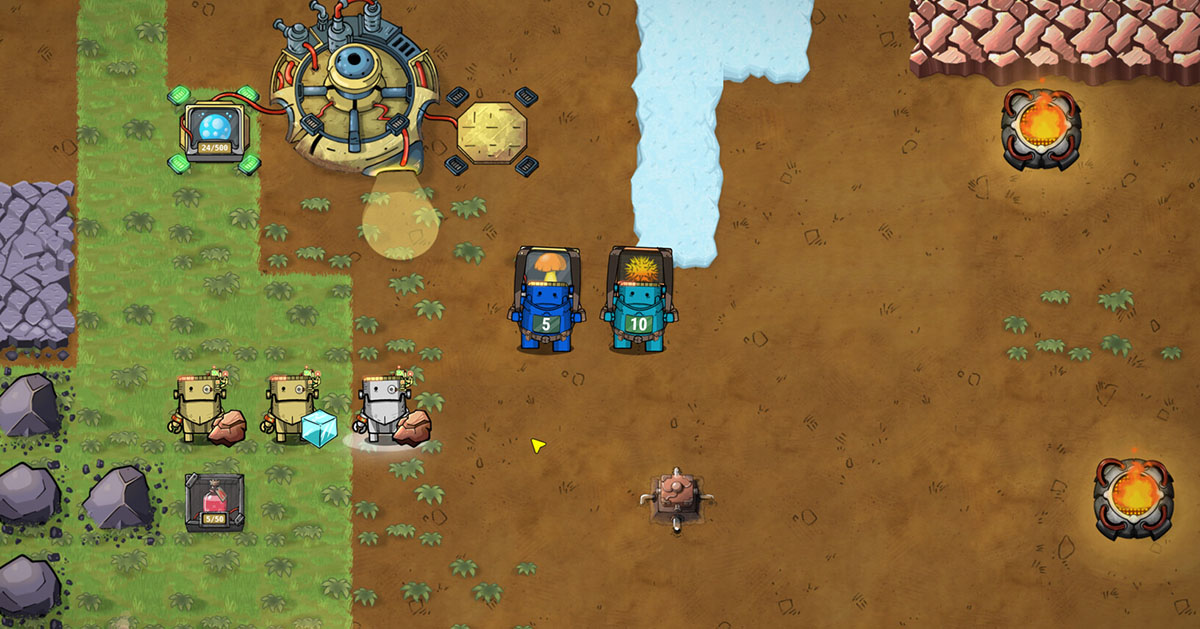
Craftomation 101: Programming & Craft
Chumakov shared his hypothesis on the podcast “Pilim, Trem.” During the conversation, he stated that one of the factors increasing the likelihood of a game appearing in the calendar for a large number of gamers could be the amount of recent playtime. That is, the number of hours users have recently spent in a game.
According to the head of Luden.io, this assumption arose after communicating with Steam support. While preparing for the release of the game Craftomation 101: Programming & Craft from early access to full release, Chumakov decided to contact the store's team and directly ask how to understand if it will be in the calendar. Naturally, they did not give him any instructions, but they did give him a hint.
“A support person writes us a response, and this response suspiciously often mentions the recent playtime profile. He probably didn’t want to hint at anything to me. Because who am I for him to hint at something? But if this word doesn’t spin in my head, knowing how the algorithm works, what’s the chance I would mention it?” Chumakov explained.
The developers of Craftomation 101: Programming & Craft immediately tested the hypothesis. Shortly before the release of version 1.0, they started holding events in the title, which led to a surge in recent playtime. Whether this affected anything or not is unclear, but the game did appear in the calendar for a fairly broad audience.
In Chumakov’s opinion, in the case of games that are released immediately without early access, the Steam algorithm might take into account playtime of demos or playtests, but this is also just a hypothesis.
Chumakov stressed that his assumption should not be taken too seriously. He perceives it as a kind of conspiracy theory, similar to those “constructed by urban lunatics.” Nevertheless, it cannot be ruled out that it works.