
Valve announced the full launch of Personal Calendar — a tool that recommends upcoming and recently released Steam games to users based on their interests. The company also published detailed guidelines for projects to appear on the calendar.
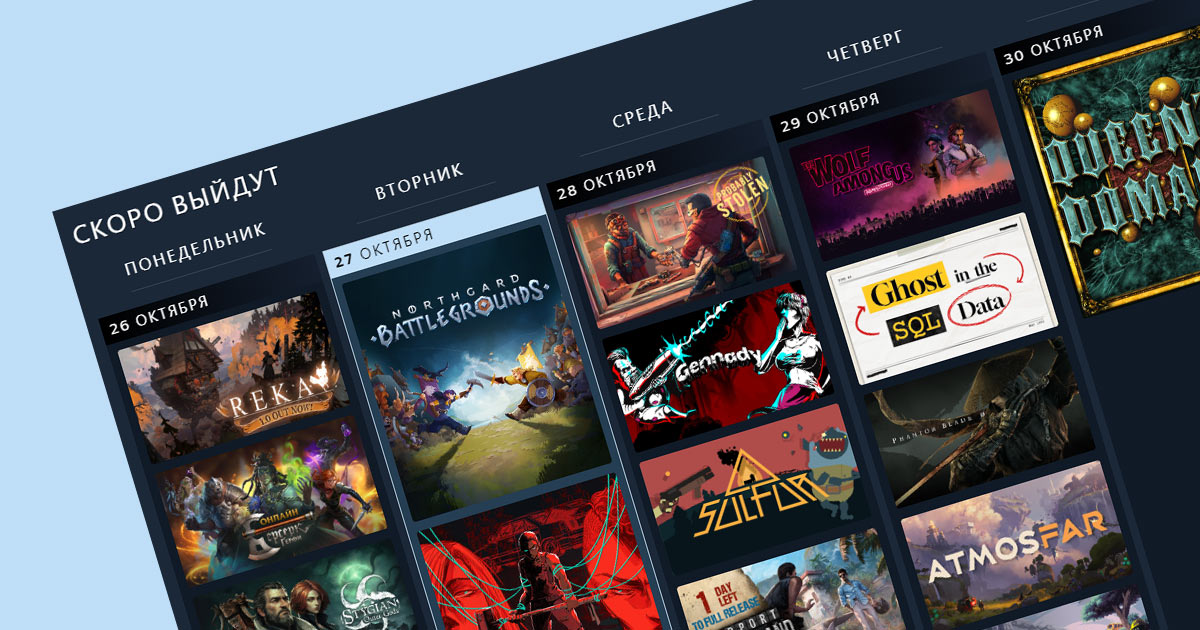
Personal Calendar was introduced on October 21, 2025, as part of Steam Labs. After almost a year of testing, on October 23, 2026, Valve transitioned it to a full-fledged store feature.
The calendar is available on the main Steam page and via a separate link. In the first instance, it displays releases for the current week, the past two weeks, and the next two weeks. On a separate page, users can explore a selection for eight weeks.
The list of games is tailored individually for each user. The algorithm analyzes their gaming activity, including time spent in games and achievements earned, then finds users with similar interests. Based on their wishlists, the system recommends games that might interest the user but are not yet on their wishlist.
Short gaming sessions hardly affect the recommendations. The algorithm prioritizes projects where the user spends significant time. The model is updated daily, although Valve warns that the selection is unlikely to change significantly each day.
How can developers get into the Personal Calendar?
In the Steamworks documentation, Valve listed the conditions that studios and publishers need to consider:
- Game Page. To participate, you need to publish a "Coming Soon" page with a specific release date. This applies to both new games and projects preparing to exit Early Access into version 1.0.
- Timing. Valve recommends setting the release date at least 60 days in advance to maximize the game's visibility on the calendar's separate page. For appearance in the main page block, it's advised to do this at least three weeks before launch.
- Appearance Speed. After fulfilling the necessary conditions, the game may start appearing in users' calendars approximately within a day.
- Wishlists. The more users add the game to their wishlists, the higher the likelihood of its appearance in recommendations. However, there is no minimum number of wishlists required. The algorithm considers not only the project's popularity but also the interests of the specific player.
- Rating. If the user rating of the game drops to "Mostly Negative," its chance to appear in recommendations significantly decreases. However, Valve does not completely exclude such projects from the calendar.
- Manual Promotion. You cannot apply to have a game included in the calendar. Valve staff cannot manually add projects to the selection — all recommendations are automatically generated.
- Release Postponement. If less than two weeks before launch the developer postpones the release date by more than 24 hours, the project is excluded from the calendar until the actual release. Small date changes within a day do not affect the display.
- Weekend Releases. The Personal Calendar displays only weekdays — Monday through Friday. Therefore, games released on Saturday or Sunday will be shown in the calendar the following Monday.
- Additional Content. Demos do not appear in the Personal Calendar. Expansions might appear in recommendations but only to users who own the base game.
Valve emphasizes that the Personal Calendar should help users discover not only major releases but also niche projects. Therefore, games with a relatively small number of wishlists can also appear in calendars for the appropriate audience.
According to the company, daily users transition from the Personal Calendar to pages of over 2,000 different games.