
Major publishers rarely take the risk of introducing new IPs to the market. Even more rarely do they become successful right from the start. Pragmata is such a case. Today, we'll examine the game's release metrics in detail and delve into Capcom's historical data and strategy.

What this article will cover:
- launch metrics of Pragmata: sales, revenue, distribution across platforms;
- why PC (Steam) is the main platform not only for Pragmata but for all recent Capcom releases;
- how Pragmata fits into the company's global expansion strategy;
- comparison of Pragmata's launch sales with other original Capcom IPs;
- key factors behind the game's success, which continues the publisher's unique winning streak;
- the importance of generational continuity and the role of less experienced developers in Pragmata's success.
Pragmata’s Initial Metrics
Pragmata launched on April 17 and demonstrated a strong start in terms of both sales and audience interest. Its peak concurrent users (CCU) reached 68,687 on Steam during its first weekend. This marked the ninth-largest release of 2026 by this metric and one of the best results in Capcom's portfolio.
Looking at the online performance of the Japanese corporation’s games, we traditionally didn’t account for the two parts of Capcom Arcade Stadium. These are collections of classic arcade games that reached peak values of almost 500,000 CCU each, largely due to the presence of Steam trading cards attractive to bots. Their basic versions with one game each can be downloaded for free.
Pragmata fell just short of surpassing the launch metrics of Street Fighter 6 (72,000 CCU) to enter the top-10. However, in terms of online numbers, it has already surpassed titles like the Resident Evil 3 remake (60,200 CCU) and this year’s Monster Hunter Stories 3: Twisted Reflection (54,700 CCU).
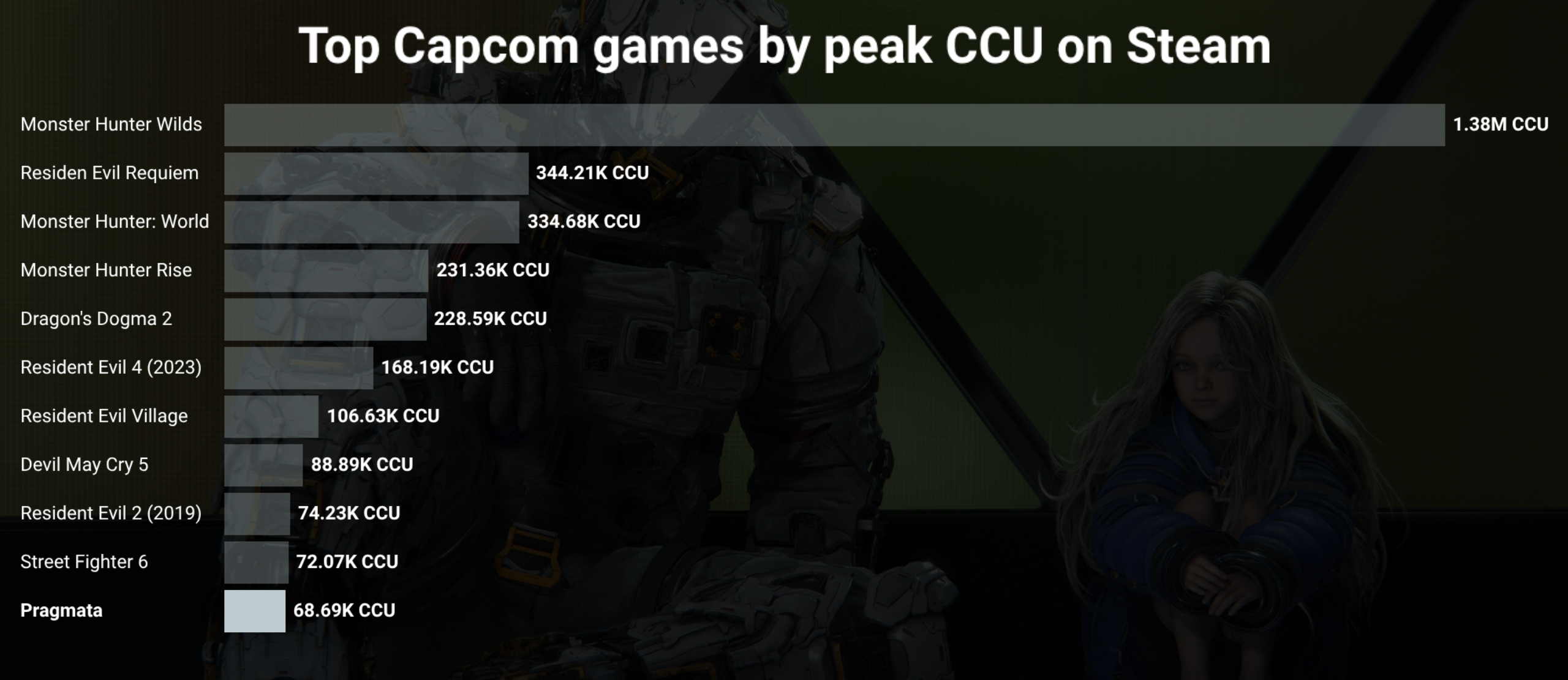
Top Capcom games by peak online presence on Steam
Shortly after the successful launch, Capcom announced that within the first two days, Pragmata had sold over a million copies across all platforms (PC, PlayStation 5, Xbox Series X|S, Nintendo Switch 2).
Based on data from Gamalytic, nearly 490,000 copies were sold in the first five days on Steam alone, and the game's gross revenue exceeded $24 million. Estimates from VG Insights and Alinea Analytics are even more optimistic: 550,000 and 574,000 copies, respectively.
Pragmata was also heavily pre-ordered. Before its release, it spent two weeks in the global Steam chart (76th → 20th place), and for the week of April 14 to 21, it secured third place, trailing in gross revenue only to Windrose and Counter-Strike 2. This is a strong start for any release, especially for a new IP.
There is limited data on console sales, but Pragmata debuted in second place in the UK retail chart (GfK), behind Tomodachi Life: Living the Dream. Physical sales in the country broke down as follows: PS5 (81%), Switch 2 (13%), and Xbox Series X|S (6%). However, as independent journalist Christopher Dring noted, retail today does not reflect the real picture. In the UK, console games for Switch 2 are mostly sold on physical media, while the share of digital sales on PS5 reaches 55%, and on Xbox, 80–85%.
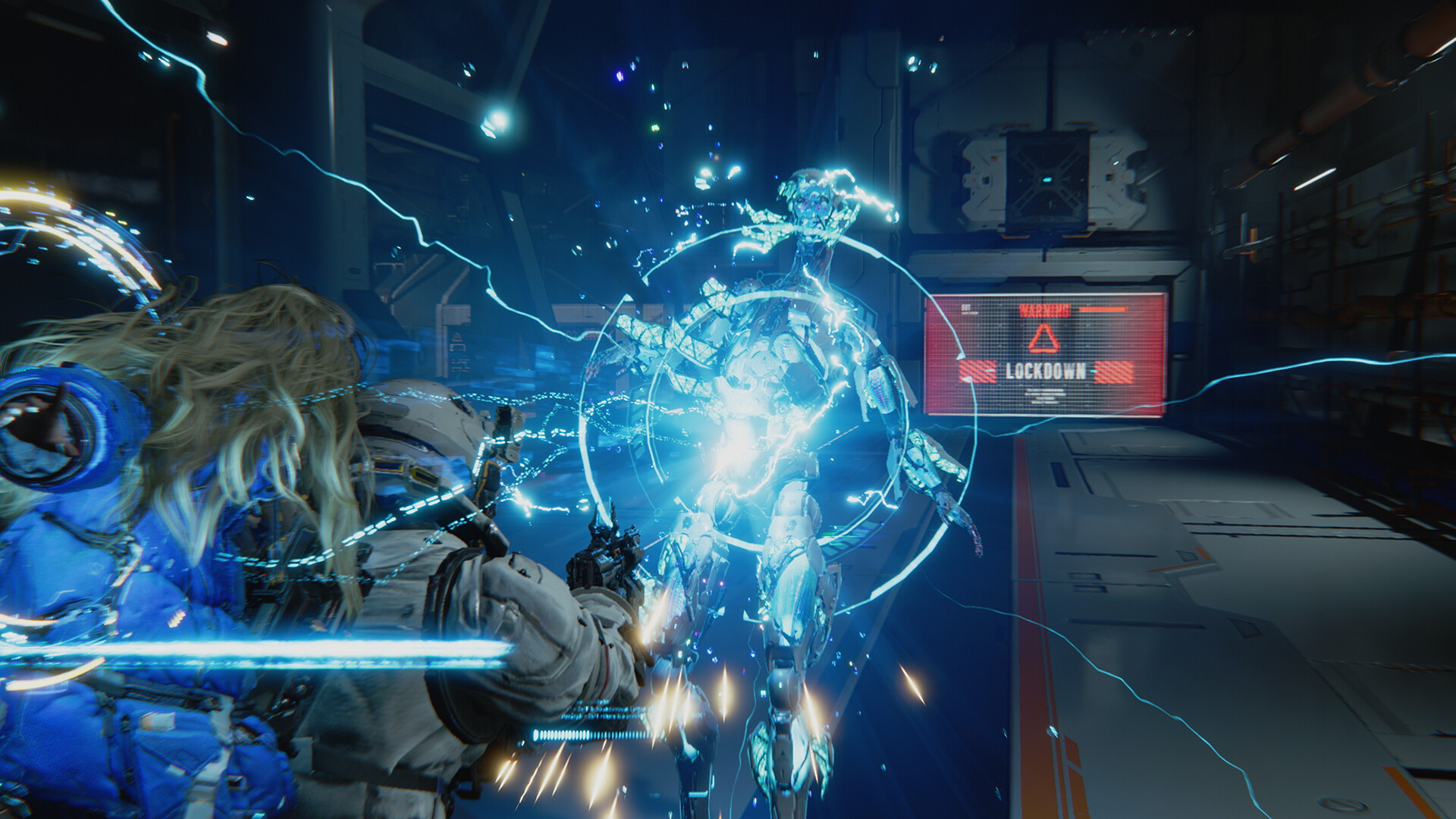
Pragmata as an Exemplary Case of Capcom's Global Expansion
As with any initial revenue and sales assessments, errors cannot be completely ruled out, but there is little doubt that Pragmata's main global audience is on PC. There are several reasons for this.
Firstly, with each passing year, Capcom sells fewer games on consoles, which historically — especially in the heyday of retail — were the company's main platform. In the fiscal year 2025, PCs accounted for over 54% of all gaming revenue. The trend of a decreasing console share is also visible in the latest report for nine months (April–December): PC game sales grew by another 21% year-over-year, and their share exceeded 55%.
Secondly, the distribution of Pragmata’s pre-release wishlists also indicates that its main audience is on Steam. Capcom officially reported that by March 10, the game had been added to the wishlists of over 2 million users across all platforms. However, according to third-party services, by that time only on Steam, it had gathered about 1.3 million wishlists, and by the release, this number had surpassed 2 million.
All this is the result of a timely shift towards digital sales and Capcom’s steady global expansion. In its annual corporate presentations, the company highlights the rapid growth in popularity of the PC as a platform. Thus, management strives to expand its IP audience worldwide, without focusing only on a few key markets.
This strategy is starting to bear fruit, gradually expanding Capcom's presence in different regions. Since 2021, the number of countries where people bought more than a million copies of the company’s games in a year increased from four to nine. The number of countries with sales of over 100,000 copies nearly doubled — from 16 to 30.
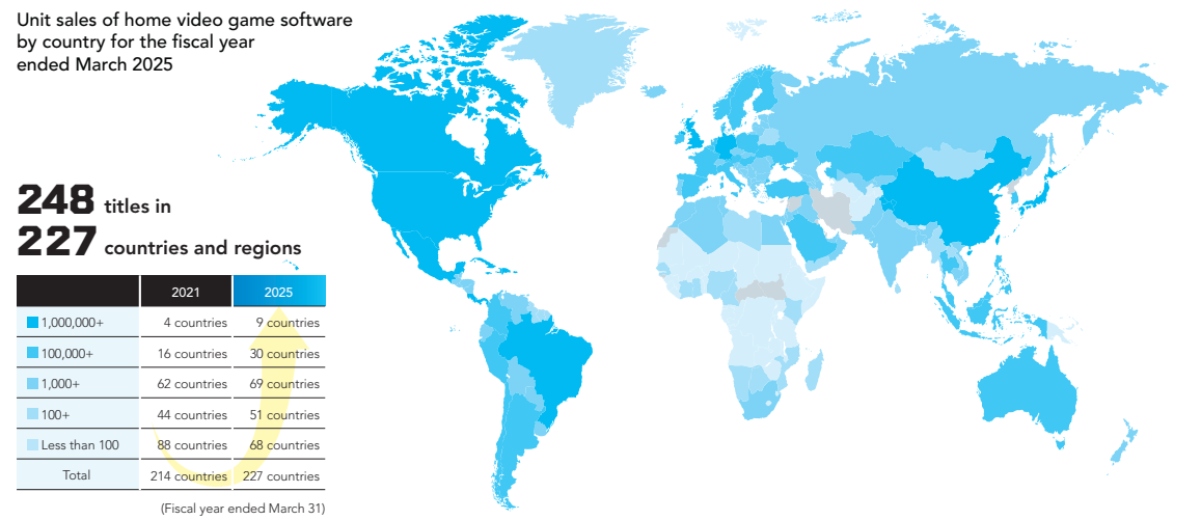
Capcom's sales geography as of March 31, 2025
The global reach of Capcom’s audience is evident in Pragmata’s sales distribution. On PlayStation 5, the main markets predictably were the US (30%) and Japan (17%). However, on Steam, the geography is more diverse: China (23%), the US (19.5%), and Russia (7.3%). The presence of Russia here is no accident — although the company officially “left” the country in 2022, it still eagerly sells its games through unofficial channels. Specifically, on third-party marketplaces, there are always keys available for the Russian Steam region at launch, often with regional pricing.
If we separately consider the reviews on Steam, the following picture emerges. 40% are written in English. Then comes Simplified Chinese (23%), Russian (7%), Korean (6%), and Brazilian Portuguese (5%).
Speaking of reviews, Pragmata was warmly received. The game currently holds a "Overwhelmingly Positive" rating on Steam — 96% of over 13,000 reviews are positive.
According to Steam Review Explorer, players predominantly praise the story, combat gameplay with robot hacking, as well as the bond between the main characters, astronaut Hugh and android Diana. As such, words like "story," "gameplay," "Diana," "father," and "love" frequently appear in the reviews.
Pragmata compared to other Capcom games: A Historical Perspective
After its announcement in 2020, Pragmata was promoted as Capcom's first original IP since Dragon’s Dogma in 2012. Yes, in 2016 the company released Megami Meguri, but it was a Japan-exclusive title for the 3DS. Thus, Pragmata is considered Capcom’s first original game aimed at the global market in many years. However, due to delays and extended development, the company managed to launch several other IPs, including the dubious multiplayer action game Exoprimal in 2023.
When Capcom announced Pragmata’s initial sales figures, we were curious to look at the metrics of other original IPs from the company. It turns out that a result of a million copies in two days is by far the best in the modern history of the Japanese publisher, when considering initial titles in franchises.
The nearest competitor is Lost Planet (2006), which surpassed the million mark in about 27 days. Dragon’s Dogma (2012) and Onimusha: Warlords (2001) took around a month (each). Interestingly, Onimusha was the first game for PlayStation 2 to sell over a million copies, even earning a note in the Guinness World Records. It achieved its first million on its home turf in Japan. It’s remarkable how the video game market has changed over the past two and a half decades.
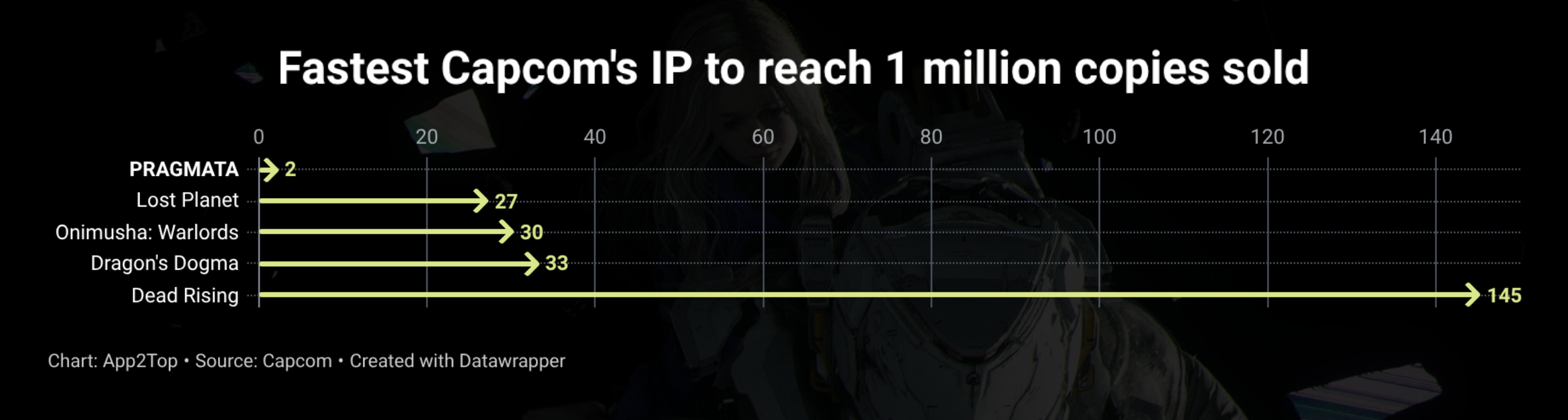
Capcom’s original IPs that surpassed 1 million copies sold the fastest
Other Capcom games in the 21st century were much more niche at launch and only became globally known and even iconic over time. This includes Monster Hunter, which until World remained relatively popular only in Asia, and the original Devil May Cry, which took months to reach its first million.
It should be noted that for older games, Capcom often reported shipments to stores instead of direct sales to customers (sell-through). This was fair during the retail boom, but today such metrics have lost their relevance. For Capcom, over 90% of sales are digital now. Only a few publishers — like Konami — have retained the tradition of using the term "shipments." Though there is little practical sense in distinguishing these terms today.
In this context, Pragmata holds up well against Capcom's established brands. Its initial sales surpass Street Fighter 6, which took five days to reach a million sold copies. It also performed about on par with Dragon’s Dogma 2, which sold 2.5 million copies in 11 days.
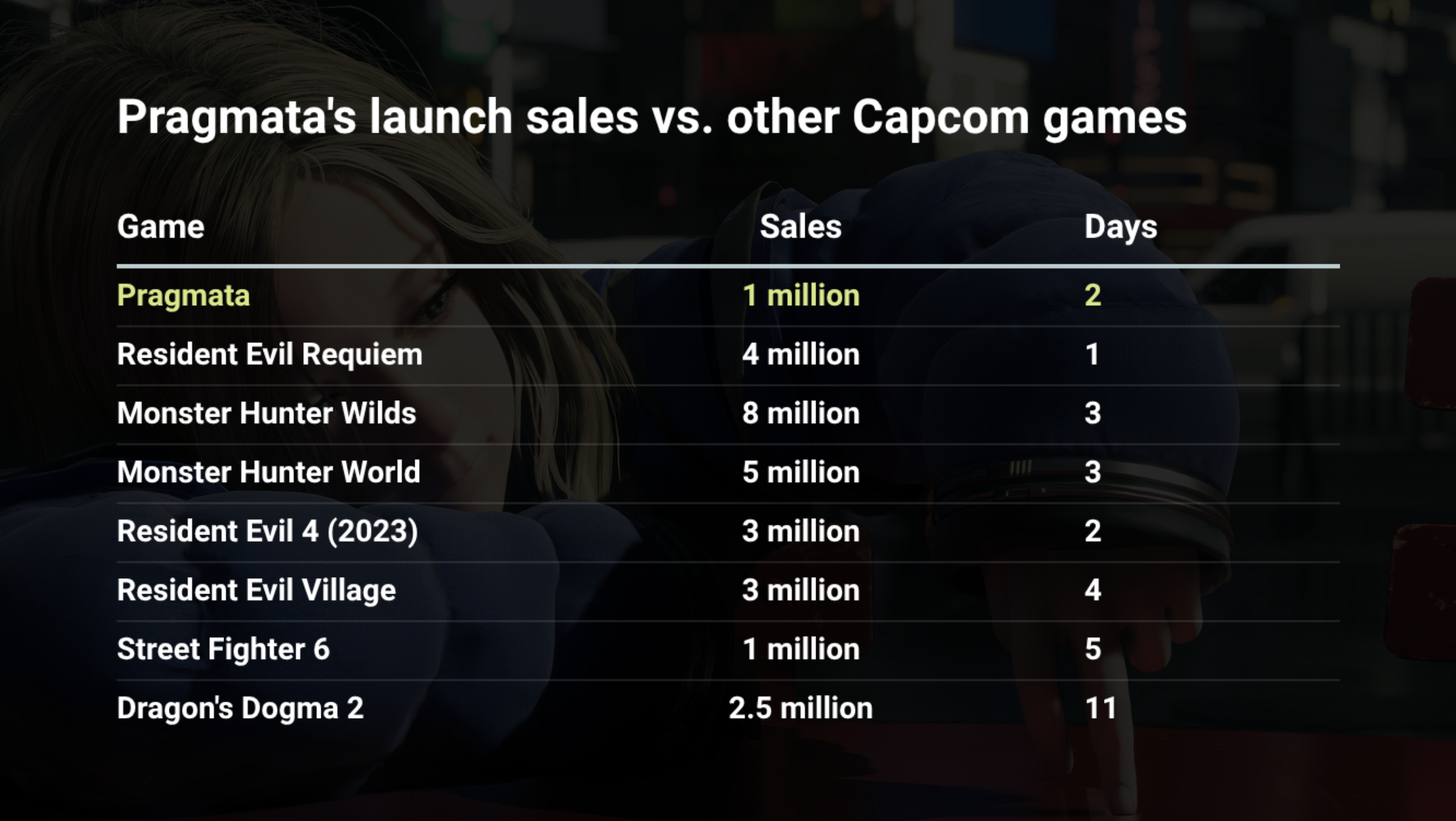
Initial sales of Pragmata compared to other recent Capcom releases
The Winning Streak for Capcom Continues
In the first four months of 2026, Capcom has released three successful games. Besides Pragmata, they are:
- Resident Evil Requiem, which set a company record for launch sales — 4 million copies in a single day, and currently, its gross revenue on Steam alone is valued at over $140 million;
- Monster Hunter Stories 3: Twisted Reflection — though official figures were not disclosed, in Japan alone, its physical sales exceeded 54,000 copies in two days, and on Steam, the game currently boasts 224,000 copies sold with a revenue of $13 million.
Pragmata stands out among them not only as a new original IP but for several other reasons.
Firstly, it featured an extremely successful demo available since December, which attracted over 2 million gamers. Given the game’s unusual core gameplay, the ability to try the mechanics hands-on before the release was a decisive factor for many users when purchasing.
Secondly, Capcom unexpectedly set the base price at $60, not $70, as with its other recent releases. Combined with regional pricing — $39 in China and, for example, keys for $40 for the RU region on Steam — this positioned the game favorably against other AAA titles.
Thirdly, a simultaneous release on all platforms, including Switch 2, ensured the widest possible audience reach.
Fourthly, Pragmata is well-optimized and fully utilizes the proprietary RE Engine. Capcom’s specialists once again proved that their tool is perfect for chamber action games, offering users high-tech visuals with minimal compromises.
Finally, Pragmata is a relatively short game. The main storyline can be completed in 10–12 hours, while more thorough exploration in a single playthrough is unlikely to last longer than 20 hours. This formula is similar to recent games in the Resident Evil series, standing out against the backdrop of sprawling open-world projects from some other AAA publishers.
This combination of decisions helped Capcom successfully launch a new IP, which is quite bold and unique in terms of mechanics.

It's also worth noting that Pragmata was developed by a relatively young team within the company. In fact, the game can be considered an experiment to test the "new blood" in the company. For instance, artist Yonghee Cho was a first-time game director, having previously worked on the Resident Evil 3 remake as well as Metal Gear Rising: Revengeance and Nier: Automata at PlatinumGames. Art director Hajime Kimura could be considered a new star at Capcom. He previously worked only on a few games, including Astral Chain (as an art director) and Dragon’s Dogma 2 (as a concept artist for characters), and now he assumed a leading role on a new original project and contributed to creating Pragmata’s distinctive visual style, which stands apart from other Capcom franchises.
Generational continuity is something often forgotten by Western gaming companies. It is the passing on of experience and nurturing of talent that plays a crucial role in long-term success, especially in an industry as risky as gaming.
Despite the successful release of three projects, Capcom has another major game planned for the coming months. Onimusha: Way of the Sword, the first entry in the series since 2006, is set to be released by the end of the year. Currently, it has accumulated almost 900,000 wishlists on Steam, likely heralding another hit for the Japanese company. Today, such a winning streak is likely unmatched by any other major publisher.