
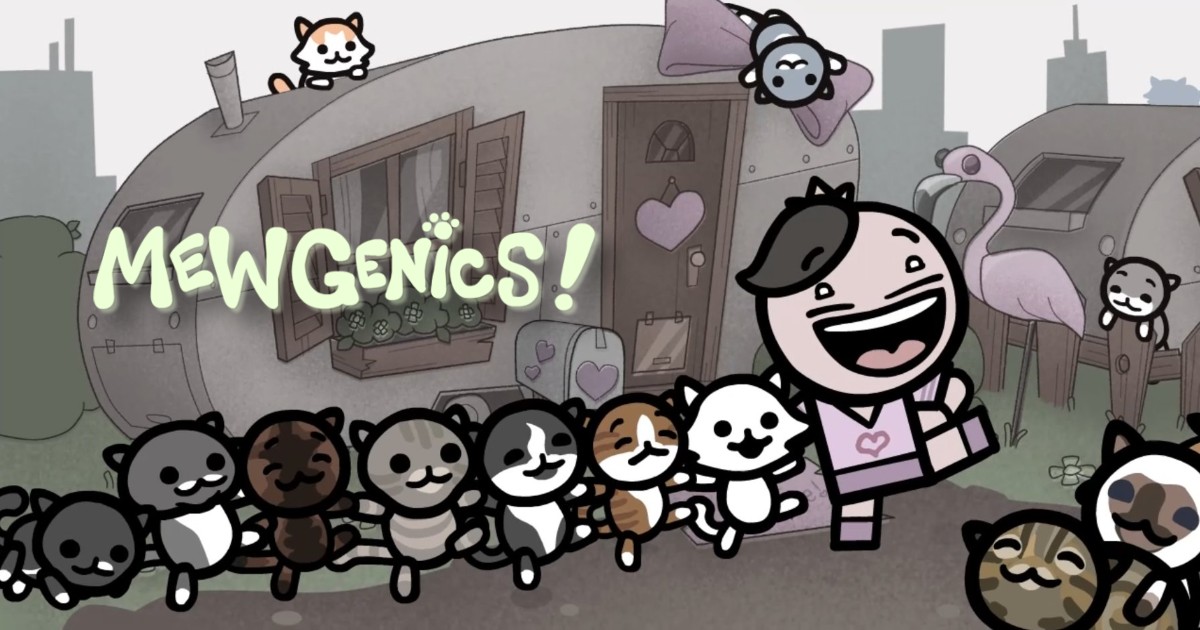
On February 10th, a turn-based "roguelike" game about cat breeding, developed by the creator of The Binding of Isaac, was released on Steam. Behind its surreal idea lies a deep gameplay experience that blends several genres. In today's article, we provide a detailed analysis of Mewgenics in terms of revenue, sales, and wishlists, as well as its marketing campaign.
What this article will cover:
- A brief history of Mewgenics, which took over eight years to develop;
- The game's successful launch on Steam: wishlists, sales, revenue, and other metrics;
- Comparison of Mewgenics' metrics with other "roguelikes";
- The game's marketing campaign as an example of effectively engaging with the community and setting the right expectations.
Mewgenics: What is the game about and why the interest?
Mewgenics is an auteur project in every sense, so it cannot be separated from the personality and work of its creator. Game designer and artist Edmund McMillen, who has been creating flash games since the early 2000s, became famous for the platformer Super Meat Boy and the "roguelike" The Binding of Isaac. These are among the most well-known and successful indie games in history, in the truest sense of the term.
The first concepts for Mewgenics appeared as far back as 2011, shortly after the release of the original version of The Binding of Isaac. McMillen and his partner Tommy Refenes, with whom he founded the studio Team Meat, announced the game in 2012. It was described as a mix of Animal Crossing, Pokémon, and Tamagotchi with turn-based battles and roguelike elements. However, the development was later halted in favor of other projects.
Shortly after McMillen left Team Meat, he regained the rights to Mewgenics and rebooted the project in January 2018. At that time, he enlisted the help of programmer and game designer Tyler Glaiel, with whom he had previously collaborated on the puzzle game Aether and the hardcore 2D platformer The End Is Nigh.
Together, they developed Mewgenics over the past eight years, with Glaiel using an old custom engine as the technical foundation, allowing for the import of assets from Adobe Flash. This is an important feature since both developers have actively used Adobe Animate throughout their careers, including for Isaac and Super Meat Boy.
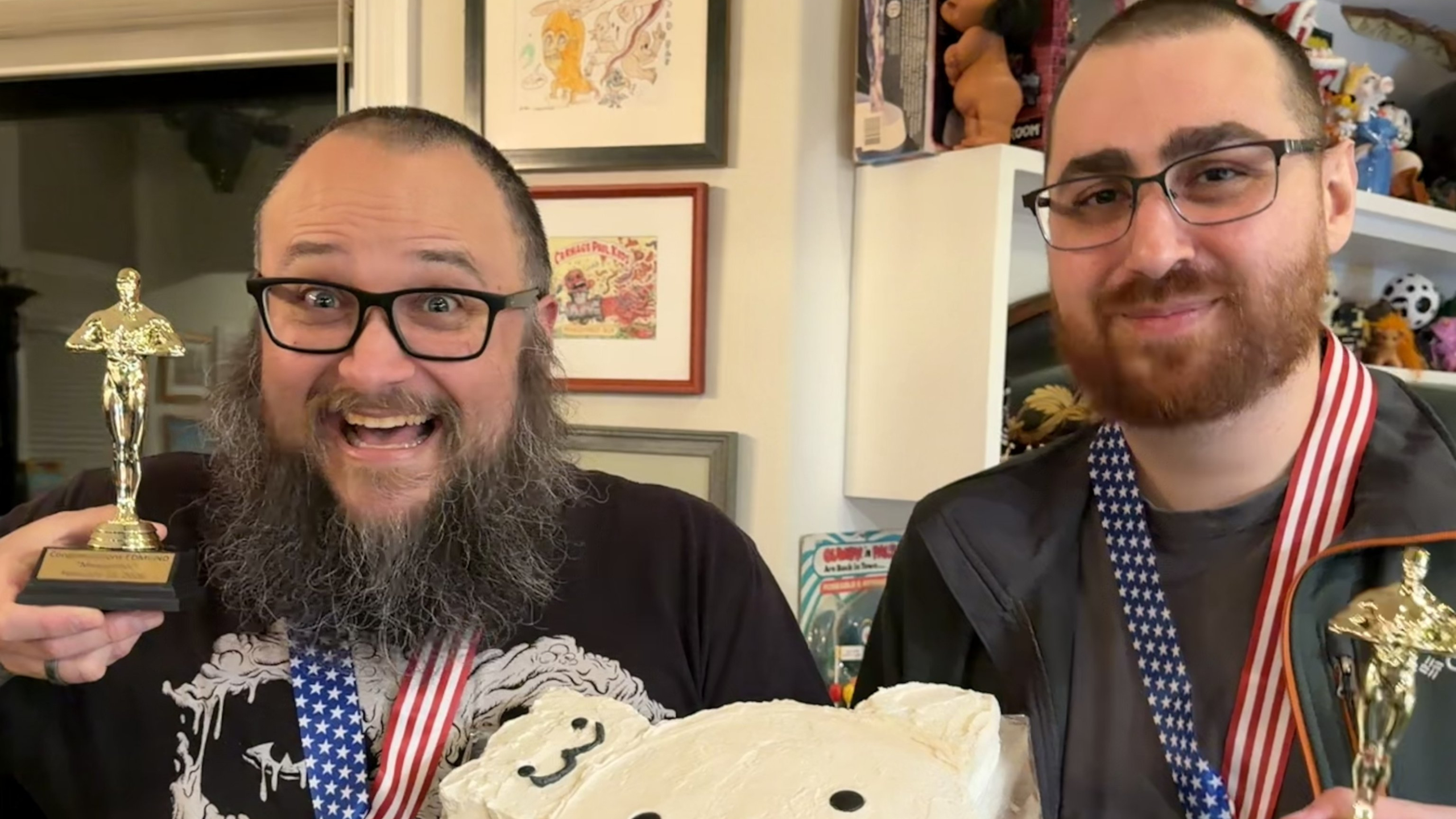
Edmund McMillen (left) and Tyler Glaiel (right) | Photo: X
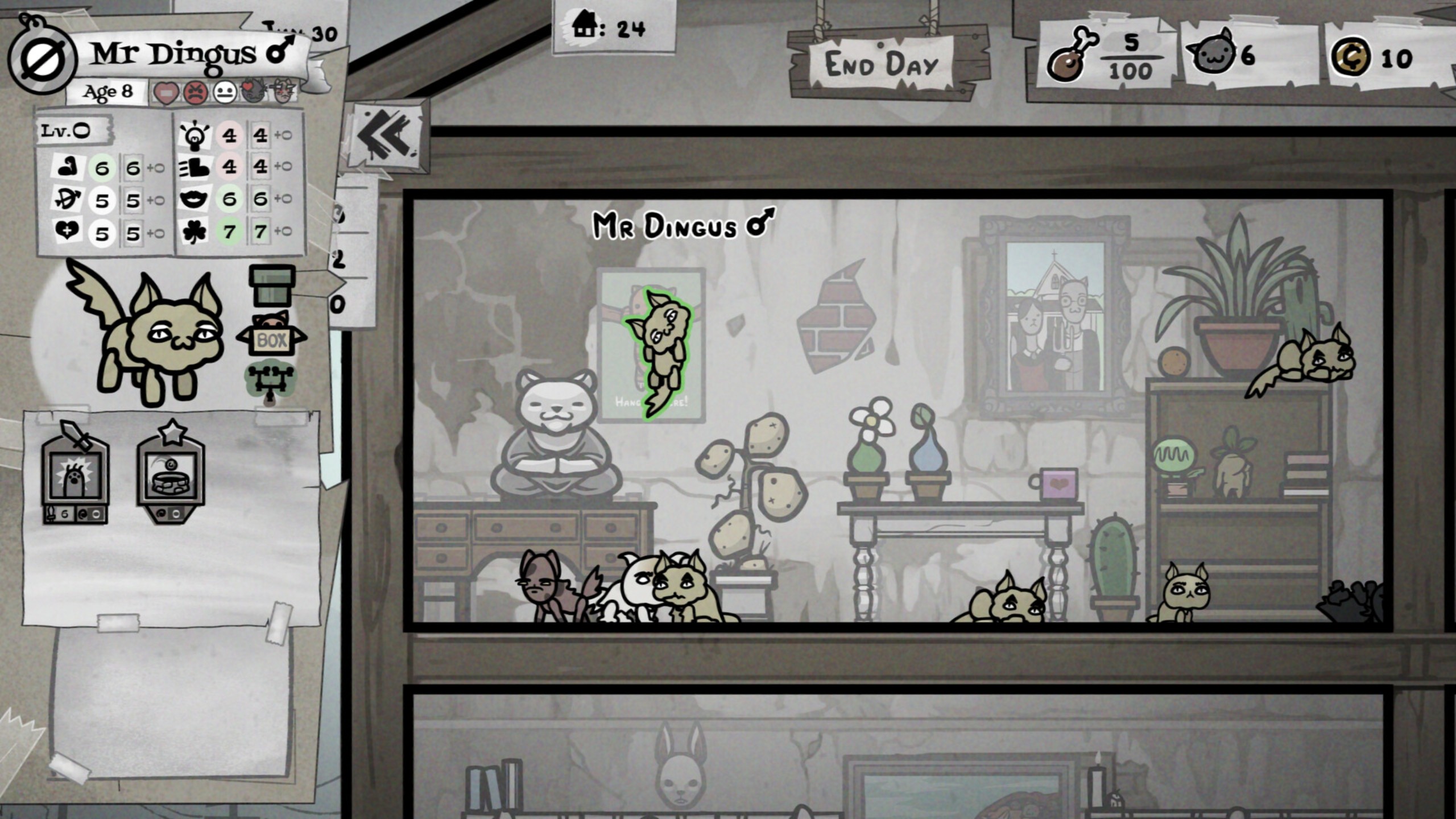
From a gameplay and core mechanics perspective, Mewgenics is a turn-based strategy with roguelike and base management elements, centered around cat breeding. Players gradually populate a house with cats, create comfortable living conditions for them, and breed offspring. The combination of different abilities and conditions generates numerous combinations, sometimes quite crazy or referencing other IPs and pop culture phenomena.
Then, players must send teams of several cats on adventures, selecting starting classes for them, upgrading them during the runs, and battling opponents. Building the route resembles the now-standard path selection like in Slay the Spire. During a run, players encounter not only ordinary adversaries and bosses but also random events, events, and shops.
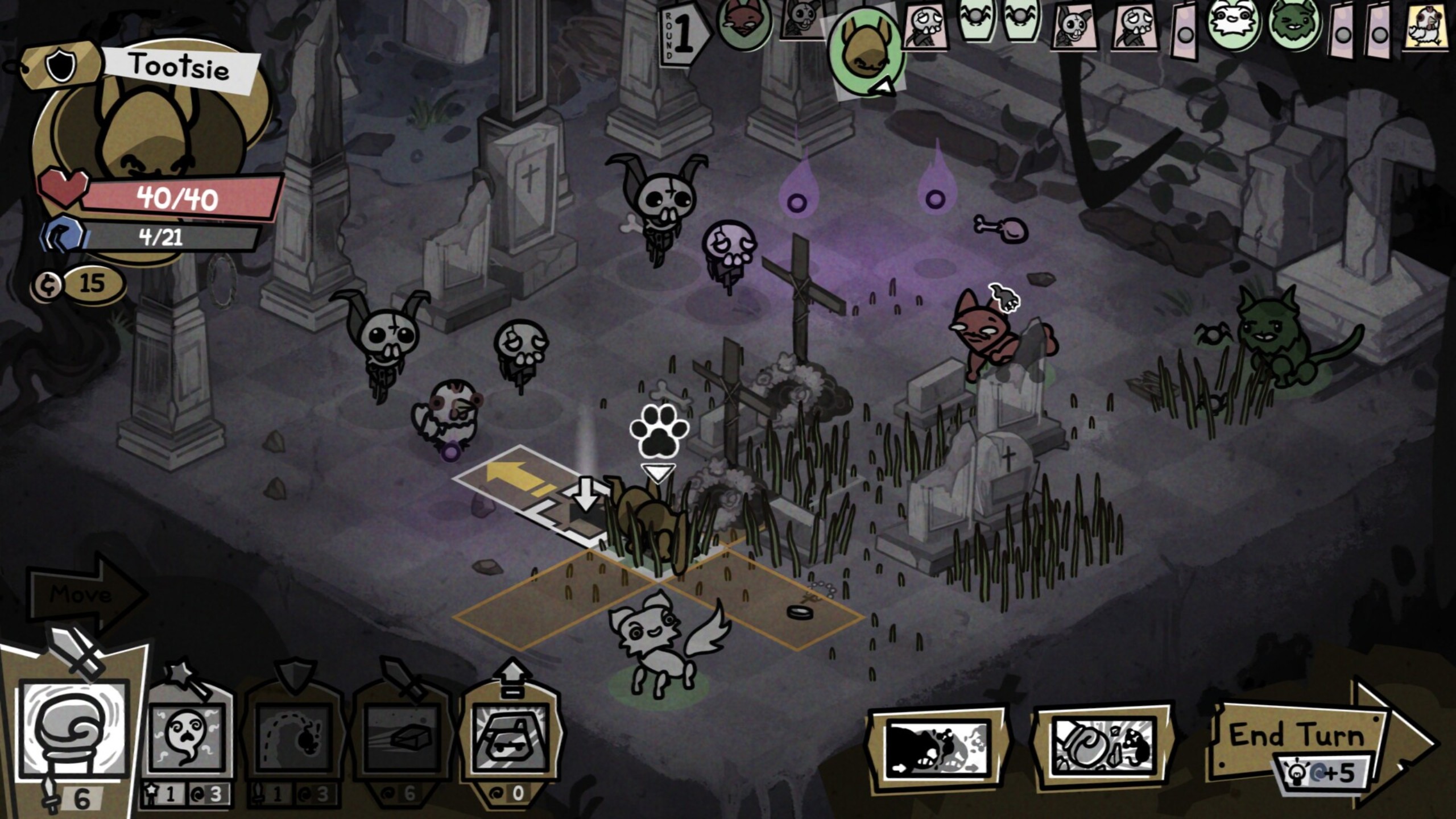
The battles resemble classic tactics with grid-based layouts, active and passive abilities, and the use of items and environment. This portion can be compared to a game like Into the Breach, which also combined turn-based combat with roguelike elements. However, Mewgenics places a greater emphasis on variety and unique combinations of abilities and items, with over 900 items claimed to be available.
As in Isaac, there is no metaprogression in the conventional sense for modern roguelikes. However, certain actions allow for permanent enhancements, and the ability to retain powerful items and a strategic approach to breeding also help simplify subsequent runs.
Considering McMillen's previous works, Mewgenics contains dozens, if not hundreds, of non-obvious details and secrets. When the game designer mentioned that it would take the community several years to uncover all the mysteries, he wasn't exaggerating. Moreover, the main content of the game is about 200 hours long.
Without McMillen's surreal, grotesque visual style and signature dark humor, some might find his works off-putting or might not appreciate his desire to toe the line and address somewhat taboo topics.
At 45, McMillen calls Mewgenics almost his magnum opus, and there is a basis for that claim. The game's launch metrics at least indicate that the eight years of development and another bet on fully creative authorship paid off.
Launch Metrics of Mewgenics: Unconditional Success
By its release on February 10th, Mewgenics garnered around 500,000 wishlists on Steam, and since the beginning of January, it climbed from 118th to 49th place on the list of most anticipated games on Steam.
The press, which received the game in advance, was impressed: the average score was 89/100 on both Metacritic (based on 40 reviews) and Opencritic (38 reviews). Initially, the score was at 90, but it slightly dropped over time.
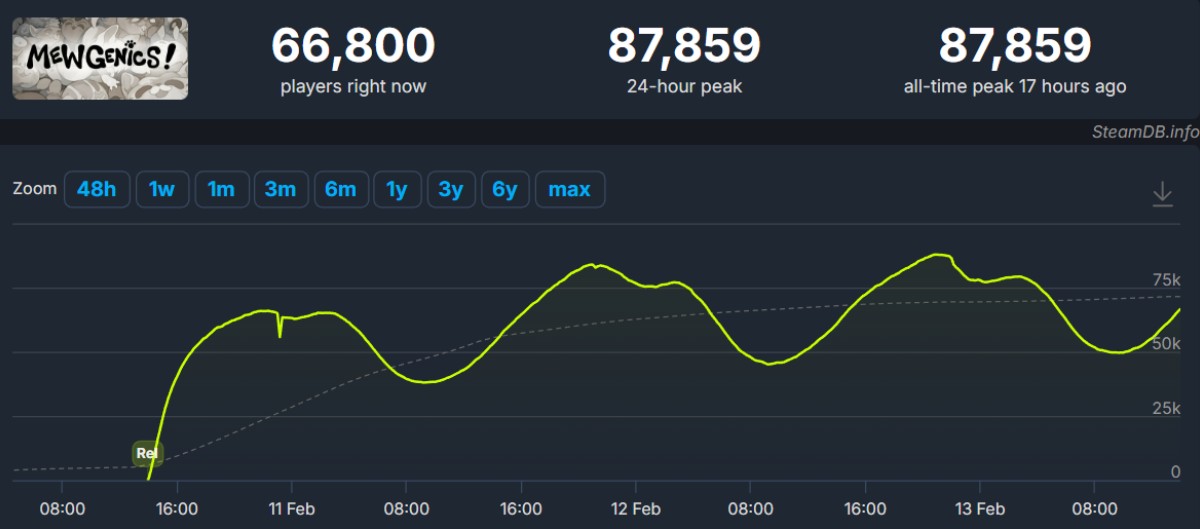
In the first few hours, Mewgenics attracted over 60,000 concurrent users (CCU) on Steam. In the following days, the numbers continued to grow, reaching 87,859 CCU by February 13th. This is significantly higher than any other project by McMillen or Glaiel, including The Binding of Isaac: Rebirth (70.7 thousand CCU).
Currently, Mewgenics ranks third in peak concurrency among 2026 releases, trailing only Nioh 3 (88 thousand CCU) and Highguard (97.2 thousand CCU). Given the hype and growing interest in the project, the metrics are expected to rise further over the weekend. There is every chance Mewgenics will surpass the 100,000 CCU mark.
Users have also warmly received Mewgenics. During the first two days, it received 11,000 reviews on Steam, with 94% being positive. The majority of reviews (67%) were predictably written in English. This was followed by Russian (8%), Simplified Chinese (7.5%), Spanish (5%), and German (2%). However, the game has not yet been localized into Russian or Chinese.
Wishlists, press ratings, and the existing large fan base of The Binding of Isaac, combined with Mewgenics' virality (discussed below), translated into excellent initial sales.
According to the developers, the game recovered its entire production budget within just three hours of release, far exceeding their expectations. Several years ago, Glaiel noted that Mewgenics would be considered a success if it sold 250,000 copies. Ultimately, it surpassed this mark in just 12 hours, and a day and a half later, over 500,000 copies had been sold.
At present, Gamalytic estimates the project's gross revenue at $19.4 million, with nearly 800,000 copies sold. It's worth noting that analytical services often have inaccuracies in the first few days after a release, so for a more accurate estimate, one should wait at least a week. However, there is no doubt that by the end of the year, Mewgenics will be on the list of the highest-grossing releases on Steam.
From other interesting statistics: Russia ranks in the top three countries by the number of players. Currently, it accounts for approximately 6.5% of all copies sold. This is not surprising, given the distribution of the audience by country for McMillen's previous projects. The share of Russian-speaking users is comparable for The Binding of Isaac (7.4%), its Rebirth version (6.4%), and Super Meat Boy (8.4%).
Comparison of Mewgenics with other "roguelikes"
McMillen and Glaiel’s new project has shown an impressive start for its genre. Let's first look at the peak online metrics of other "roguelikes."
Note: We include games with roguelite or roguelike elements in various genres, like action, auto-shooters, strategies, simulators, and deckbuilders. From our research of Steam releases, we've excluded free-to-play games and those like Elden Ring Nightreign or Content Warning, which can hardly be considered part of the genre. While one might loosely categorize Don’t Starve Together as a "roguelike," it set its online record on the original game’s tenth anniversary due to a major update and a 90% discount.
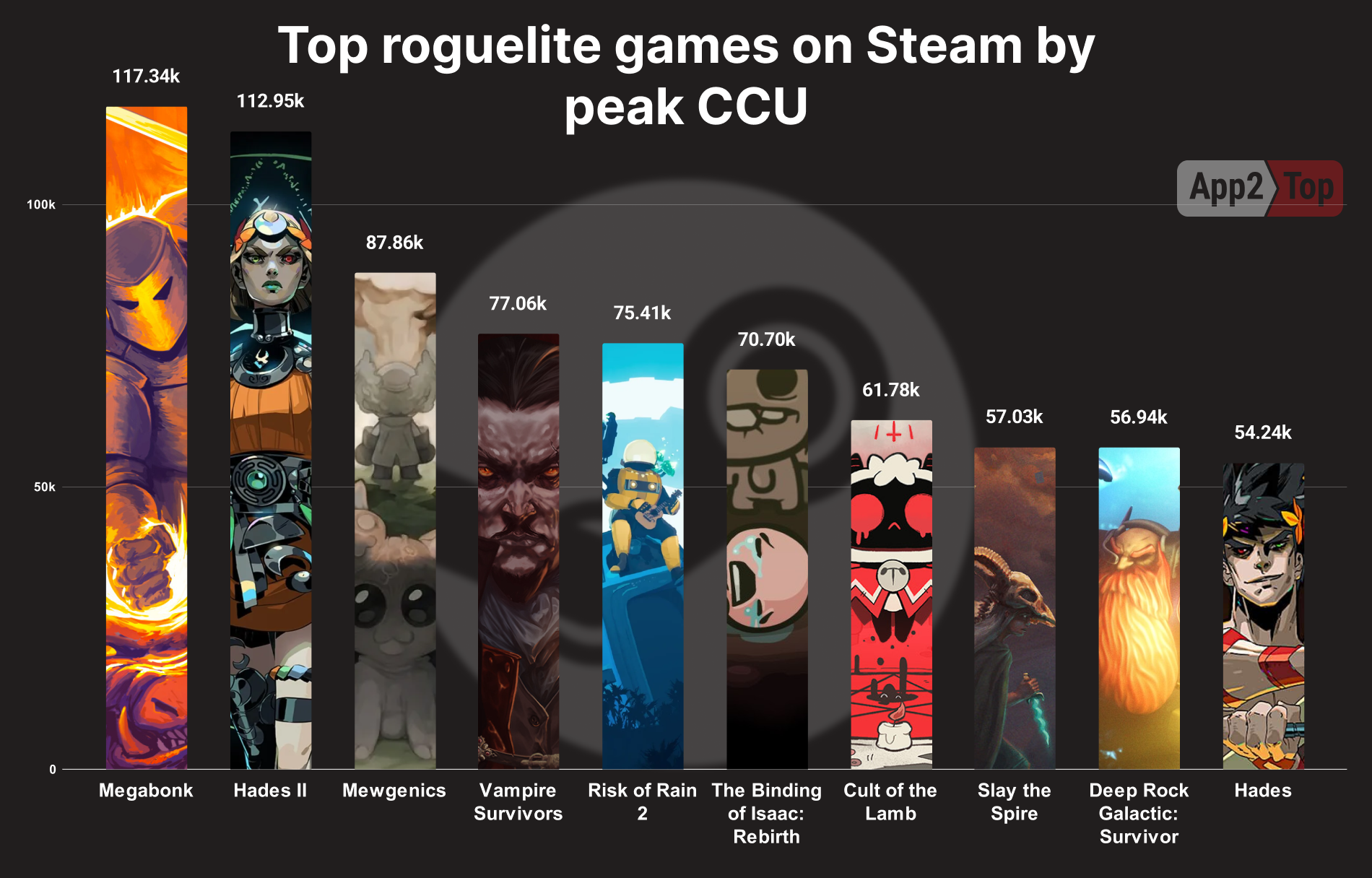
Currently, Mewgenics trails only last year’s Hades II (112.9k CCU) and Megabonk (117.3k CCU) in peak online metrics. Among turn-based "roguelikes," it's far ahead — for instance, Into the Breach boasts only 14.6k CCU.
Certainly, online concurrency on Steam isn’t an absolute measure of success. All the mentioned titles are major hits. Still, this metric underscores the immense initial interest in Mewgenics.
Top 10 "roguelikes" on Steam by peak online users
Comparing Mewgenics' revenue to other genre representatives isn’t feasible yet. However, it ranks among Steam's top 30 highest-grossing "roguelikes," potentially breaking into the top ten year-end. Titles currently in the top ten include Darkest Dungeon ($52 million), Gunfire Reborn ($55 million), and Cult of the Lamb ($67 million).
Leading the genre are The Binding of Isaac: Rebirth ($80 million), Slay the Spire ($94.8 million), Hades ($156 million), and Risk of Rain 2 ($157 million).
Marketing Mewgenics: Blending Reputation, Transparency, and Virality
Finally, let's touch upon the marketing campaign. Although nothing revolutionary or extraordinary, the strategy chosen by McMillen and Glaiel is notable for relying heavily on the developers themselves.
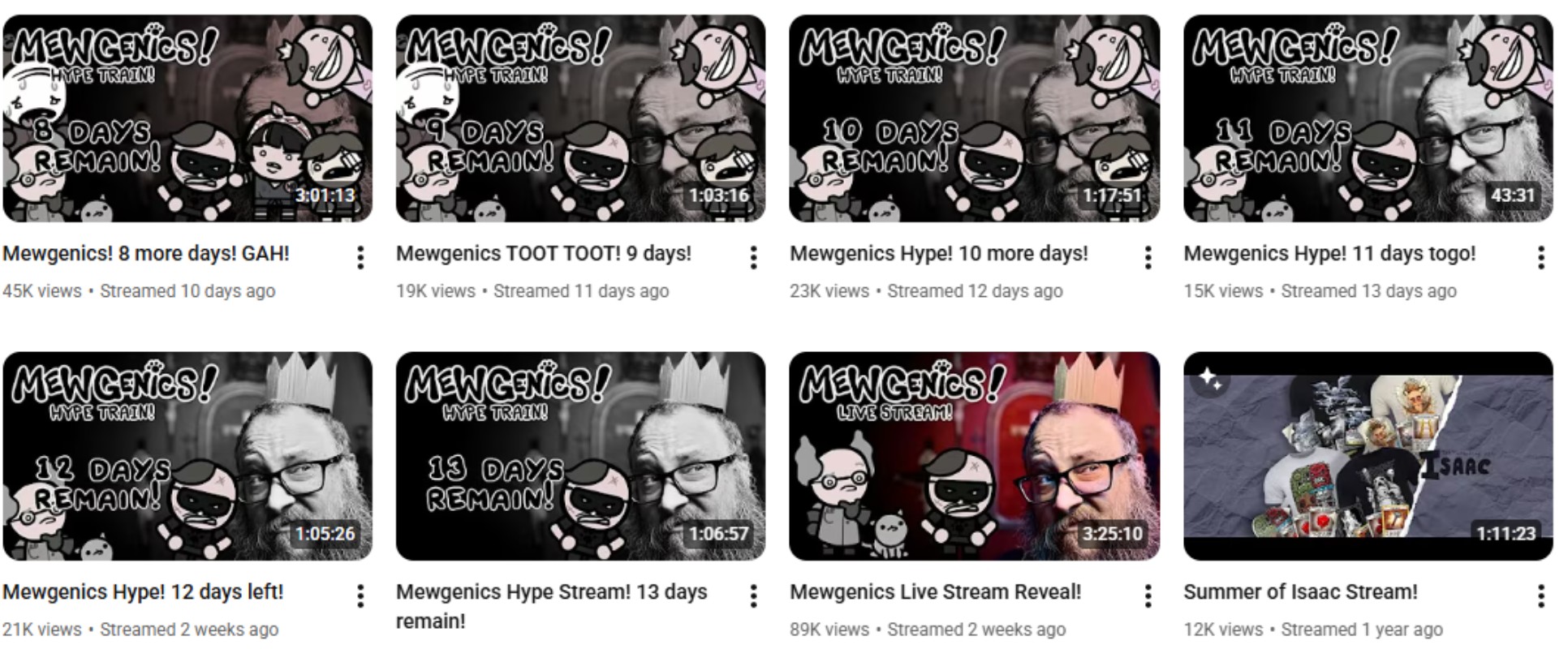
Two weeks before its release, McMillen began hosting daily streams showcasing the game, discussing its features, and simply engaging with the audience. While not all developers have channels with 100,000 subscribers, why not utilize modern platforms without reservations?
Indeed, some game creators maintain YouTube or Twitch channels, regularly sharing updates, but most aren’t ready to step out beyond social media. They should. While the same immediate return as McMillen’s might not be evident, such efforts cost only time, not money.
Furthermore, McMillen frequently appeared on other streamers' and bloggers' channels, whether in impromptu podcasts, interviews, or playthroughs with developer commentary. Influencers included hardcore rogue-like players like Lazy Mattman, who built their careers on The Binding of Isaac, as well as general gaming YouTubers.
Regardless of how Mewgenics ultimately turned out, a game's perception is always improved when one of its creators is personally accountable and directly communicates with its audience. Although it's psychologically and physically more demanding than merely distributing keys via an agency.
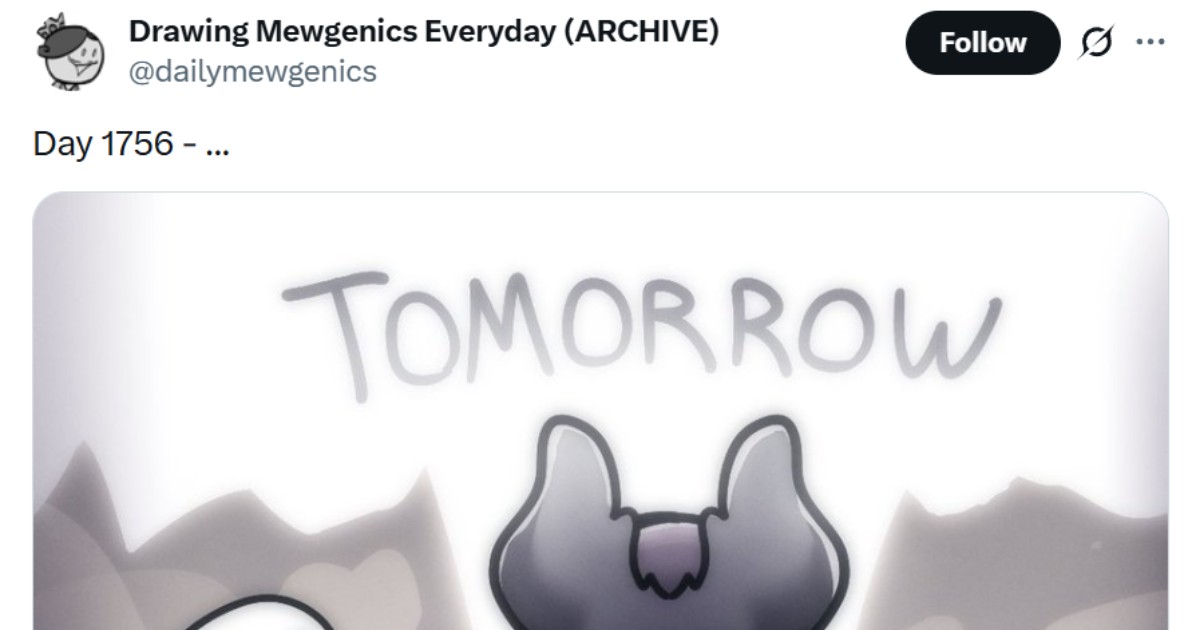
Clearly, McMillen’s reputation played an instrumental role. Thus, the community around Mewgenics naturally formed well before its release. One of the most unusual examples is the account Drawing Mewgenics Everyday, where an artist shared fan art and comics inspired by the game daily for 1,757 days leading up to its release.
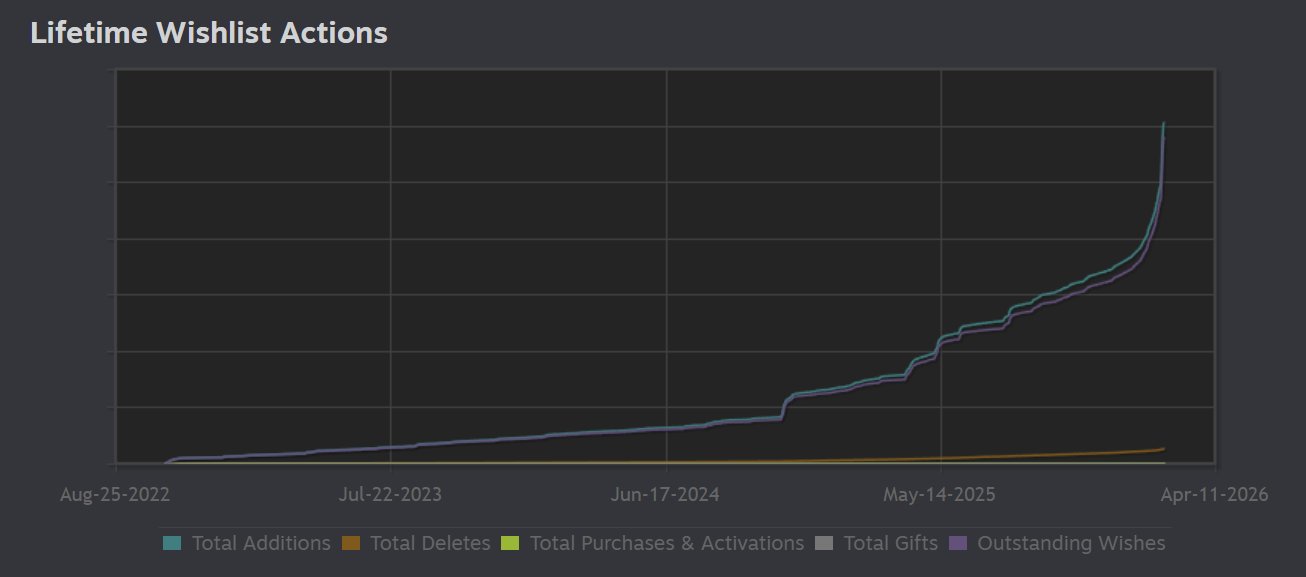
Shortly before launch, Glaiel shared the Mewgenics wishlist graph, which sharply spiked upwards following early reviews from critics. Coupled with the aforementioned activities, this line graph turned vertical.
Additionally, McMillen organized a series of contests for the community in the weeks leading up to launch. Daily tasks varied from simple (donating to an animal shelter or spreading the game's trailer on social media) to creative (writing a "cringe" song or explaining Mewgenics' concept to their family).
One of the most viral contests involved printing out flyers of fictional missing cats and posting them around participants’ cities. This campaign turned into a substantial and, importantly, cost-free outdoor advertisement for Mewgenics.
Winners received game copies and branded merchandise. Below are some flyer examples.

The developers also enlisted numerous well-known individuals for the cats' voices. Among them were game developers such as Cliff Bleszinski, co-creator of Gears of War, and Florian Himsl, co-author of The Binding of Isaac, as well as various musicians, actors, and YouTubers like Vsauce and MoistCr1tikal, who also voiced a character in last year's Dispatch.
According to McMillen, all participated in the project for free, simply needing to record different cat sounds. Ostensibly a brilliant marketing move and effective use of his network. However, some online criticized the inclusion of several individuals whose political views are, to say the least, controversial.
In response to this criticism, McMillen said: “I understand we live in a time where meows from people with different beliefs can frighten, irritate, and stir controversy. But I felt this move was intriguing.” He also mentioned that if he only included those sharing his views, he’d be the sole voice for all the cats.
Anyway, these "cat" cameos added more points to Mewgenics, sparking a lot of discussions online. The game itself, with its gameplay and visual virality, is already gaining traction on platforms like TikTok.
***
In some respects, Mewgenics can be compared to last year’s Hollow Knight: Silksong. Two indie developers with successful games and impeccable reputations embark on their most ambitious project. They work on it for years with a small team, free from crunch and scandals, and release it to resounding success.
Certainly, other indie developers shouldn’t necessarily use Mewgenics and Silksong as their benchmarks. These are games with unique fates, and their creators have, through years of work, achieved an unthinkable level of comfort and creative freedom in the industry. However, it wouldn’t hurt to aspire to such heights.