
4 million downloads, with 2.8 million being organic.
Evgeny Antipov, the CEO of Pixel Cells studio, shared about the project in his column for App2Top.
Evgeny Antipov
The project began as a prototype created in two weeks, without monetization or future plans. Today, six years later, it is a fully-fledged growing product, developed by a team of seven people.
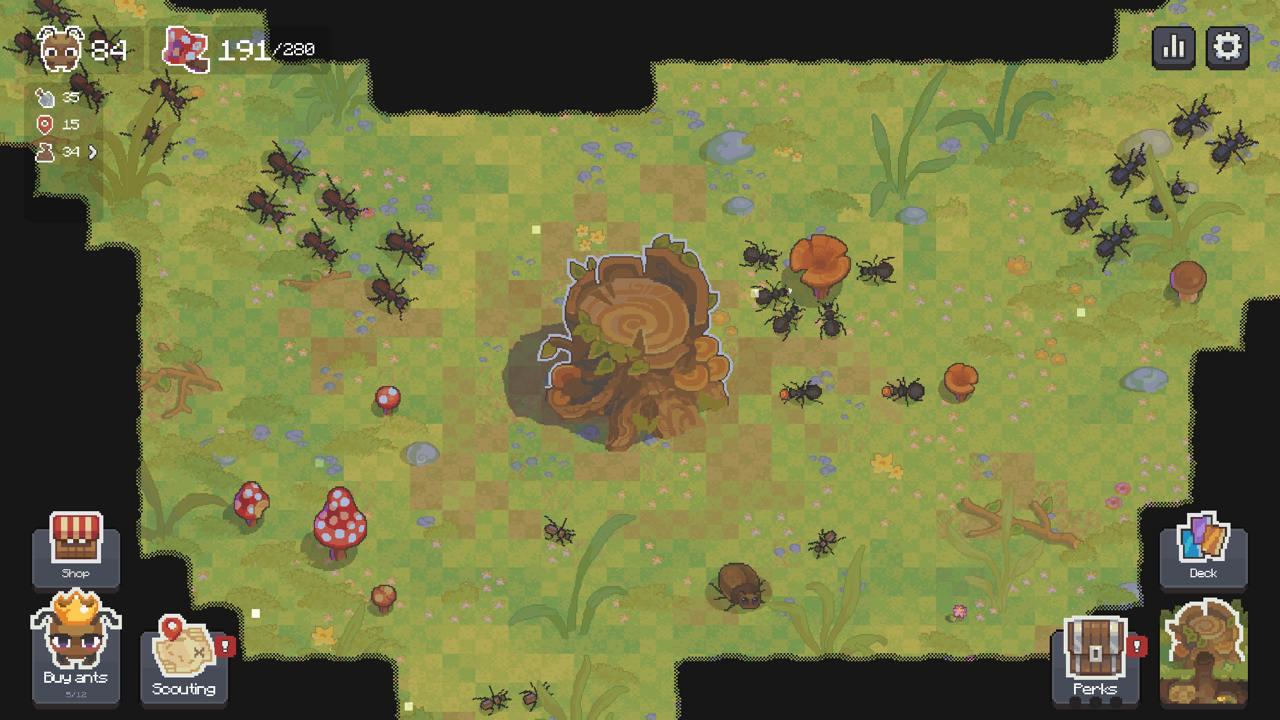
The Beginning
In September 2018, I was in the middle of my year-long challenge, during which I dropped out of college and quit my job as a 3D modeler to make games for a whole year. I wanted to see where it would take me. I didn't know how to make games, so I was actively studying Unity and writing on forums, offering everyone to collaborate: I wanted to prototype as many ideas as possible.
One of the people who responded to my call was a developer with the nickname Denismann. This guy had also just entered the game development world and was brimming with ideas. Some of them resonated with me, and we started working together on one of his projects.
One evening, I accidentally stumbled upon a YouTube video titled ANT TERRARIUM, SPIDER VS ARMY or something like that. I devoured it whole. Then watched the next video. And another. The ants were doing incredible things, behaving just like NPCs from my favorite genre—RTS! That's when I conceived the plan to create a strategy game about ants.
I quickly infected my colleague with the idea. The first thing we did was check the market. To our surprise, there was only one game about ants on the entire Google Play, and it was in Korean.
So we faced a maximum level challenge: to create a project that few had attempted. Original yet challenging. Though where there’s complexity, there’s interest: in my opinion, there's nothing more fascinating for a developer than designing unit behaviors from scratch.
We spent two weeks intensely collaborating on Discord and produced a playable prototype. In it, you could create ants and a dungeon infinitely. The ants would find food, bring it home, and there were enemy base raids, fog of war, and a minimap.
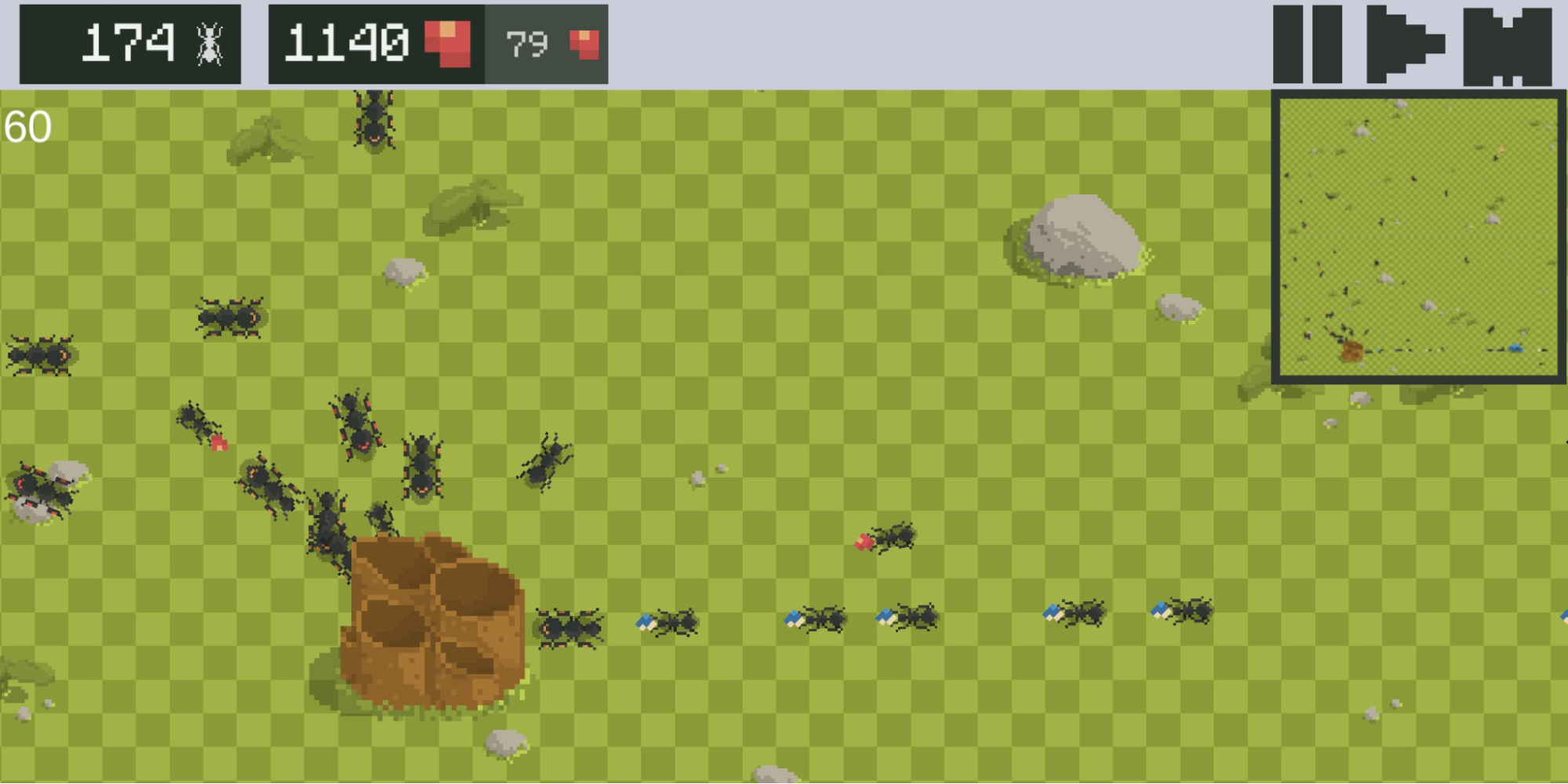
We were very pleased with our work. We uploaded our game Ant Colony: Simulator to Google Play, made two quick updates, and then parted ways. I went on to prototype my next projects, while Denismann received an offer to join an IT studio as a junior developer.
Three to four months later, I received a notification from Google Play in my email about the need to update some libraries in the game. I logged into the developer console and decided to check the reviews. I read one, two, ten, a hundred... wait. I checked the downloads. The game was featured. The downloads were flowing in at a rate of 300 thousand a month. Tons of organic traffic.
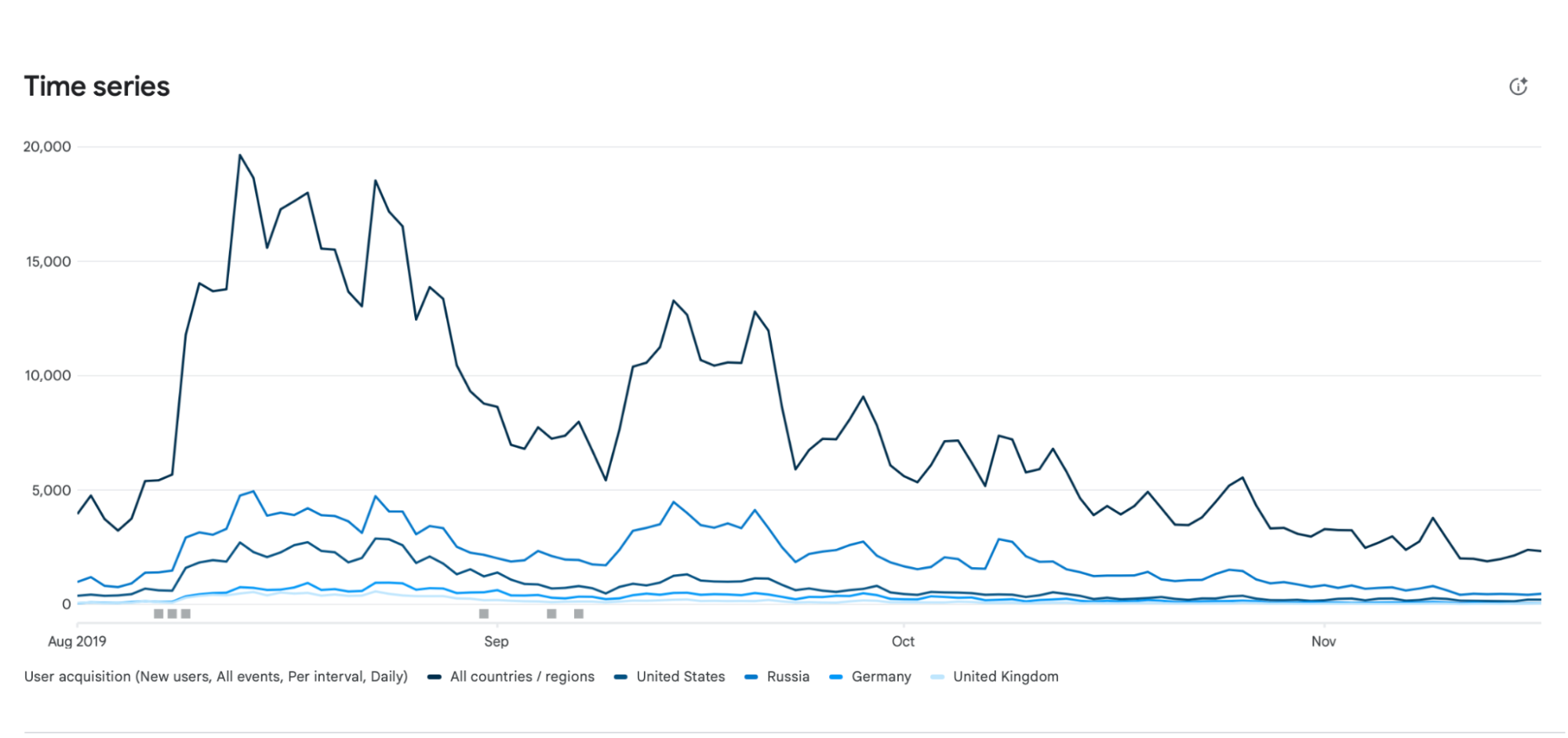
Our prototype proved its viability. People were interested in the small pixel game about an ant colony. A game without ads, IAPs, with only 30 minutes of gameplay and no mobile optimization, found its audience. Magic! In total, the game was downloaded by over a million users. Moreover, it even spurred a wave of clones in the Play Market.
Second Part
A couple of years later, we decided to make a full product. A second part that would consider player feedback.
Interestingly, the team found me on their own. All the developers came after getting to know the first part. They wanted a continuation, they wanted to create a larger game about ants that would once again shake up the mobile store.
We began development of the sequel on January 1, 2020. Initially, the team had three people:
- me as a game designer and UI/UX specialist;
- Victor, a successful mobile game developer specializing in ants, as the programmer;
- Artem — a freelance artist.
The game was developed as a passion project. This meant everyone contributed as much time as they could. However, we tried to organize more: structure tasks, carry out clear alignments, track tasks, and maintain documentation. We worked in this manner for four years, until by the end of 2023, we decided the project was ready for soft launch.
These four years were challenging.
Running a passion project like a startup without funding is a constant balancing act.
Firstly, maintaining motivation and focus is hard without player feedback.
Secondly, maintaining good communication within the team is vital — disagreements often doom projects in their early stages.
Thirdly, survival is amidst chaos — structure only emerges over time; processes are established, and responsibilities are distributed. Every team member during this period must exert a tremendous effort to enable the project to come to fruition.
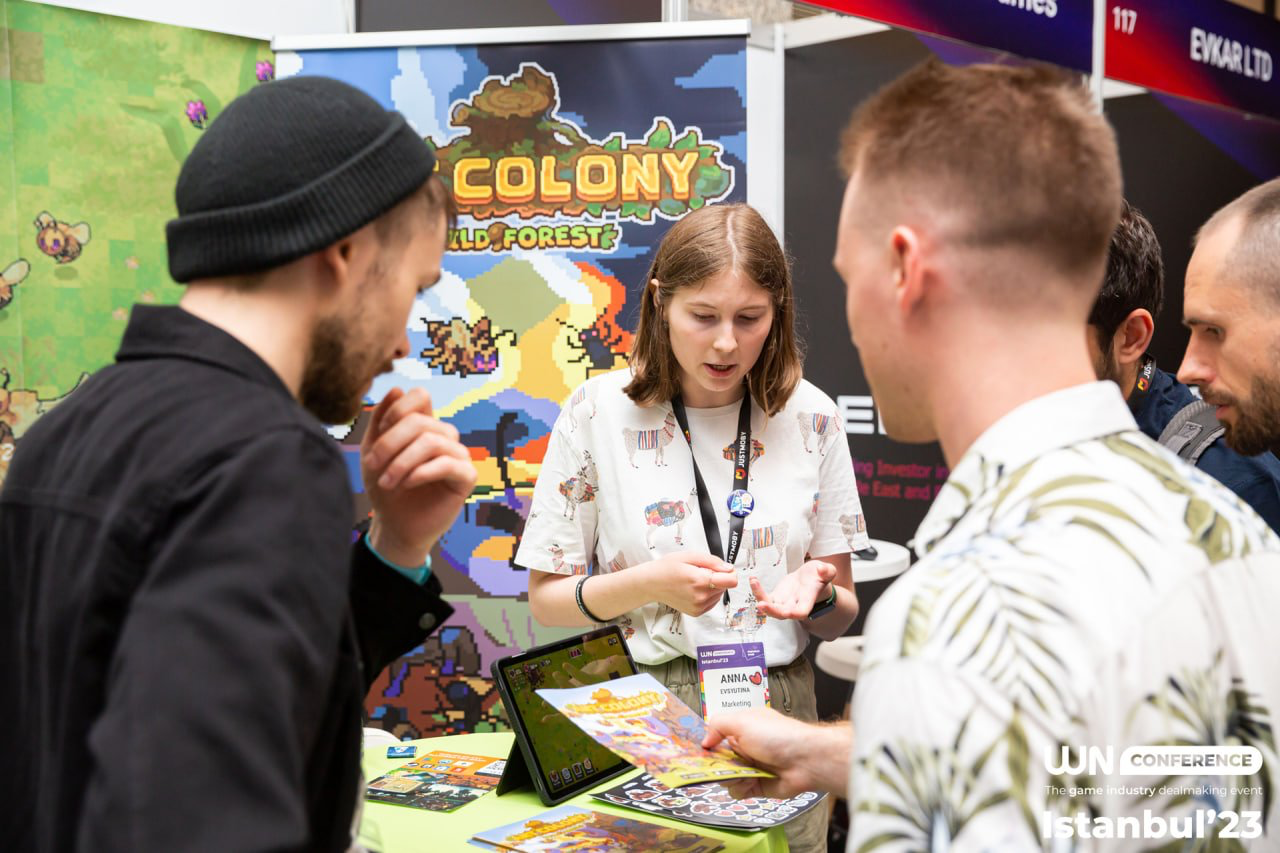
By the way, we first showcased the game to the world at the White Nights conference in Istanbul.
Searching for a Publisher
A year before the soft launch, we realized we needed a publisher. We needed both finances and expertise.
We had a plan: go to a conference, set up a booth, and choose a partner from the publishers who come to chat. We knew that mobile publishers who would suit us would be at the event. Plus, having volunteered at numerous gaming conferences, I had an idea of how everything should be set up.
There's always a clear contrast at events between teams who have prepared vibrant promos, brochures, stickers, and interactive booths, and those manned by enthusiastic developers ready to answer questions, versus other developers' booths with empty tables holding only laptops.
We executed our "homework" excellently — printed promos, found a girl to help at the booth, acquired tablets, and prepared QR code game presentations.
In the end, the conference went well. Our booth had a line. It was tough for the girl and me to answer everyone. Several dozen publishers invited me for discussions. We had a real choice.
We returned home and started listing all the offers in a spreadsheet to make a decision. Our key considerations were:
- contract format;
- language of communication;
- experience in mid-core games;
- experience in strategy games;
- developer's share;
- required SDKs;
- offered burn rate;
- feedback on them from other studios.
And then a problem arose: it became evident from the spreadsheet that the studios showing interest in us did not have the necessary experience in similar projects (since this was our first project, expertise was crucial for us), while the studios we would consider as potential partners found our metrics insufficiently high.
Other parameters (not only experience) were also important. For example, communication in English could be problematic: not everyone in the team had a high proficiency in English. We also needed some funding to make a push towards scaling content.
While gathering information about publishers and discussing who might fit us, a colleague from my previous job reached out, where we had jointly developed a game called Freaky Stan. He said their studio was now not only a developer but also a publisher. Moreover, they were interested in our project.
Bingo. Everything aligned. They offered monetization and content expertise, technical support, test assistance, and communication in Russian. I personally knew the whole team that was supposed to help us with the project and did not doubt their skills.
In January 2024, we signed a contract with Hypercell Games.
Reorganizing Processes
After the publisher came on board, we reworked the monetization—adding systemic meta elements and witnessing a significant increase in LTV compared to the prototype. After this, we released the game officially, during which it was featured before reaching its first million downloads.
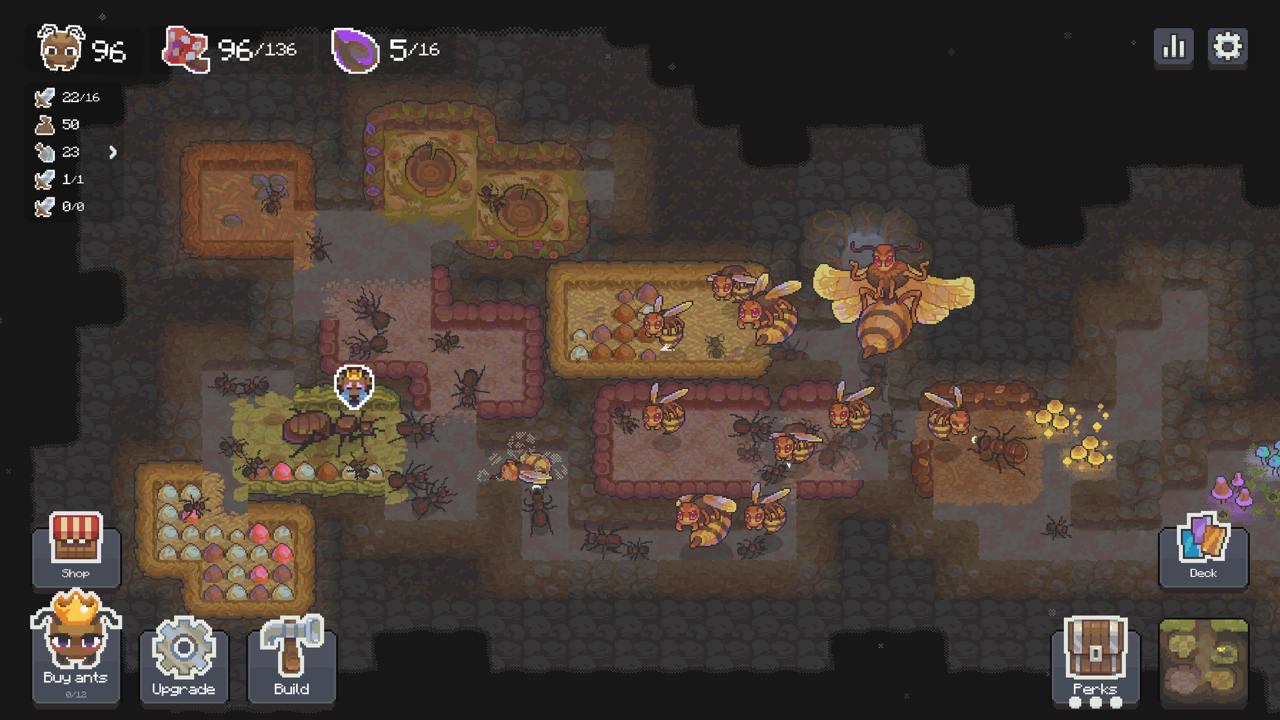
All of this allowed us to finally start believing in tomorrow and work on transforming our creative collective into a full-fledged studio.
Initially, we introduced strict working hours. More and more employees began working full-time. Next, we introduced the concept of sprints, timelines, and started planning beyond one update. The team had grown to seven people, and project structuring became increasingly important. Over time, we had weekends, followed by vacations. We relocated staff. Work became more explicitly allocated and documented. Each step involved significant implementation effort. Our CTO Victor burned out multiple times from setting up working mechanisms but persisted in building the system.
Relocations, emergencies, and accounting and legal processes consumed more budget than anticipated, exceeding the studio's monthly turnover. Preparing for this was difficult. But it’s a phase that everyone aspiring to take the next step to become a serious studio must go through. We believed and still believe in our product and team, so all problems—financial, team-related, or process-related—were resolved despite everything.
Status and Future Plans
We have 4 million downloads on Google Play and the App Store, with 2.8 million being organic. The game is officially released, but in reality, it’s more like a late-stage beta. We plan to refine the functionality, which we believe matches the release criteria, by the end of the year.
Updates are released every few months, after which we think "now it's a full game," but then we come up with something else. At least for the next five years, we have ideas on how to develop and grow this project content-wise.
We anticipate releases in China, Apple Arcade, and Steam. Once the core gameplay development is completed, we plan to start parallel development of a reskin of the game in a different setting. Keeping all the eggs in one basket is very risky. Based on our resource position, making a move towards a simple reskin of the existing game is the best way to expand boundaries.
We believe heartfelt games can become hits. And we intend to prove it!