
We continue to wrap up the year 2025 with top managers and experts from the gaming industry. Next up is an interview with the CEO of the studio "Siberia Nova", Sergey Russkikh.
How did 2025 turn out for your team? What were you able to accomplish, what are you proud of, and what, on the contrary, did not get completed?
Sergey Russkikh, "Siberia Nova": In 2025, the "Siberia Nova" studio, which worked on the project "Zemsky Sobor," welcomed new experienced specialists, and many of the existing team members’ roles were redefined. Thanks to the coordinated efforts of all departments, the project was executed just as we envisioned.
With the arrival of a new game design director, we were able to restructure internal processes: the game design department now operates with regular playtests and swift feedback from players. We've become more responsive to the community — and this is already reflected in our year-end updates.
I would like to highlight the work of the narrative team, formed at the beginning of the year. They managed to create the "heart" of the project — an engaging story and a charismatic character — the Cossack Kirsha.
Thanks to the team's professional work, we successfully built communication with the gaming community, launched a series of successful information campaigns, and attracted a wide audience to “Zemsky Sobor.”
We are proud that the release of the new game allowed us to change perceptions of our projects even among skeptics. An eight-point rating on VK PLAY is more than just a number for us; it is proof that we are moving in the right direction.
Unfortunately, not everything was completed within the allotted time. Some ideas had to be moved to the backlog to avoid sacrificing quality for speed, but we will return to them when we can achieve the desired quality without disrupting the rhythm.
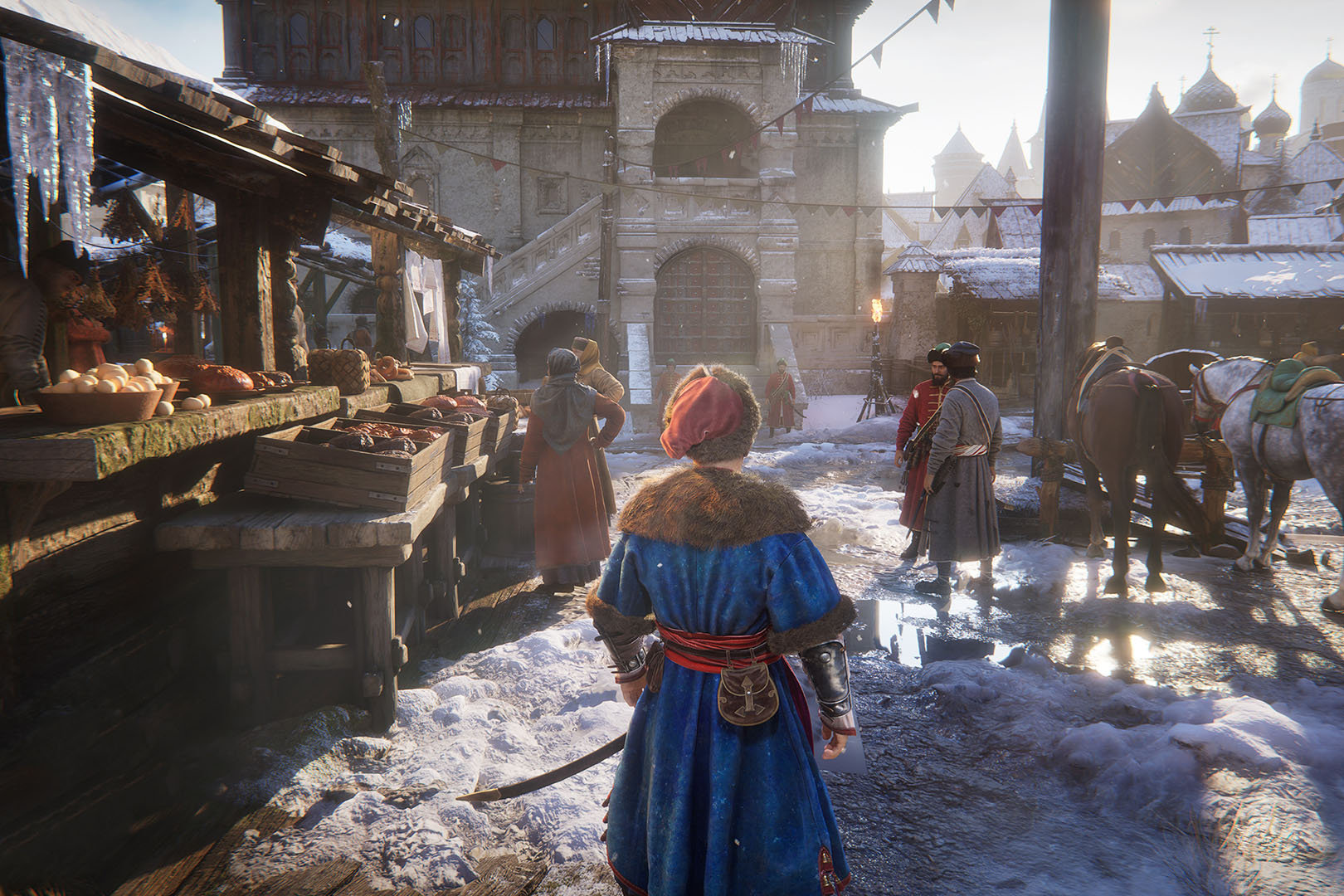
"Zemsky Sobor"
What conclusions did you draw from 2025 as a development studio?
Sergey: By the end of 2025, we as a studio came to several important conclusions that will undoubtedly influence our development in the future.
Firstly, changes within the team — especially the arrival of new specialists and the restructuring of processes — served as a powerful impetus for growth, but only because we established clear communication and a shared understanding of our goals. This took time, but ultimately had a positive effect on both the quality of the game and the atmosphere within the team.
Secondly, we realized just how critically important it is to consistently and systematically listen to players. We've conducted several playtests, collected detailed feedback at each stage, and maintained an open dialogue with the gaming community. This helped us focus on what truly matters to our players.
Thirdly, we've come to understand that it's unwise to chase after the sheer quantity of content at the expense of its coherence. Some postponed features were a conscious choice in favor of stability and depth.
Overall, 2025 was a year of maturity for us: we learned to plan better, trust each other, honestly assess our capabilities, and boldly make decisions — even complex ones. These insights will be the foundation of our work in the new year.
How did the year turn out for the niche/genre you work in?
Sergey: The year 2025 was quite interesting and revealing for our niche. We see that historical adventure games are gradually gaining popularity with the Russian audience — players are increasingly interested in their history and are ready to immerse themselves in authentic settings. At the same time, they highly value attention to detail and the depiction of historical events.
Regarding technical aspects, modern engines like Unreal Engine 5 allow for impressive graphics and detailed locations, especially important for historical projects. Players appreciate visual components but also remain mindful of gameplay and storyline.
Overall, the year demonstrated that our niche has good potential for development. I hope that interest in historical games will continue to grow in the future.
What trends in your niche/genre do you expect to strengthen or emerge in 2026?
Sergey: The modern world is changing rapidly, and the gaming industry is no exception. Artificial intelligence is increasingly being integrated into the game development process, evoking mixed reactions in the community. Some fear the loss of the human touch and worry that games will become impersonal. However, I am confident that the creative approach of developers will help maintain the uniqueness of projects.
What are your team's plans for the coming year?
Sergey: We are currently in an active stage of analysis and planning. Before making any statements, we need to thoroughly discuss all the details within the team, weigh the pros and cons, and identify priority development areas.
We continue to actively gather feedback from our gaming community. Recently, we released an update enhancing the gaming experience: we added difficulty levels, updated target-lock, making the fights more dynamic and engaging. The team also focused on stability improvements — bugs were fixed, the combat system was refined, and quests were polished.