
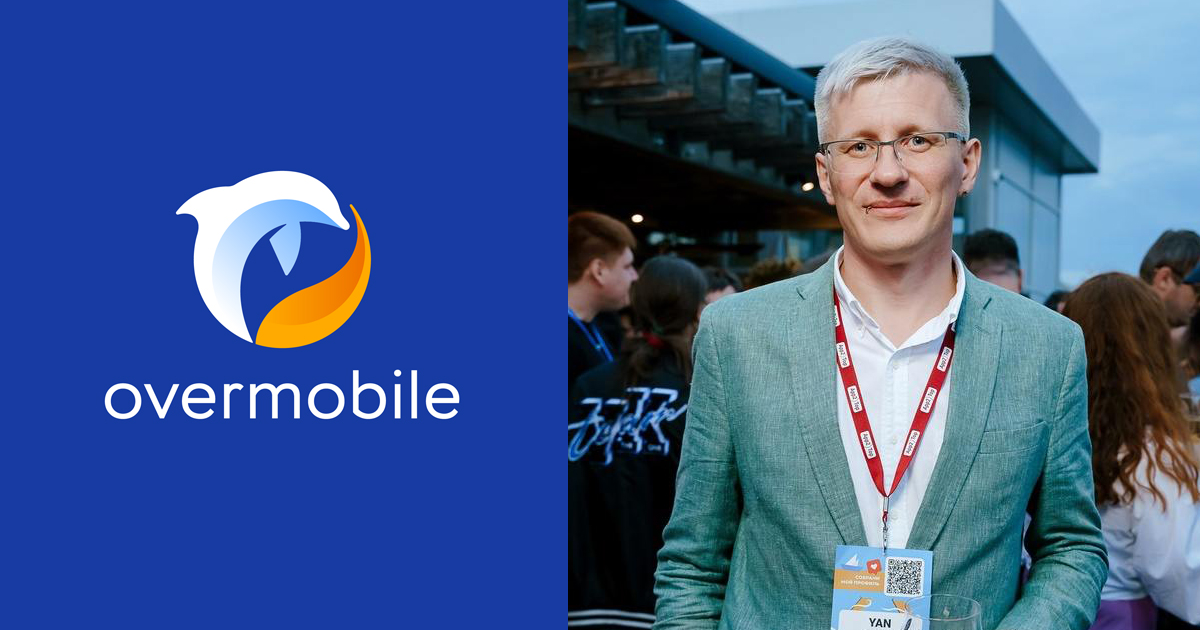
We continue to summarize the results of 2025 with gaming (or gaming industry-related) teams. Next up is an interview with Yan Yankelets, the Business Development Director of Overmobile.
How did the year 2025 turn out for your team? What were you able to achieve, what are you proud of, and what, on the contrary, did you not manage to accomplish?
In 2025, the revenues of our match-3 RPG "Magic World" significantly increased. We also succeeded in launching Raid & Rush on major Russian web portals — Yandex Games and VK Games. The project is complex, written in Unity, but despite this, we managed to achieve acceptable performance, which demonstrates how Unity is advancing towards the web market.
We are slightly lacking resources to conquer the Western HTML5 portal market, but not all of them are ready for projects with predominantly in-app monetization. I hope in 2026 we can enter major platforms — Game Distribution, MSN, and many others.
What conclusions have you drawn as a development studio by the end of 2025?
The market is constantly changing, players are becoming more discerning, regulatory activity can significantly alter the scenario in a few days, and one needs to focus on what you know and do well.
The landscape of internet resource availability in our country and beyond is changing significantly, and it is necessary to react promptly to these changes. Analytics services are ceasing to work; there are issues with payment systems — all of this is the reality of browser games.
Has the practice of interacting with publishers/investors changed? Has it become easier or harder to work with them?
I can’t answer that question because we publish most of our projects ourselves, and the experience we had with a publisher wasn't exactly successful.
But what I see in the market — all the money is going into PC projects. They are more predictable, and it seems like the chance of success is higher there.
I would like to particularly note the activity of the Moscow video game cluster, which promotes Russian developers' projects in Asian countries. Thanks to them, our games were taken to the largest gaming exhibition in India in the city of Chennai, where we gained numerous interested contacts.
We may have to try interacting with a publisher for the third time because it seems that accessing a local market in a country like India is not feasible without a local partner.
How did the year turn out for the niche/genre you are working in?
Midcore, where we primarily focus with our projects, has not been significantly affected by changes.
There are top players who have been at the top for many years, spending millions of dollars to attract a few whales that make their marketing worthwhile. And then there's everyone else.
All projects are built on several already established core mechanics. Developers mainly try to attract players with varied meta-gameplay. They provide them with an “adventure” and content to consume. There are no new core mechanics in the market. Whoever invents them will be the new king of midcore and dominate the top charts. And whoever captures new whales in the new digital environment—messengers and HTML5 portals.
What trends in your niche/genre do you expect to see strengthened or emerge in 2026?
More meta-content, more diverse upgrades, and experiments with new visuals. So far, only miHoYo's projects have managed this.
Personally, I expect new midcore projects in realistic settings—modern military conflicts. It seems that such projects are lacking in the market, although there is a common belief that nothing beats the fantasy style in terms of visual perception. This, of course, can be contested by miHoYo's anime stylistics.
What are the team's plans for 2026?
To actively develop current projects and launch another project that we have in development.
We plan to enter new platforms. We are very interested in the gaming platform by Rostelecom. Hopefully, there will be space for browser games.
We're planning to launch on new HTML5 platforms in Western countries, aiming to globally expand our audience. We’re also focusing on the gaming market in Telegram—we have new events and activities planned with our partner Playdeck. Local content portals like Pikabu Games give us optimism and new paying players.
We have mixed success in our interactions with major telecom companies, but only Beeline continues to work actively with games, and I would be glad if they share their successes themselves, which they do have.
We plan to continue actively collaborating with the Moscow game hub and, with their help, present our projects abroad.